I planned this one for a Saturday on purpose. Salamanca Market only happens once a week, and I did not want to be the person who turns up on a Tuesday and wonders where everyone went. So I built my whole Hobart afternoon around it: market first, then up through Kelly’s Steps into Battery Point, then a loop through the oldest streets in the suburb before heading back down.
The whole thing took about three hours. I took the public bus in from where I was staying on the eastern shore, which meant no parking to think about and no rush to get back to a car.
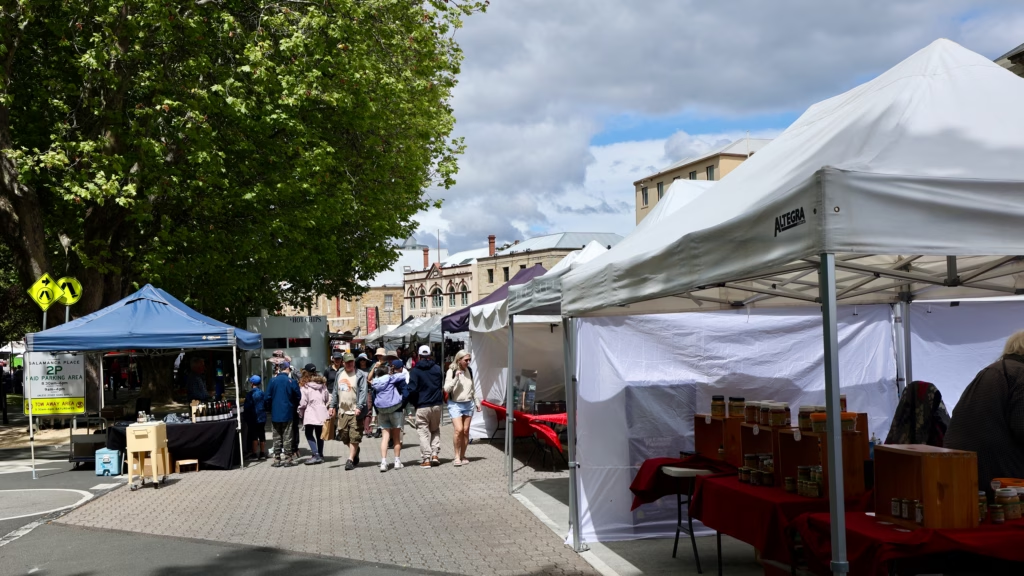 Salamanca Market stalls in Hobart, Tasmania, showing market tents, shoppers, and the historic sandstone warehouses along Salamanca Place.
This is not a long walk in distance. It is a walk in layers. Convict-quarried sandstone at the bottom, colonial cottages at the top, and a set of stairs in between that has been doing the same job since 1839.
The quick answer
Start at Salamanca Market if you can time it for a Saturday. Walk up Kelly’s Steps to Battery Point. Loop through the historic streets, past Jackman & McRoss bakery, St George’s Church, and Narryna Heritage Museum. Come back down the same steps. Roughly three hours all in, more if you stop for lunch or linger in the market.
Salamanca Market: come hungry, leave heavier
 Official branded signage for Salamanca Market in Hobart, confirming its Saturday-only schedule.
Salamanca Place runs along the old sandstone warehouses that once stored whale oil and, later, jam. On a Saturday the whole strip fills with market stalls from about 8:30 in the morning, and by midday it is properly busy. Locals mixed in with visitors, prams weaving between stalls, the smell of hot chips and coffee everywhere.
 Smith’s Pies food truck at Salamanca Market, Hobart, with visitors walking the busy market strip.
I walked the length of it slowly. Honey and preserve stalls with jars stacked in wooden crates. A woodcut print stall with linocut florals pinned up on display boards. A coffee cart called Stand By Me Espresso doing steady trade. Smith’s Pies, a proper Tasmanian pie truck, parked in the middle of the action with a queue that never seemed to shrink.
Food is only part of the story here, and it would be misleading to suggest otherwise. Salamanca Market has grown to more than 300 stalls since it started in 1972, and the range on offer is properly wide. Timber and woodwork, hand-thrown ceramics, leatherwork, glasswork, jewellery, clothing, antiques, original paintings and prints. Buskers play through the whole stretch, and some stallholders demonstrate their craft as they sell it, a potter at the wheel, a woodworker with shavings curling off a block. If you are after a souvenir with some actual thought behind it, this is a far better bet than anything closer to the cruise terminal.
The market itself is free to wander, no ticket, no gate. Salamanca Market runs Saturdays only, typically from around 8:30am to 3pm. If your Hobart days do not include a Saturday, Salamanca Place is still worth visiting. The warehouses, galleries, and bars along the strip operate every day. You will just be missing the stalls. I planned my Hobart days specifically to catch it, and I would do the same again.
Kelly’s Steps: convict stone with a whaler’s name on it
At the western end of Salamanca Place, a narrow set of sandstone steps cuts up through the cliff face. These are Kelly’s Steps, built in 1839 by Captain James Kelly, an early Australian explorer and whaler, as a shortcut between the wharves below and the residential streets above. The stone for the steps, and for the warehouses that line Salamanca Place, was quarried straight out of this same cliff.
They are not long. A handful of short flights, maybe forty-five steps in total, but steep enough that you feel it a little by the top, especially if you have already spent an hour wandering the market.
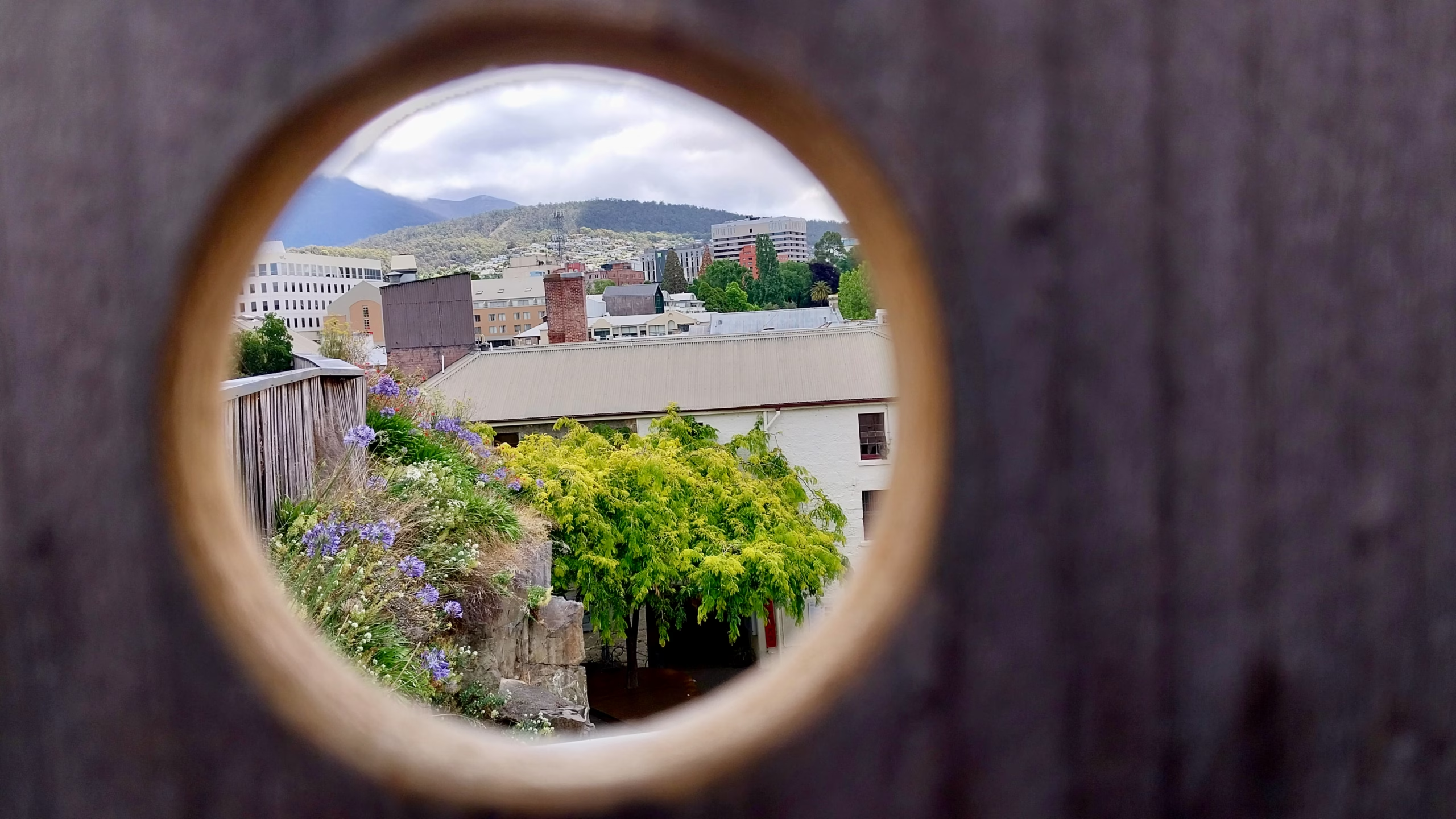
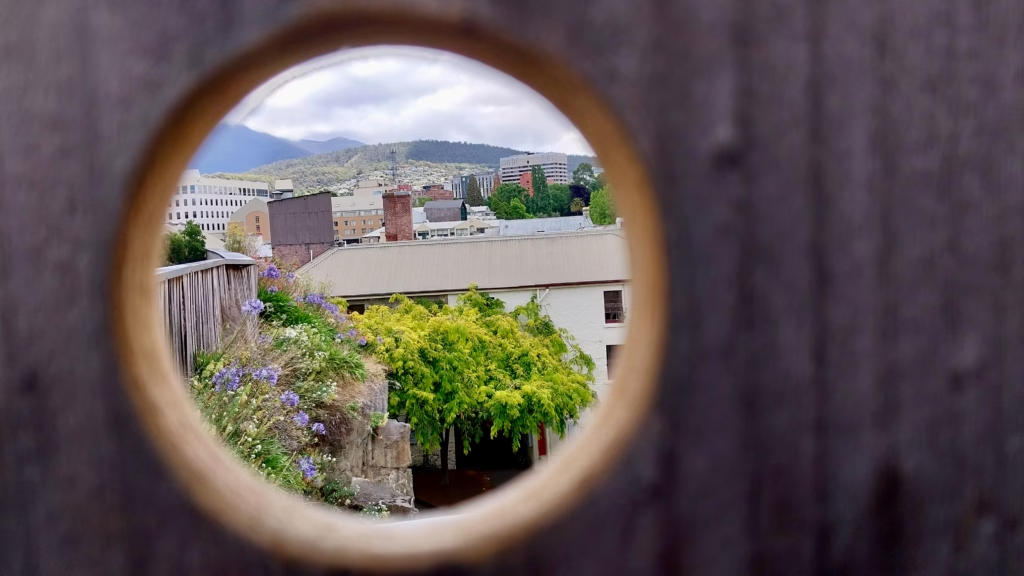 View of Hobart rooftops and Mount Wellington through a circular hole in a wooden fence at the top of Kelly’s Steps
At the top, I found something I still think about. A circular hole cut into a wooden fence, just at eye height, framing a view straight down over the rooftops toward the Hobart CBD and kunanyi in the background. I have no idea who cut it or why. Maybe it was meant as a proper viewing feature, maybe it was just curiosity with a drill. Either way, I stopped and looked through it for longer than I probably needed to.
Purple agapanthus spilling over the fence line, a yellow-flowering tree, white rooftops and glass catching the light below, and the mountain sitting hazy behind the whole scene. It might be my favourite single frame from the entire day.
Battery Point: the best-preserved colonial suburb in the country
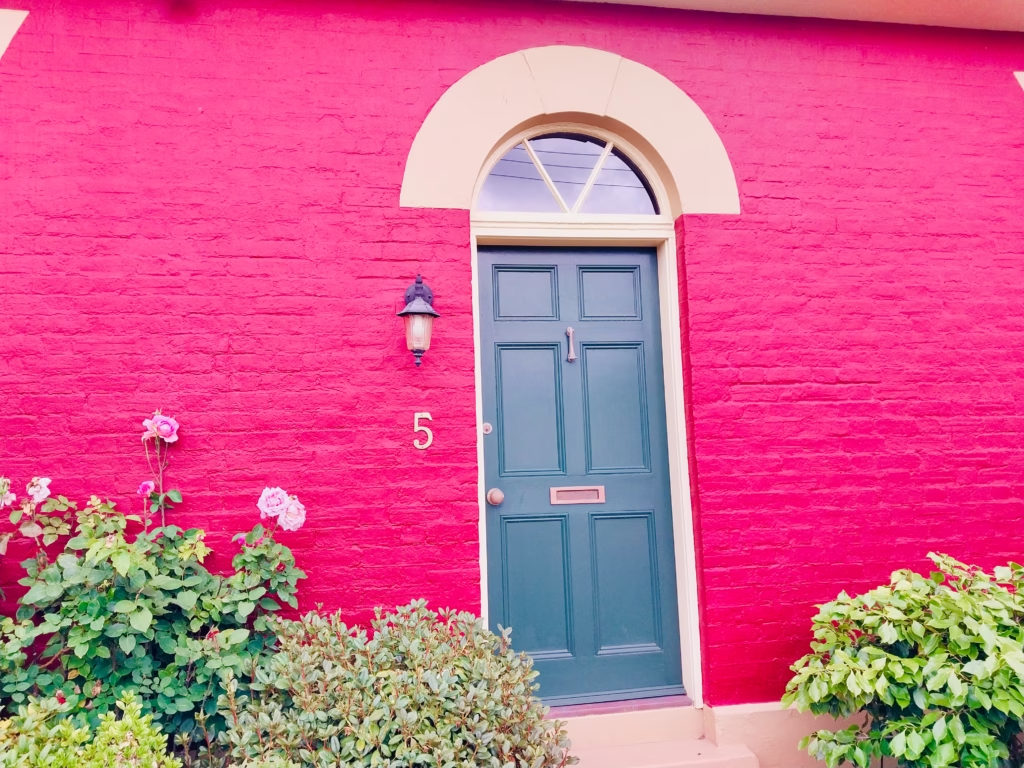 A heritage red brick townhouse in Battery Point, Hobart, with a dark green panelled door, iron gas lamp, and rose garden.
Battery Point is widely regarded as the best-preserved colonial-era suburb in Australia. It takes its name from the Mulgrave Battery, a defence post that once guarded the harbour, established here in 1818. What is left today is a tight grid of streets lined with dockworkers’ cottages and merchant-class townhouses, most of them still lived in rather than turned into museums.
Worth adding to your route
The actual site of the original battery is preserved today as Princes Park, right at Castray Esplanade near the start of this walk. Underground tunnels used to store gunpowder were rediscovered there in 1934, and guided walks now visit them. The park also overlooks the finish line of the Sydney to Hobart yacht race, one of the more unexpected views in Hobart if you happen to know what you are looking at. I did not make it there myself on this visit, but if you have an extra twenty minutes, it rounds out the story of how the whole suburb got its name.
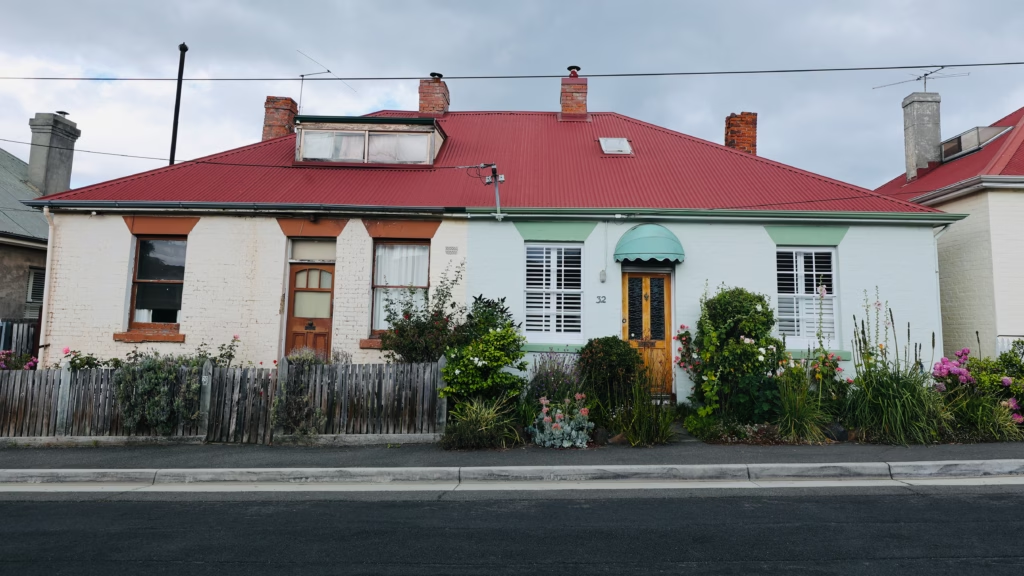 Semi-detached heritage cottages in Battery Point, Hobart, painted in pastel cream and mint green with a cottage garden in front.
I did not plan a specific route through the streets, I just followed whatever looked interesting. A deep red brick townhouse with a dark green front door and an ornate iron gas lamp stopped me first, roses growing thick against the wall beneath it. A few streets over, a pair of semi-detached cottages painted in cream and soft mint green, with a green canvas awning over one door and a wild, well-loved front garden. And a third house built of rough coursed stone rather than brick, with a navy awning and purple flowering shrubs climbing the iron fence. This one is almost certainly Fusilier’s Cottage at 64 Hampden Road, a well-documented Georgian cottage built from bluestone and sandstone.
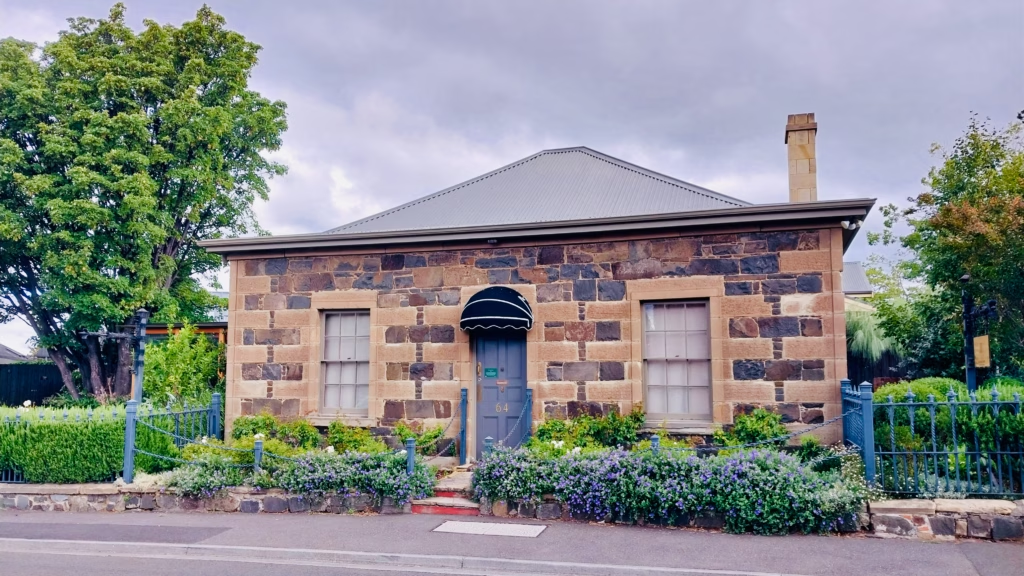 A rough coursed stone cottage in Battery Point, Hobart, with a navy door awning and purple flowering shrubs along an iron fence.
None of these are famous individually. That is rather the point. Battery Point is not one or two showpiece buildings, it is street after street of them, and the effect builds the longer you walk.
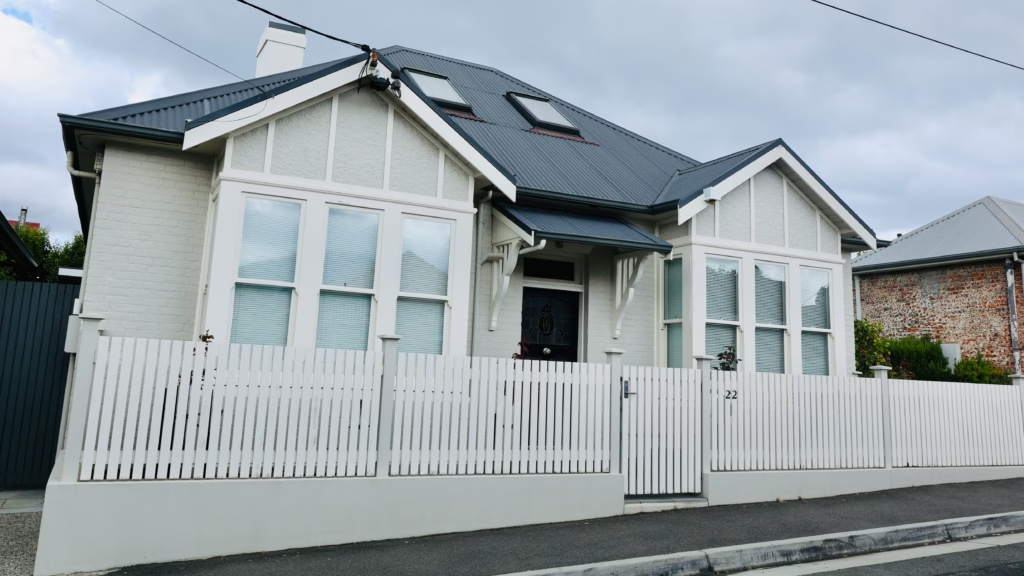 A tastefully renovated period cottage in Battery Point, Hobart, with skylights and a white picket fence.
There is also a nicely renovated home along the way, grey rendered brick with skylights let into the roofline, proof that not everything here is frozen in the 1840s. Battery Point is a lived-in suburb, not a film set.
St George’s Anglican Church: the mariners’ landmark
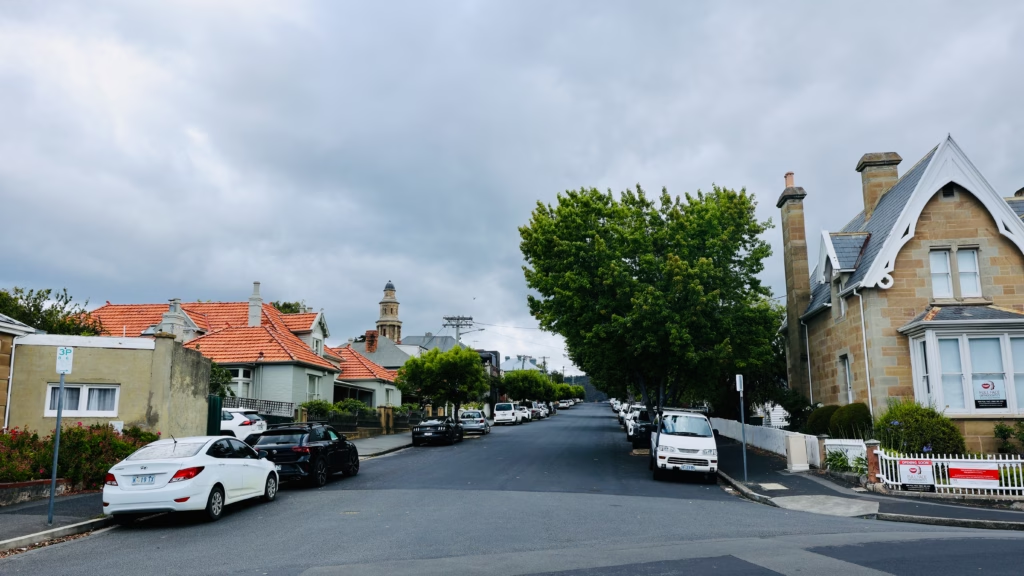 A quiet residential street in Battery Point, Hobart, with the historic stepped tower of St George’s Anglican Church visible above the rooftops.
From one of the residential streets I could see a distinctive stepped octagonal tower rising above the rooftops. This is almost certainly St George’s Anglican Church, on Cromwell Street, built on the highest point in Battery Point in 1838. The tower itself was added later, completed in 1847, specifically to serve as a landmark for ships navigating the Derwent. It earned the church the nickname the Mariners’ Church, and the floodlit tower is still visible from many parts of Hobart after dark.
I did not go inside, so I cannot tell you about the interior, the cedar box pews or the Doric portico that other visitors rave about. What I can say is that the tower alone is worth glancing up for as you walk the streets below it.
Narryna Heritage Museum: a merchant’s house behind a hedge
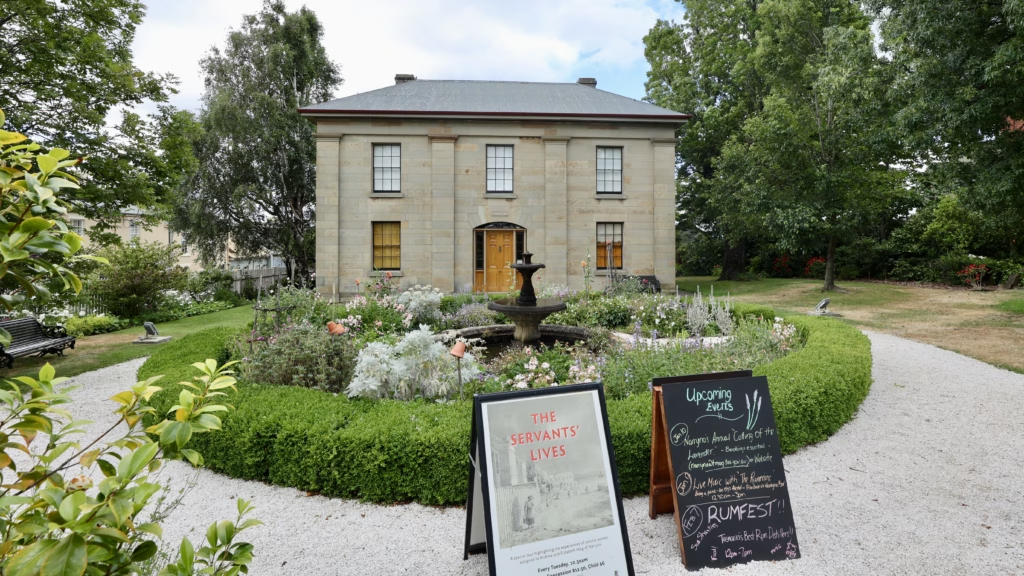 Narryna Heritage Museum in Battery Point, Hobart, a Georgian sandstone merchant’s house built in the 1830s, seen from its circular garden.
A little further along, a Georgian sandstone mansion sits behind a neat circular garden with a stone fountain at its centre. This is Narryna, built by Captain Andrew Haig, a seafarer, in the 1830s, now run as a heritage museum showing what life looked like for Hobart’s merchant class in the colonial era.
I only saw the gardens and the front of the house, an events sign out front was advertising something called Rumfest and an annual lavender cutting, which tells you this is still a living, active part of the neighbourhood rather than a static exhibit. If museums are your thing, this one is worth building in extra time for. I simply did not go in on this visit.
Jackman & McRoss: the bakery everyone in Battery Point seems to know
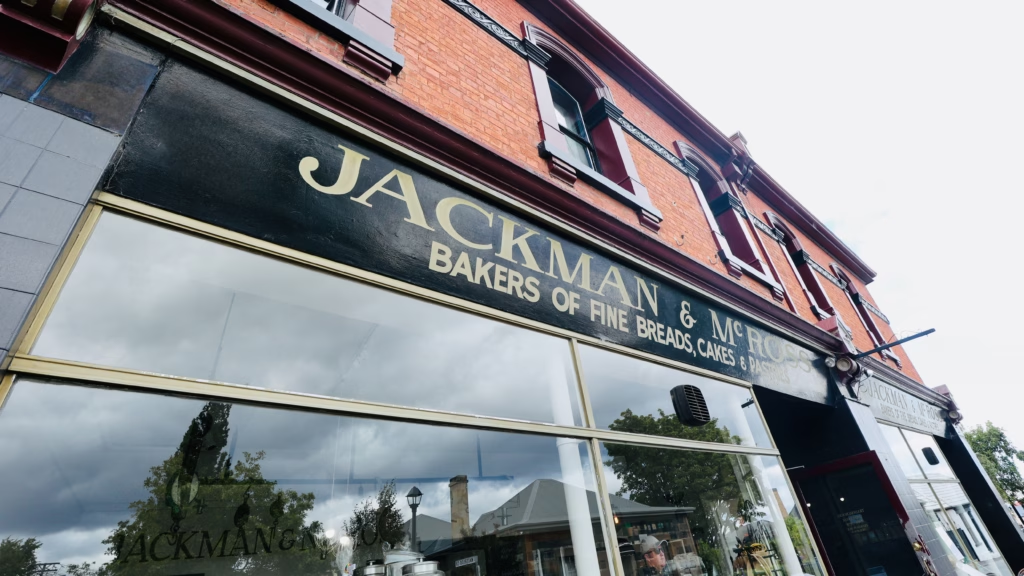 Jackman & McRoss bakery on Hampden Road, Battery Point, Hobart, known for its curried scallop pie.
Hampden Road is Battery Point’s main street, and Jackman & McRoss sits right on it, a red brick building with gold lettering above the window reading “Bakers of Fine Breads, Cakes and Pastries.” It has been a fixture here for years, and it shows, the place was busy the moment I walked past.
I ate here, though I will be honest, I cannot remember exactly what I ordered. What I can tell you, because I looked it up afterwards out of curiosity, is that Jackman & McRoss is best known for its curried scallop pie, a distinctly Tasmanian dish. There is a nice bit of history behind the curry element too: Keen’s Traditional Curry Powder, still a well-known Australian brand, was invented near Hobart in the 1840s, and the local curried-scallop tradition is thought to be a nod to that. If I go back, that is what I am ordering. If you want a drink to go with the history, the Shipwright’s Arms Hotel, known locally as Shippies, has been pouring drinks in Battery Point since 1846. A white-and-blue nautically themed pub, it is the kind of place that fits the whole afternoon’s theme without trying too hard.
Salamanca Arts Centre and Wooby Lane
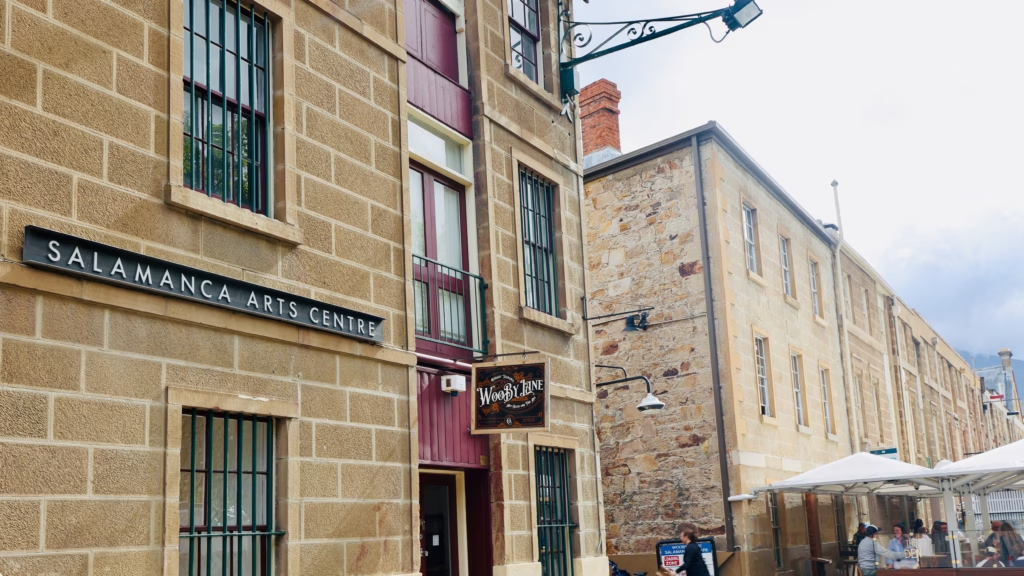 Salamanca Arts Centre and Wooby Lane art studio in the historic warehouse buildings of Salamanca Place, Hobart.
On the way back down, I passed the Salamanca Arts Centre sign on one of the old warehouse buildings, and a small glass and art studio called Wooby Lane tucked into a laneway just off the main strip. Outdoor tables were busy even mid-afternoon. This stretch of Salamanca is where the market spills into permanent galleries, bars, and studios, worth a wander even on a non-market day.
Back down Kelly’s Steps
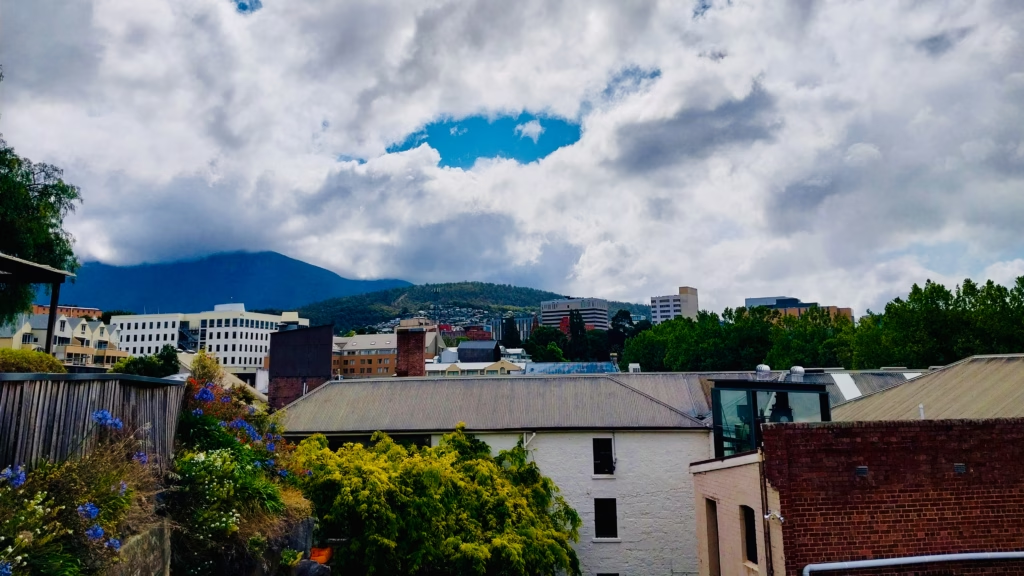 Returning to the same spot, under a very different sky
I finished the loop the same way I started it, back down Kelly’s Steps toward Salamanca. I stopped at the same spot at the top for one more look, this time holding my phone up over the fence rather than through the little hole. The sky had turned properly dramatic by then, heavy cloud with a break of blue pushing through, kunanyi half-hidden behind it.
It felt like a fitting way to close the walk. Started under one sky, finished under a completely different one, all within a few hours.
Doing this walk without the market
If Saturday does not line up with your Hobart days, the walk still works. Salamanca Place itself is worth seeing any day, the warehouses, the galleries, the permanent bars and restaurants tucked into the old buildings. What changes is the atmosphere. Instead of stalls and crowds, you get a quieter, more contemplative version, more space to actually look at the sandstone architecture rather than navigate around market tables.
Battery Point, Kelly’s Steps, Jackman & McRoss, and the church and museum exteriors are unaffected either way, they are there every day of the week. If anything, a weekday visit might suit the Battery Point half of the walk better, since the streets themselves are quiet regardless of the day.
Practical info
Distance and time: The walk itself, Salamanca to Battery Point and back, covers maybe two to three kilometres depending how much you wander the side streets. Budget an hour and a half for the walk alone, more if the market pulls you in for a while. I spent about three hours total, market included.
The steps: Kelly’s Steps involve a handful of short, steep flights, comfortable shoes recommended. Not accessible for wheelchairs or prams, there is no ramp alternative directly on this route, though Battery Point can also be reached by road via Runnymede Street or Napoleon Street if stairs are not an option.
Getting there: I took the public bus into the CBD and walked to Salamanca from there. If you are staying centrally, it is an easy walk from most CBD accommodation. DiscoverCars is worth considering if you are combining this with other eastern shore or day-trip driving, though for this walk specifically a car adds little since parking around Salamanca on a Saturday is limited.
If you have another hour: The Tasmanian Museum and Art Gallery sits right on the waterfront a short walk from Salamanca, free entry, open 10am to 4pm most days. I visited it on a different day of my trip, so I cannot fold it into this particular afternoon’s story, but it is an easy add-on if your legs have more in them after Battery Point.
Where to eat and drink
Jackman & McRoss (Hampden Road) for the curried scallop pie, or really anything from the counter.
Shipwright’s Arms Hotel (Battery Point) for a drink with genuine 1846 history behind it.
Smith’s Pies and the various food stalls inside Salamanca Market itself, if you are there on a Saturday.
For a more structured food experience, the Hobart Half Day Wine and Food Tour covers this part of Hobart with a guide doing the legwork for you.
Getting the most from this stretch of Hobart
If you would rather have the history explained as you walk rather than piece it together yourself, the Hobart Historic Walking Tour covers Salamanca and Battery Point with a local guide. And if MONA is on your list for the same trip, the Hobart City Sightseeing Tour including MONA Ticket bundles the ferry and the museum together, worth a look if you have not sorted MONA tickets separately.
FAQ
What day is Salamanca Market in Hobart?
Saturdays only, typically from around 8:30am to 3pm. It does not run on any other day of the week.
How do you get from Salamanca to Battery Point?
On foot via Kelly’s Steps, a short flight of sandstone steps built in 1839 at the western end of Salamanca Place. The climb takes a few minutes and connects directly into the Battery Point streets.
Is Battery Point worth visiting without the market?
Yes. Battery Point, Kelly’s Steps, Jackman & McRoss, and the church and museum exteriors are accessible every day. Salamanca Place itself is also worth a wander any day, just without the stalls.
How long does the Salamanca to Battery Point walk take?
The walk itself is roughly an hour and a half. With the market included, budget closer to three hours.
Are Kelly’s Steps accessible for prams or wheelchairs?
No, there is no ramp on this particular route. Battery Point can be reached by road via Runnymede Street or Napoleon Street if stairs are not suitable.
Is Narryna Heritage Museum worth visiting?
I only saw the exterior and gardens, which are lovely on their own. If you want the interior, check current opening hours before you go, as it is not open every day.
Is the Tasmanian Museum and Art Gallery part of this walk?
It is close by, a short walk from Salamanca along the waterfront, free entry, and worth adding on if you have another hour. I visited it on a separate day of my own trip.
Final thoughts
This is not a hard walk, and it does not pretend to be one of Tasmania’s great outdoor adventures. What it gives you instead is layered history in a small space, whaling-era stone steps, a suburb that has barely changed its street plan since the 1840s, and a market that still runs the way markets are supposed to, loud, local, and a little chaotic. If your Hobart trip has a free Saturday, build it around this.
Planning the rest of your Hobart time? The best sunset spots in Hobart pair naturally with an afternoon here, Battery Point’s own waterfront makes a good sunset backup if Rosny Hill is not on your list. For the mountain itself, see the Mount Wellington from Hobart guide. And if you have not sorted your east coast day trip yet, the Hobart to Freycinet day trip is the other big one worth the early start. Do not miss the Bruny Island day trip either, just south of the city and a full day well spent.
Once it is live, see our 3 Days in Hobart itinerary (link when live) for how all these pieces fit into a single trip, and our 7 Days in Tasmania Itinerary (link when live) for the full state road map. Heading north as well? Our guides to things to do in Launceston, the Cataract Gorge, a Cradle Mountain day trip and historic Ross Village will help you plan. Tasmania is easy to reach from the mainland too, as I found on my Sydney to Launceston flight. And if your trip takes in Victoria, my 4 days in Melbourne itinerary covers what I actually did with the time.
Please visit:
Our Sponsor
Related Posts
With 100s of fire survivors still in hotels, concerns about disaster’s impact on rental market grows
HONOLULU (HawaiiNewsNow) - A deadline that caused some panic among…

Why an aborted take-off reinforced my confidence in AEGEAN Airlines
There are moments in travel — rare and oddly reassuring…
Marriott’s Hotel Push in Europe Targets Middle-Class and Smaller Cities
Marriott International aims to boost its appeal to Europe's middle-class…