Cape Tribulation is the one place on this whole Australia trip, Sydney to Tasmania to Melbourne to Cairns and back, where two World Heritage sites meet: the Daintree, widely considered the world’s oldest rainforest at somewhere between 135 and 180 million years old depending on the estimate, running straight down to the edge of the Great Barrier Reef. If you’re working out what actually deserves a full day of a Cairns or Queensland itinerary, I’d put this near the top of that list, not as a generic day out, but as one of the more distinctive things Australia has on offer full stop. I did it as a full-day tour with Uncle Brian’s, and the day delivered on that setting: a real crocodile on the river, a rainforest walk through old-growth canopy, a swim at a hidden freshwater hole, and a beach where the reef and the rainforest are both visible at once. Here’s exactly what a day out there actually involves.
Tour
Uncle Brian’s, ~12 hours
Crocodile sighting
Yes, on the river cruise
From Cairns
Pickup ~7am, back ~6:30pm
Book This Tour
This is the Cape Tribulation day tour I actually did, but there are a few different ways to do the Daintree depending on what you want out of the day.
Best if you’d rather explore by 4WD than coach
Best if one day feels too rushed
Best if you want the reef and the rainforest in one trip
️
Best if you’re based in Port Douglas rather than Cairns
The tour, and how the day was actually structured
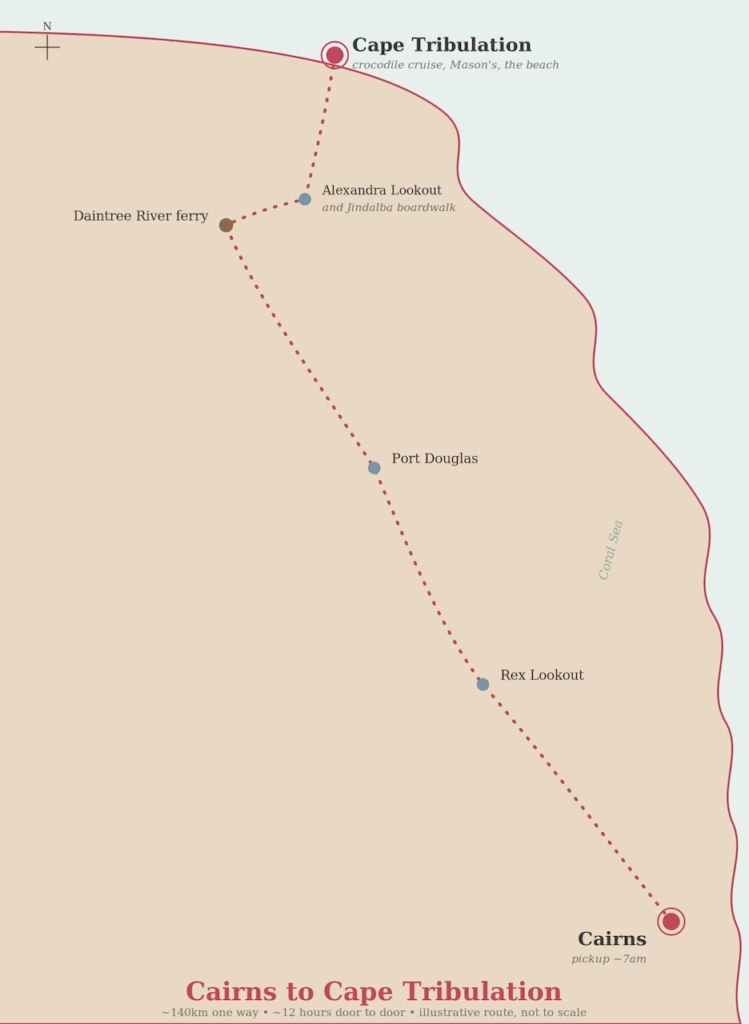 The whole day’s route at a glance – roughly 140km each way, Cairns to Cape Tribulation and back.
A locally owned operator that’s been running trips through Far North Queensland for two decades, and the day runs to roughly 12 hours door to door: picked up in Cairns around 7am, and dropped back at the same point in Cairns between 6 and 6:30pm, so the whole loop starts and ends there.
The itinerary, in the order I did it:
1
Rex Lookout, a coastal stop on the Captain Cook Highway
2
Port Douglas and Four Mile Beach
3
The Daintree River ferry crossing
4
Alexandra Lookout (Walu Wugirriga)
5
Cape Tribulation, including a rainforest walk (the Jindalba boardwalk) and a beach walk
6
A wildlife cruise on the Daintree River
7
Lunch and a swim at Mason’s Swimming Hole
8
Daintree Ice Cream Company, on the drive back
Worth knowing before you go: the whole day is built around the wildlife cruise, and that cruise is timed to low tide for the best crocodile-spotting odds. Uncle Brian’s own scheduling shifts around this, so on some days Port Douglas is a morning stop and on others it’s an afternoon one, which is why the timeline above shows the order rather than clock times. Treat it as what happened on my day, not a fixed sequence.
What’s actually included
| Included in the AU$229 | Extra, paid on the day |
|---|---|
| Cairns pickup and drop-off | Daintree Ice Cream Company purchases |
| Informative guide | |
| Morning tea | Personal drinks and snacks |
| Wildlife cruise | |
| Ferry crossing | |
| Rainforest and beach walks | |
| Lunch at Mason’s Cafe | |
| All park fees |
What to actually bring
Swimwear and a towel for Mason’s, spare dry clothes since you’ll likely stay a little damp afterward, closed-toe shoes for the boardwalk rather than flip-flops, insect repellent, a hat, a refillable water bottle, and a small waterproof bag for your phone if you’re swimming. Bring cash, small stalls and the ice cream stop are easier with it on hand even if cards are accepted. Reef-safe sunscreen if you have it, since you’ll be outdoors most of the day. The road north of the Daintree ferry winds a fair amount, so motion sickness tablets are worth packing if you’re prone to it.
Don’t let a cloudy forecast put you off
The Daintree is a wet place by nature, and rain is part of the deal rather than a sign the day’s ruined. The rainforest canopy covers most of the walking, and the swim at Mason’s works just as well in the rain as in full sun.
Rex Lookout and the road to Port Douglas
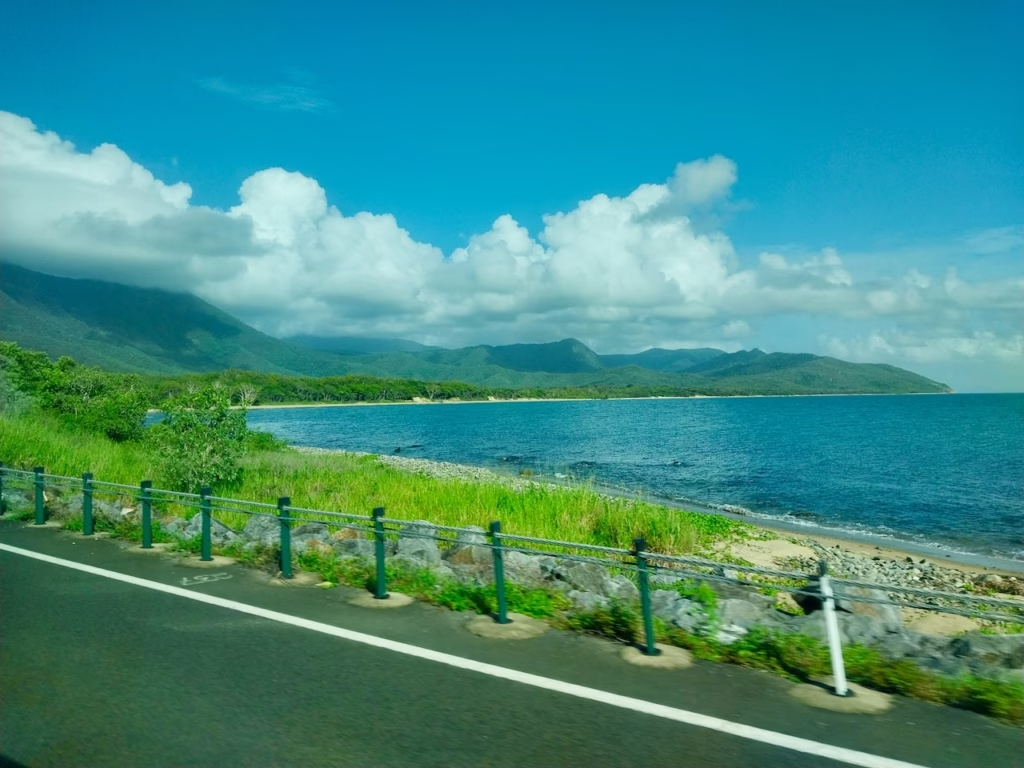 The Captain Cook Highway near Rex Lookout, taken from the bus window – cliffs on one side, the Coral Sea on the other.
The drive up the Captain Cook Highway from Cairns is the first thing that actually surprised me. It runs right along the coast, cliffs on one side, the Coral Sea on the other, and it’s one of the more scenic stretches of road I’ve been on. If you’ve done Victoria’s Great Ocean Road, it’s a fair comparison, just a smaller, more compressed version of it. Rex Lookout is the first proper stop, an easy pull-off with coastal views back toward Cairns.
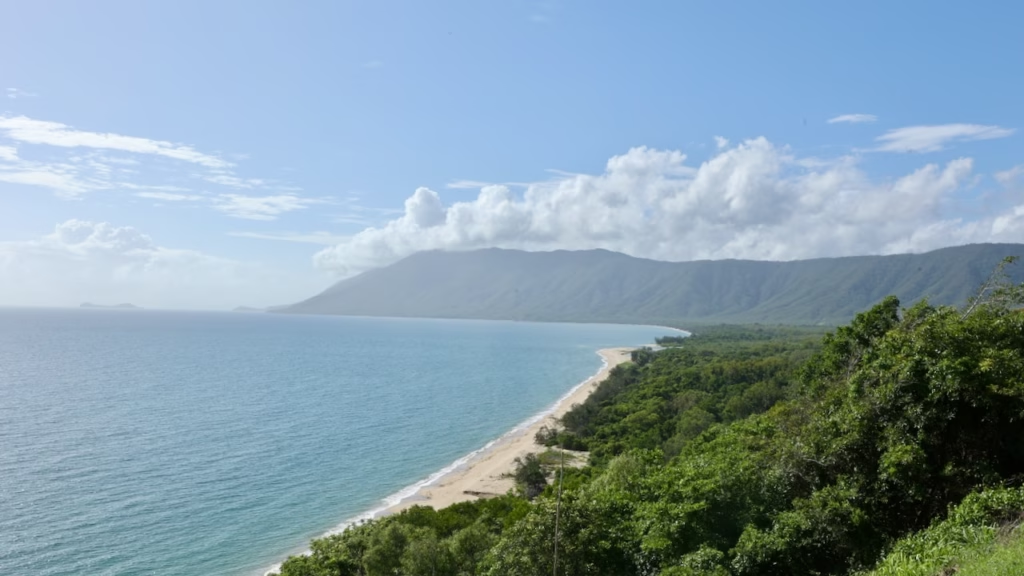 The actual view from Rex Lookout – the beach curving away toward the next headland, hazy islands visible offshore.
Past Rex Lookout, the road cuts inland briefly through cane fields and open farmland before rejoining the coast, sugarcane on both sides and the mountains sitting low and hazy ahead. It’s a genuine part of the day’s appeal, not just transit between stops.
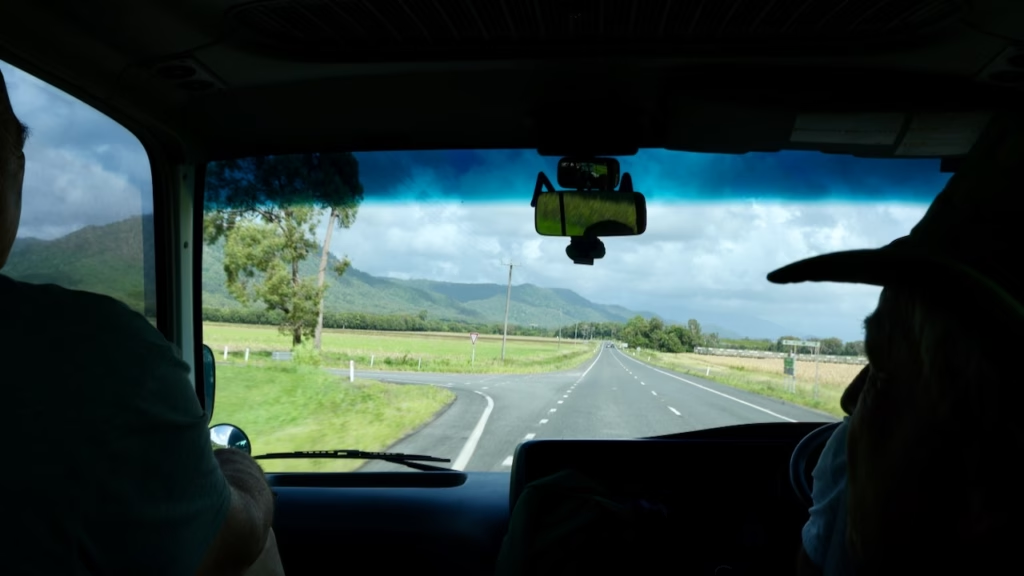 From inside the bus, somewhere between Rex Lookout and Port Douglas – cane fields, open road, storm clouds building over the range.
Port Douglas and Four Mile Beach
Port Douglas itself is a brief stop on this tour, mostly built around Four Mile Beach, exactly what it sounds like: four miles of sand, backed by the town. It’s a pleasant enough pause, though on a 12-hour day built around the Daintree, it’s more of a warm-up than a destination.
It’s worth a mention here because a fair number of people doing this same trip choose to base themselves in Port Douglas rather than Cairns, since it sits roughly halfway between Cairns and Cape Tribulation and cuts a meaningful chunk off the drive each way. My own tour started and ended in Cairns, that’s what this whole post describes, but a Daintree and Cape Tribulation trip departing and returning in Port Douglas instead is also a real option, and I’ve listed one near the top of this post if you’d rather skip Cairns entirely. I stayed in Cairns for this whole leg of the trip, so I can’t speak to Port Douglas firsthand, but real accommodation options that come up consistently include the Sheraton Grand Mirage Resort right on the water, Pullman Port Douglas Sea Temple Resort and Spa, and Peppers Beach Club a short walk from Four Mile Beach, plus Thala Beach Nature Reserve if you’d rather stay somewhere quieter and more forest-set, a little south of town.
Cairns remains the more practical base if you’re doing more than just the Daintree, better transport links, more flights, and everything else in this Cairns cluster is built around it. I’ve written about that side of things properly in Where to Stay in Cairns and Best Hotels in Cairns, both first-hand.
Crossing the Daintree River
The Daintree River ferry crossing is a genuine moment on this drive, not just logistics. It’s a small cable ferry, a few minutes across, and crocodiles do inhabit this river, which the crossing makes clear even before you’ve reached the rainforest proper. This is also where the tarmac effectively ends and the actual Daintree begins. The name itself comes from Richard Daintree, a 19th-century geologist and photographer the river was named after in 1873, not from any local word, worth knowing since it comes up as a common question.
Alexandra Lookout
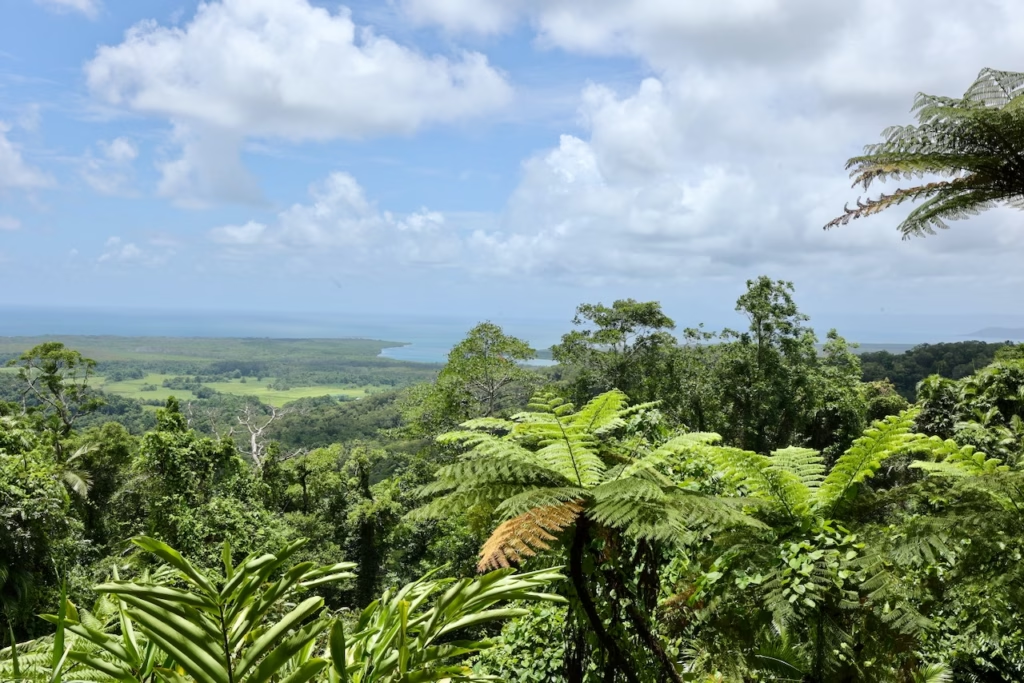 The view from Walu Wugirriga – rainforest canopy running out to the coastline, with the Daintree River mouth visible in the distance.The view from Alexandra Lookout (Walu Wugirriga) over the Daintree rainforest canopy toward the coast and the Daintree River mouth.
A short climb up from the ferry, Alexandra Lookout (Walu Wugirriga in the local Kuku Yalanji language, meaning “look about”) is the first real payoff of the day: views back over the Daintree River mouth, the coastline, and on a clear day, out toward the Low Isles and Port Douglas. It’s not a long stop, but it’s worth the few minutes.
The rainforest walk: Jindalba
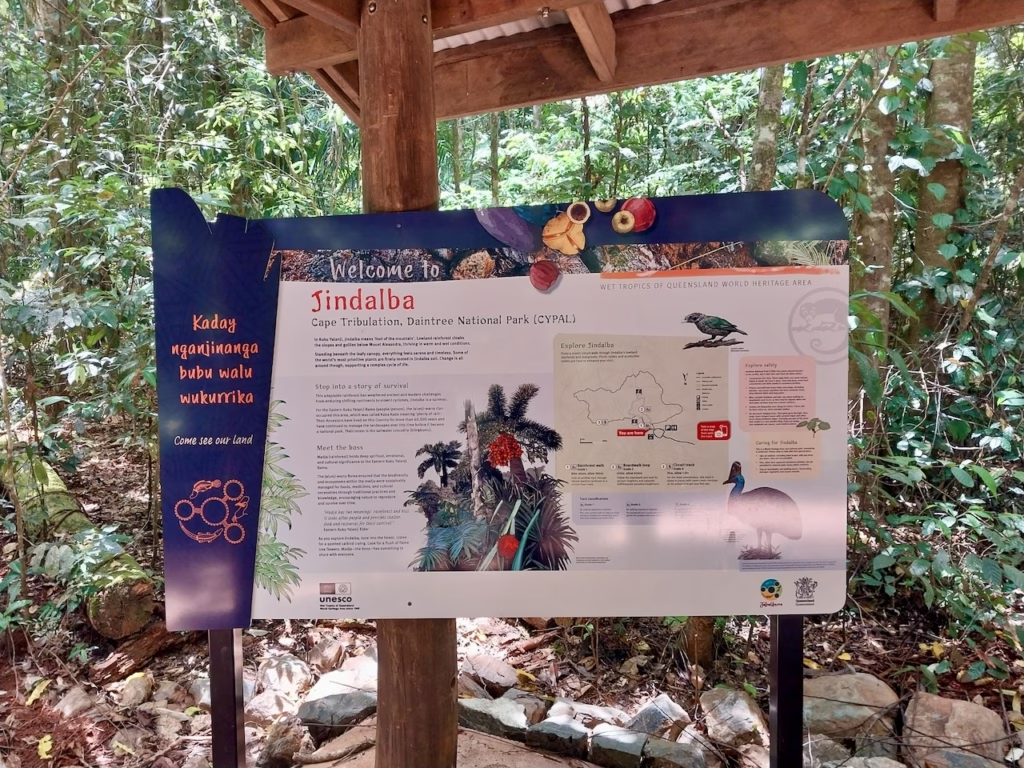 The Jindalba sign at the trailhead – Kuku Yalanji Country, and a reminder this is genuine cassowary habitat.
The rainforest walk on this tour was the Jindalba boardwalk, right in the foothills of Mount Alexandra, a few minutes from the lookout. Jindalba means “foot of the mountain” in Kuku Yalanji, and the walk itself is an easy 650-metre loop, elevated up to four metres off the ground in places, winding through dense lowland rainforest rather than the roadside version you get glimpses of from the highway.
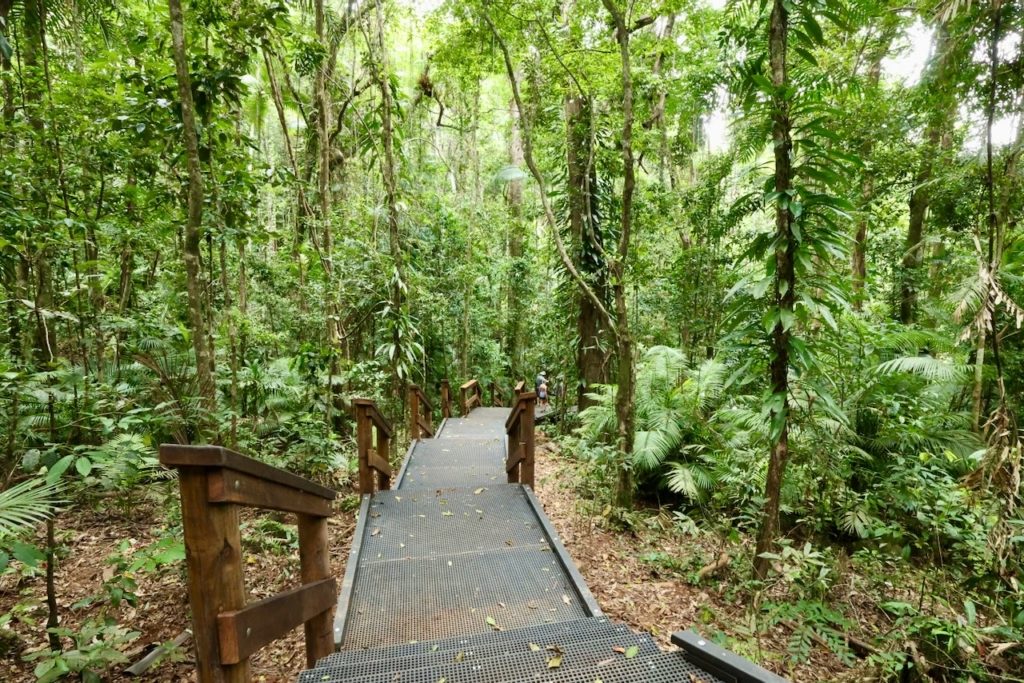 The boardwalk itself, a few metres off the ground in places, cutting straight through the understorey.
Worth distinguishing this from the Daintree Discovery Centre nearby, a separate, paid attraction at Cow Bay with a canopy tower and aerial walkway. This tour uses Jindalba, which is free and simpler; I haven’t been to the Discovery Centre myself, so I can’t compare the two directly, just flagging that they’re different places if you’ve seen both names mentioned.
This is real cassowary country
Jindalba is a known cassowary hotspot, not just a generic warning sign. I didn’t see one here, but the signage is specific about it: keep well back if you do, never feed them, and treat any encounter as a wild, potentially defensive animal rather than a photo opportunity.
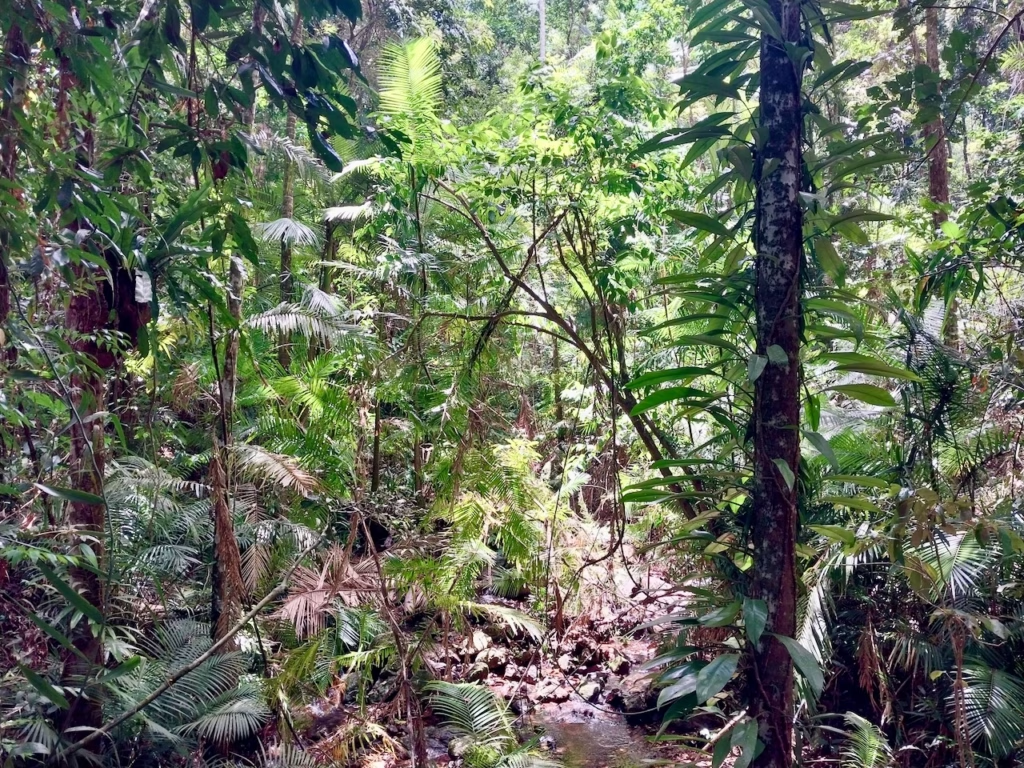 One of the creek crossings along the boardwalk – this is lowland rainforest doing exactly what it’s known for.
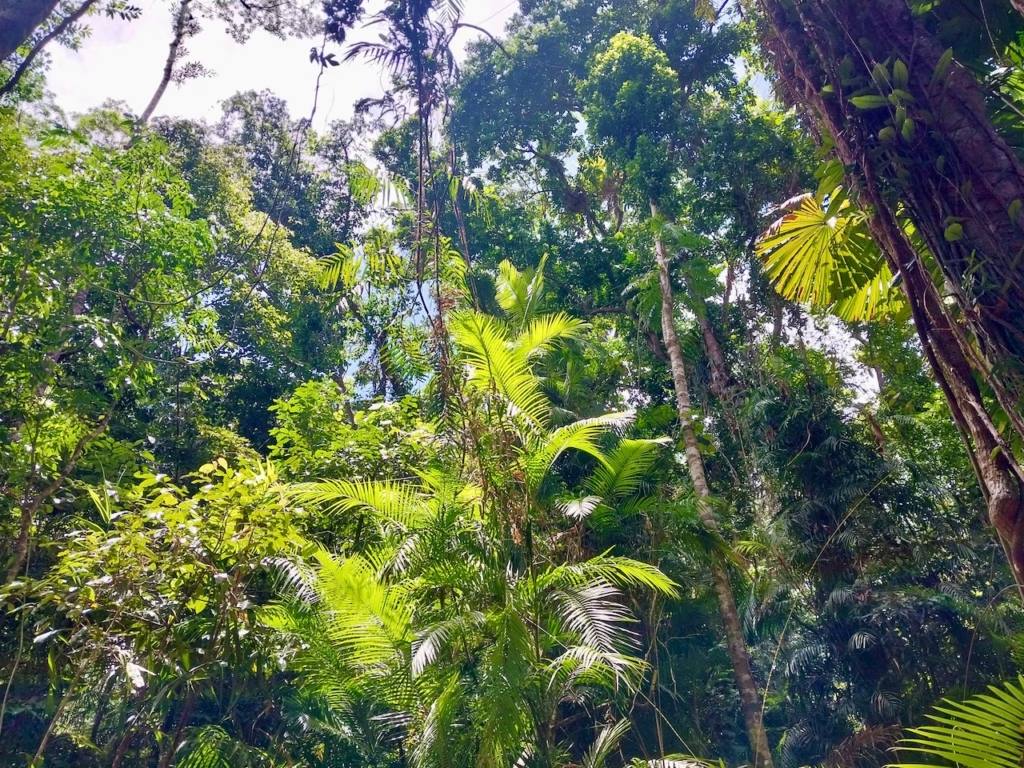 Looking straight up through the canopy – the kind of light you only get a few metres of at a time on a walk like this.
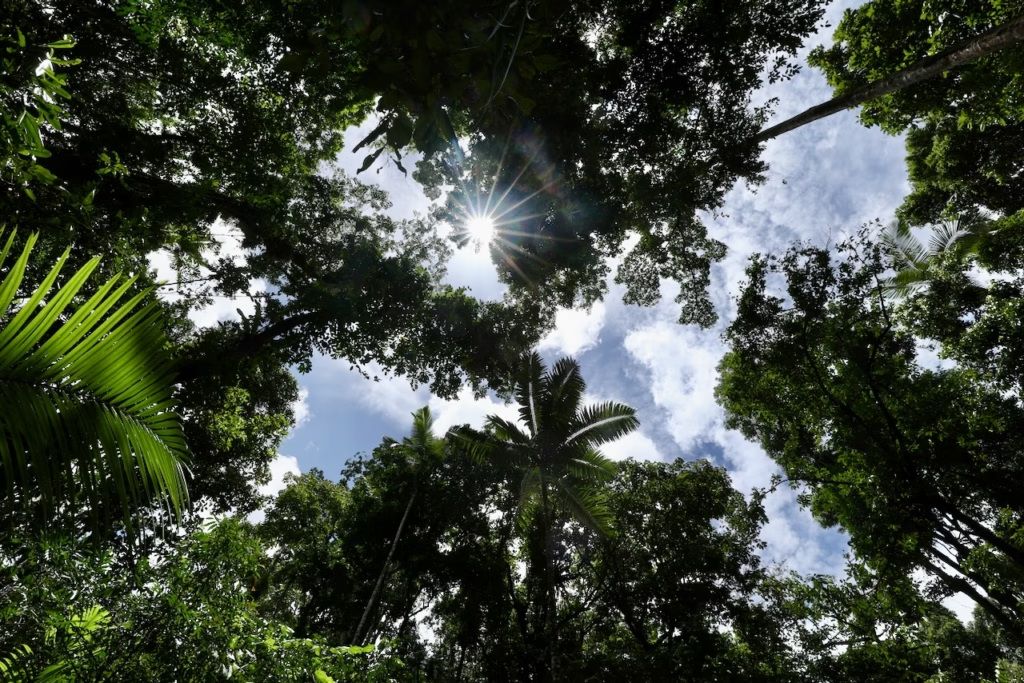 A few steps further along – the sun cutting almost straight down through a gap in the canopy.
The wildlife cruise, and an actual crocodile
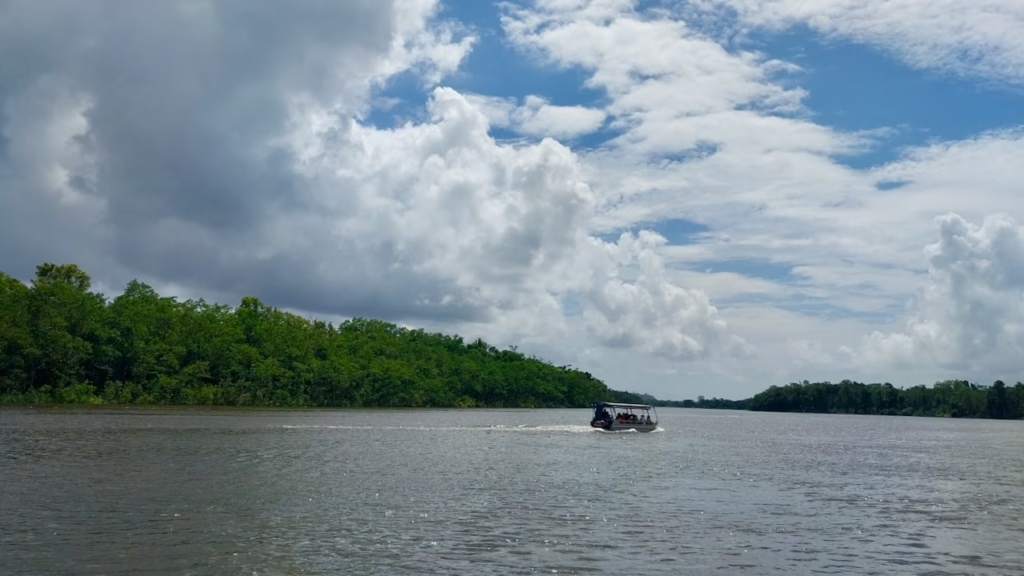 The cruise boat out on the Daintree River – wide, brown, and framed by rainforest on both banks the entire way.
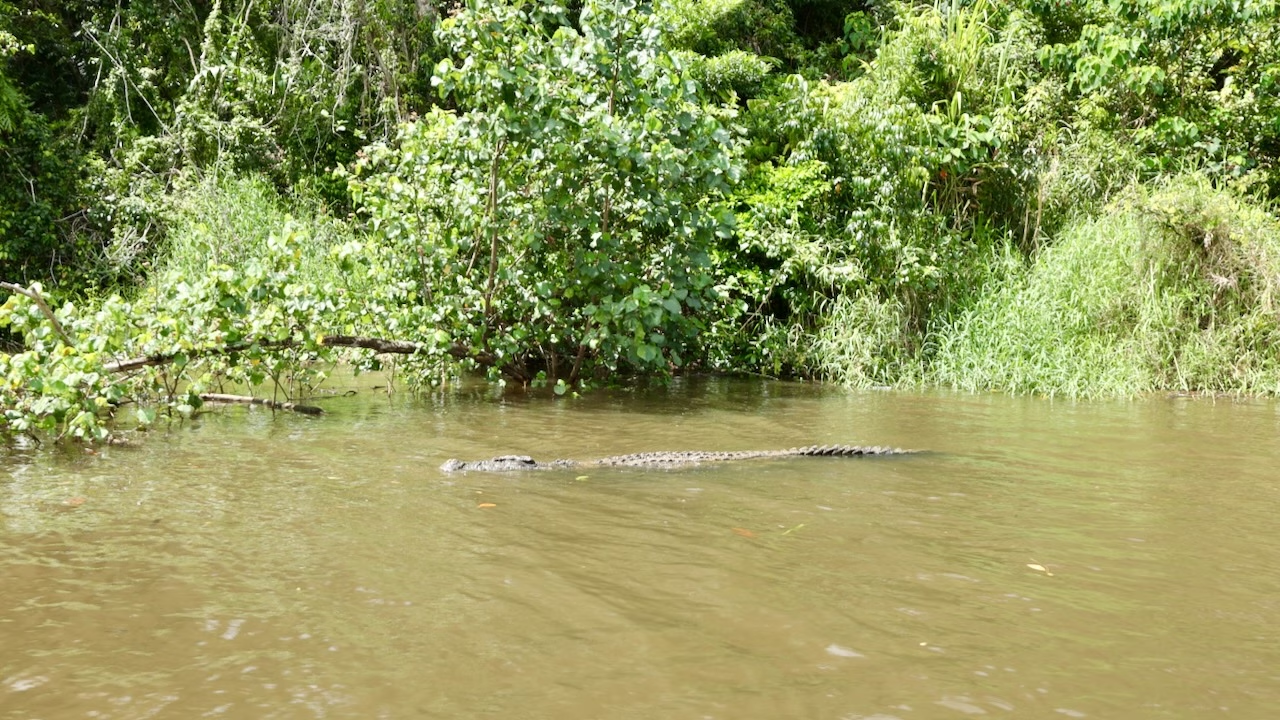
I did see a crocodile on the river cruise, which is the actual point of this stop, and not something every tour or every day guarantees.
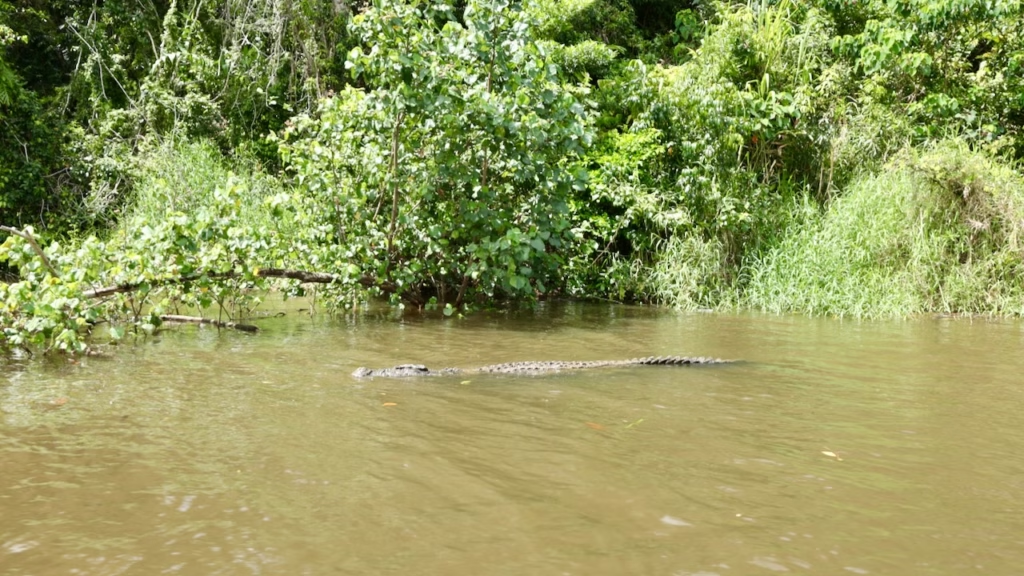 The actual sighting – close enough to the bank to see clearly, far enough that this was very much its territory, not ours.
Here’s a short clip of the sighting itself, close enough to see the ridged back clearly as it moved along the bank:
Cruises like this are timed around the tides, since low tide gives the best chance of a sighting, so there’s a real element of luck involved even with a good guide. Beyond the crocodile, I didn’t see other wildlife on this particular day. I’d already had a cassowary sighting a few days earlier on the Atherton Tablelands waterfalls tour, so this wasn’t my only wildlife moment of the trip, just not one this specific day added to. Beyond crocodiles and cassowaries, the wider Daintree is well known for its wildlife, tree kangaroos and the vivid blue Ulysses butterfly among the more commonly mentioned species, though I can only speak to what I actually saw, which was the one crocodile.
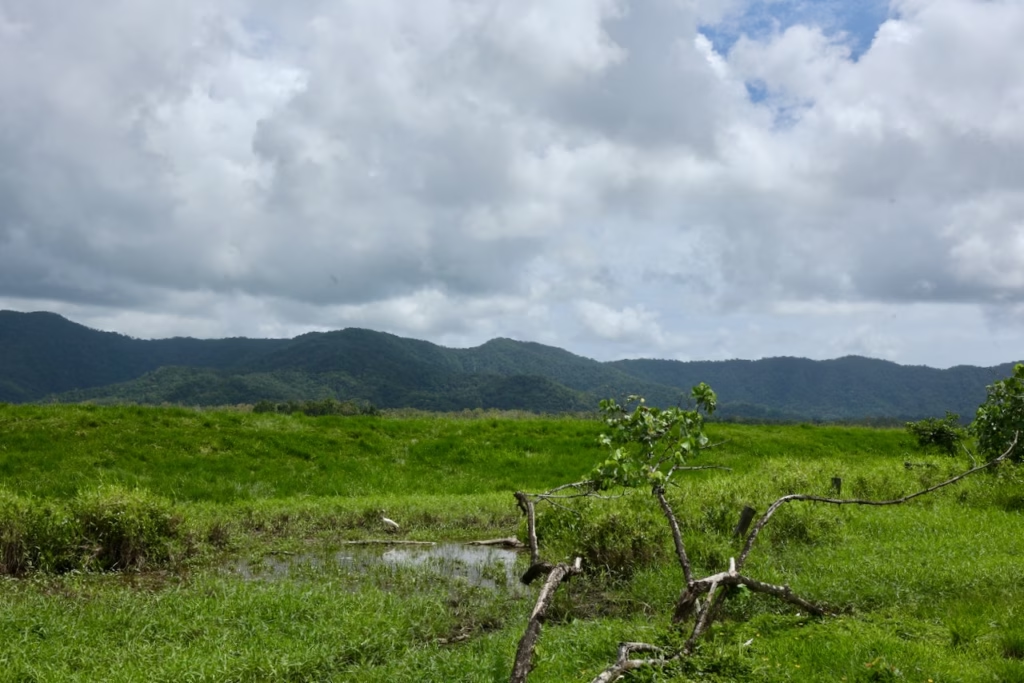 Not every stretch of the cruise is dense rainforest – parts of the riverbank open into wetland and grass, with the mountains sitting behind.
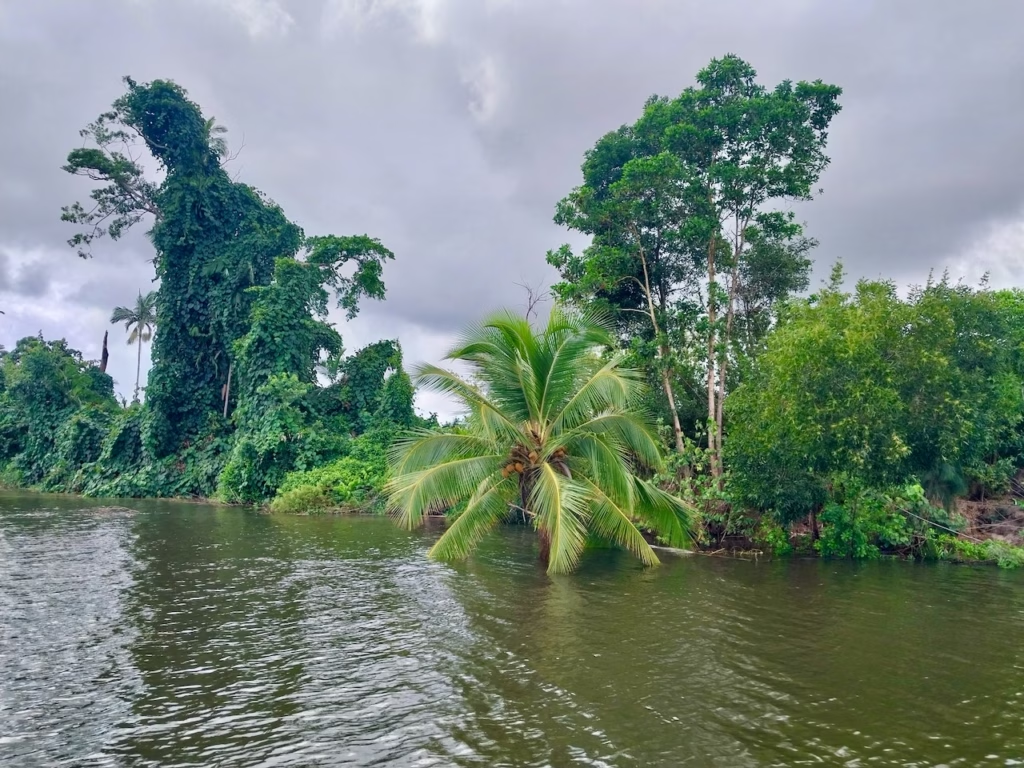 One of the odder sights along the river – a long-dead tree entirely reclaimed by vines, a young palm growing up right beside it.
Mason’s Cafe and the swimming hole
Lunch was at Mason’s Cafe, a locally run spot on Cape Tribulation Road best known for its exotic meat burgers, crocodile, kangaroo, and emu are all on the menu, alongside more familiar options. I can’t tell you exactly what I ordered, but the food was solid enough. If you’re expecting a standout meal as part of the day, temper that; it’s more “properly fed” than “memorable.”
Why this spot, specifically
Saltwater crocodiles are a real presence in the Daintree River and the coastal waters nearby, and January sits inside the crocodile breeding season (roughly September to April), when they’re more active. Mason’s is a separate, inland freshwater creek on private land, chosen and maintained specifically because it isn’t part of that river or estuary system, and it’s promoted by the venue as crocodile and stinger-free. Take that as the venue’s own claim rather than an official guarantee, and don’t treat it as licence to swim anywhere that looks like a quiet creek in this region; stick to spots that are actually vouched for.
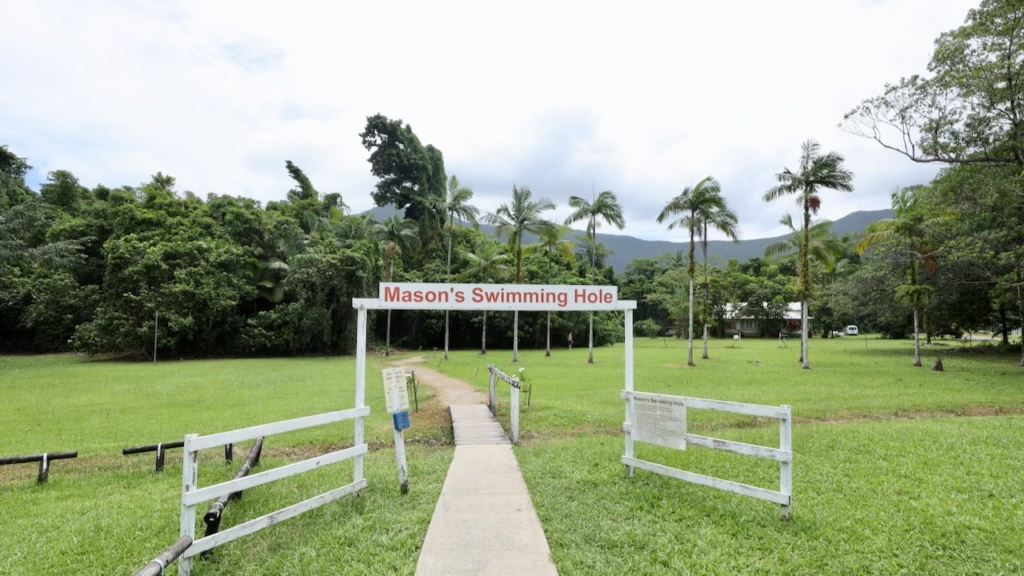 The entrance to Mason’s Swimming Hole, right behind the cafe – the sign lists a dollar-per-person donation for independent visitors, honesty-box style.
The swimming hole itself is right behind the cafe, on the same private property. The entrance sign lists a small entry donation, around a dollar a person, for independent visitors; as part of the tour, we weren’t charged separately for it. This is the “secret” swimming spot the tour built the afternoon around: clear water, two rope swings, freshwater fish and turtles sharing the water with you. People were climbing up and swinging in, one after another, the kind of spot that’s clearly become a regular stop for a reason. I got in and swam. It’s a real highlight in the middle of a long day, cool water, dense rainforest around you, no crowd beyond your own tour group and whoever else happened to be there that day.
Cape Tribulation Beach
 Mason’s Cafe and the swimming hole
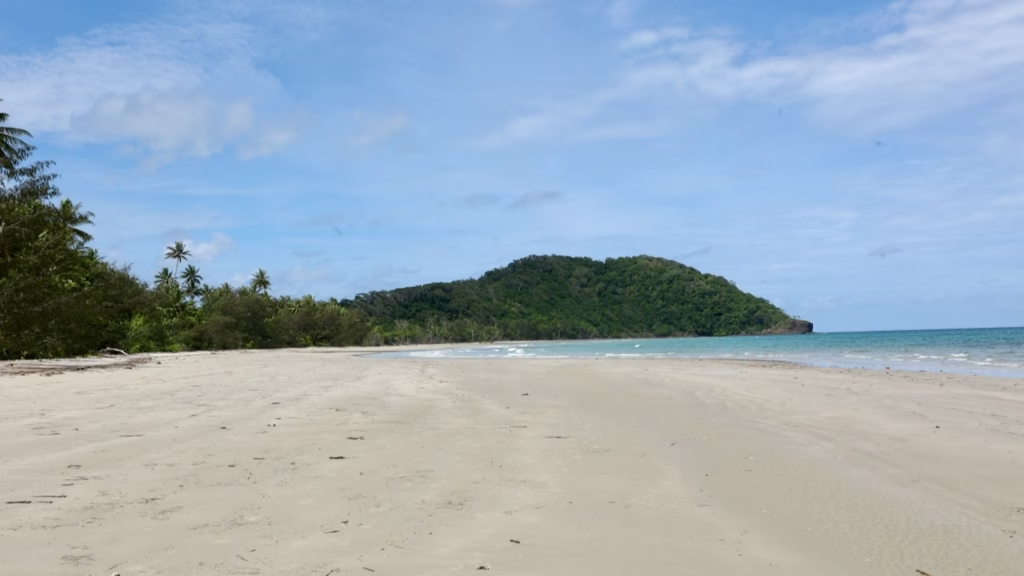
The beach walk came after lunch, and it’s the moment the tour’s whole framing (two World Heritage sites meeting in one place) actually clicks. Long, pale sand, essentially empty at low tide, with a forested headland closing off one end of the bay.
Mason’s Cafe and the swimming hole
Look, don’t swim
This is open coastal water, not Mason’s. Marine stingers and saltwater crocodiles are both a real possibility here, and this beach isn’t netted or patrolled the way a town beach further south might be. Walk it, don’t swim it, unless a guide or clear signage says otherwise.
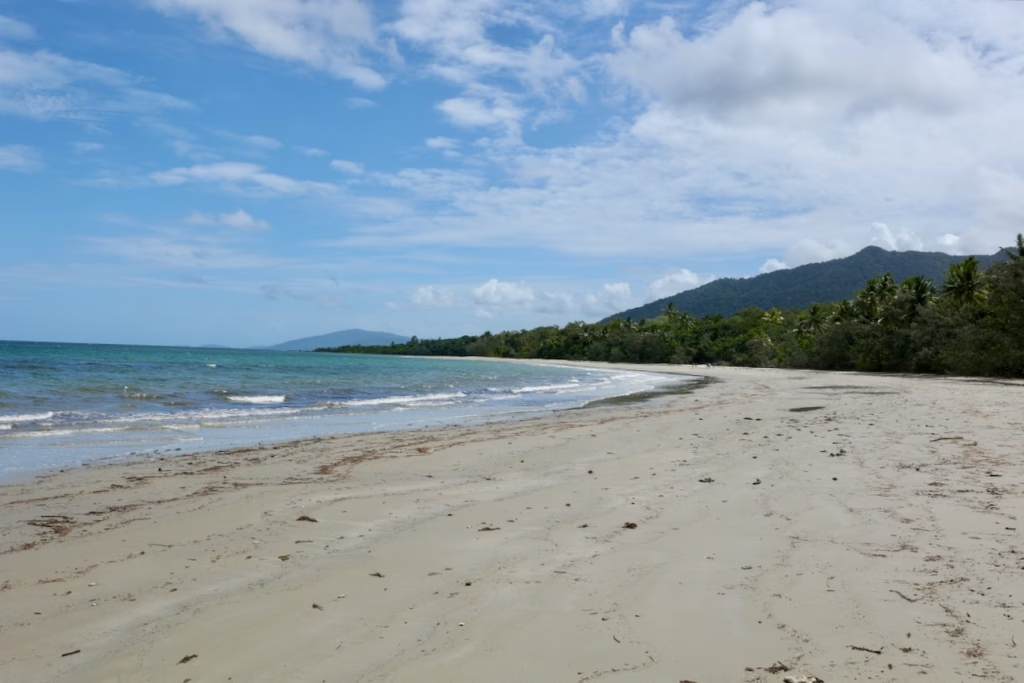 The beach curving away toward the treeline – low tide, ripple marks in the sand, hardly anyone else around.
Daintree Ice Cream Company
This was the last stop of the day, on the drive back to Cairns, and it deserves more than a passing mention. I wasn’t expecting much from a roadside ice cream stop tacked onto the end of a long tour day, but it was excellent, worth calling a must-try in its own right rather than just something to fill the last half hour before Cairns.
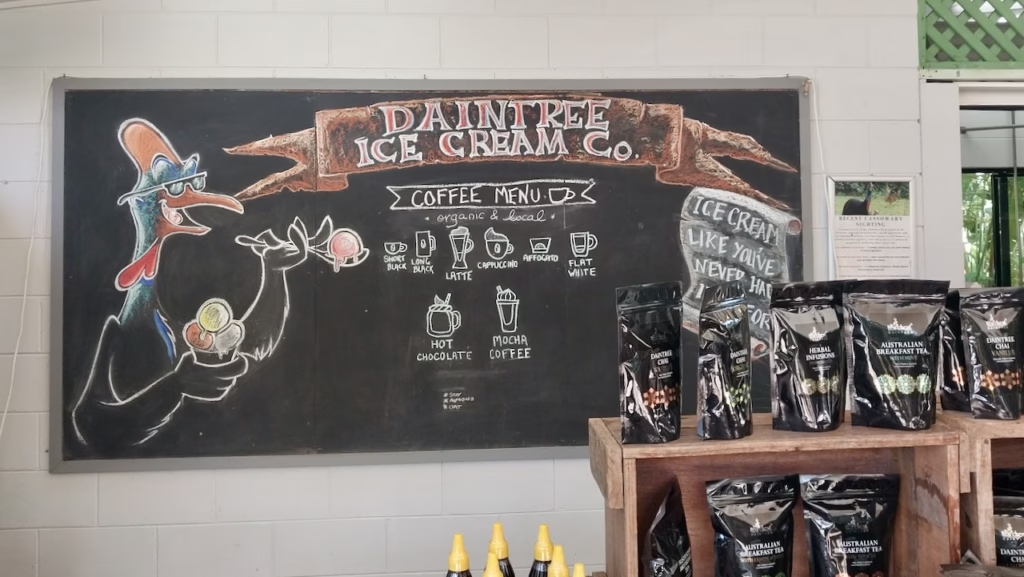 The signature cup board on the day I visited – coconut, passionfruit, yellow sapote, and wattleseed, out of a much longer regular rotation.
Expect a queue
This stop was easily the busiest of the day, tour buses stacked up and a real line to order, staffed by a small, fast-moving crew of young locals who clearly do this every single day. It didn’t put me off. The day I visited, the signature four-flavour cup was coconut, passionfruit, yellow sapote, and wattleseed, chosen from a much longer rotating list that includes things like black sapote, mango kulfi, and coconut lemon myrtle. A single cup runs $7.50-9.50, with an affogato option at $10. The company’s been running since 1993 and it shows in how efficiently they move a crowd through.
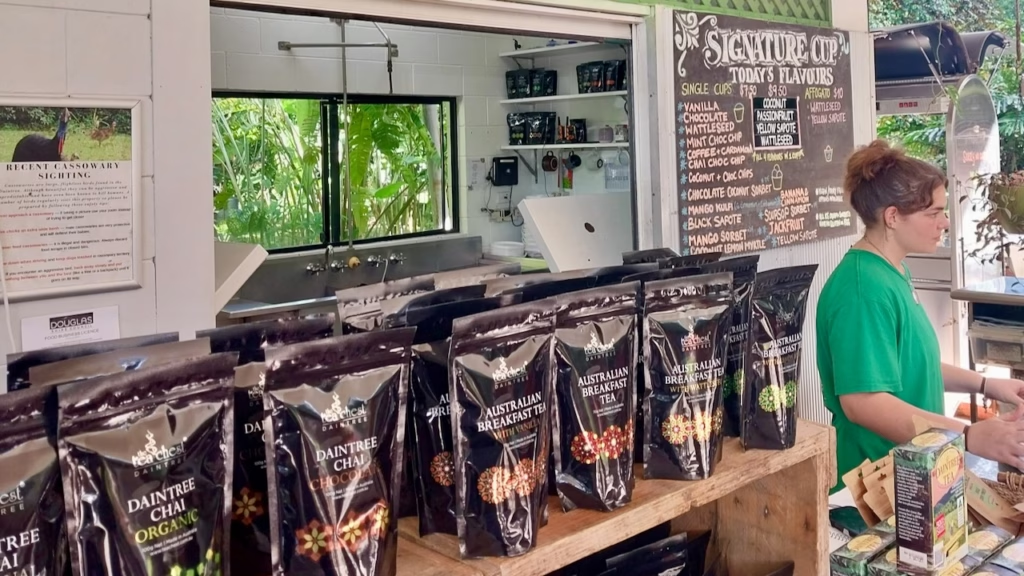 Beyond the ice cream itself, the counter stocks local Daintree Chai and tea – worth a look if you’re after something to take home.
One of the best small moments of the day, crowd included. The queue is absolutely worth the wait. Out of everything small on this whole day, this is the one stop I’d tell you specifically not to skip.
Final thoughts
My Experience
VisitedJanuary 2026, full-day tour with Uncle Brian’s
Best forA real crocodile sighting and the rainforest-meets-reef setting in one day
Skip ifPrice matters more to you than it did to me – compare the operators listed above first
The Daintree earns its reputation. Standing in rainforest that old, watching a wild crocodile move through water it’s owned for longer than most countries have existed, then finishing the day on a beach where the reef and the rainforest sit side by side, that’s a rare combination to get in a single day, and this tour covers all of it well.
At AU$229 when I went, it’s also the most expensive single day I spent out of Cairns, and it’s fair to hold a day at that price to a slightly higher bar than a AU$130 flight or a AU$30 hotel room. If you go in expecting a full, well-run, logistically smooth 12-hour day covering unusual ground, rather than measuring it purely against cheaper days elsewhere on the trip, it holds up well. I wasn’t unhappy with Uncle Brian’s specifically, everything ran on time and delivered what it promised, but next to other tours I did on this same trip, it landed closer to content than especially impressed. If price matters more to you than it did to me, it’s worth comparing the operators listed near the top of this post before you commit to one.
Continue exploring
Frequently Asked Questions
Is the Cape Tribulation day tour from Cairns worth it?
Yes, particularly if you value the Daintree and Cape Tribulation as a distinctive destination in their own right rather than just another beach day. The crocodile sighting, the rainforest walk, the swimming hole, and the ice cream stop all delivered. I paid AU$229 in January 2026, and Uncle Brian’s own booking page still lists AU$229 as the current adult price, though it’s always worth checking directly before you book in case that’s changed.
Can children do the Cape Tribulation day tour?
No, not this specific one-day tour. Uncle Brian’s own official booking page lists it as Ages 18+. I’d previously written this as family-friendly based on third-party listings that turned out to be inaccurate for this product; the operator’s own current page is the correct source, and it’s an adults-only tour.
Will I definitely see a crocodile on the Daintree River cruise?
No sighting is guaranteed, but cruises are timed around low tide specifically to maximise the chance. I saw one on my cruise.
Is it safe to swim in the Daintree?
Not in the river or open coastal waters, where saltwater crocodiles are a genuine presence, especially during breeding season (roughly September to April). Guided tours use separate, vetted freshwater creek locations away from that river system for swimming stops.
Is Cape Tribulation dangerous?
Not in a way that should put you off, but it’s worth taking seriously rather than dismissing. The real risks are saltwater crocodiles in the river and coastal waters, marine stingers in the ocean roughly November to April, and cassowaries, which are wild birds capable of serious injury if approached or fed. None of these are a reason to avoid Cape Tribulation, they’re a reason to swim only where it’s specifically vetted (like Mason’s, not the open beach or the river), keep a proper distance from any cassowary you see, and follow the same commonsense rules everyone else visiting follows. I didn’t feel unsafe at any point on the day, the precautions are well signposted throughout.
What’s the weather like in Cape Tribulation and the Daintree?
Hot and humid year-round, with two real seasons rather than four. Wet season runs roughly November to April, hotter, more humid, with regular rain and the marine stinger and crocodile breeding risk both at their highest. Dry season, May to October, is markedly more comfortable and generally considered the better time to visit if you want the easiest conditions. I went in January, deep in wet season, and the rain never actually got in the way of anything, the rainforest canopy covers most of the walking and Mason’s works fine wet or dry.
Can I do Cape Tribulation without a tour?
Yes, it’s a self-drive road the whole way, with the Daintree River ferry crossing as the only real logistics to plan around. Ferry fares reset annually on 1 July, so check the current ticket page before you go rather than relying on an old figure, mine would already be outdated. A tour takes care of the ferry timing, the wildlife cruise booking, and the drive itself, which matters more on this particular route than most, since the cruise is timed to the tide rather than a fixed schedule. If you’d rather drive yourself, compare rental car prices in Cairns here.
Does the Cape Tribulation day tour include Mossman Gorge?
No. I checked directly against Uncle Brian’s own official page for this exact one-day tour, and Mossman Gorge doesn’t appear in the itinerary or the inclusions list, matching what I actually experienced. A few third-party booking sites describe a different itinerary that does include it, which looks like outdated or generic listing copy rather than the current product; the operator’s own page is the more reliable source here. If you specifically want Mossman Gorge in the same day, this Cape Tribulation, Mossman Gorge and Daintree tour covers both.
How long does the Cape Tribulation day tour take?
Around 12 hours door to door, typically picked up from Cairns around 7am and returned between 6 and 6:30pm.
Please visit:
Our Sponsor
Related Posts

Your browser is not supported
Your browser is not supported | northjersey.comnorthjersey.com wants to ensure…
France mandates climate certification for all hotels
The regulations assess energy use, water consumption, carbon emissions, and…

B2 Hotels partners with Amadeus to transform the guest booking experience in Asia Pacific
B2 Boutique and Budget Hotels, part of GPCM Group, announces…