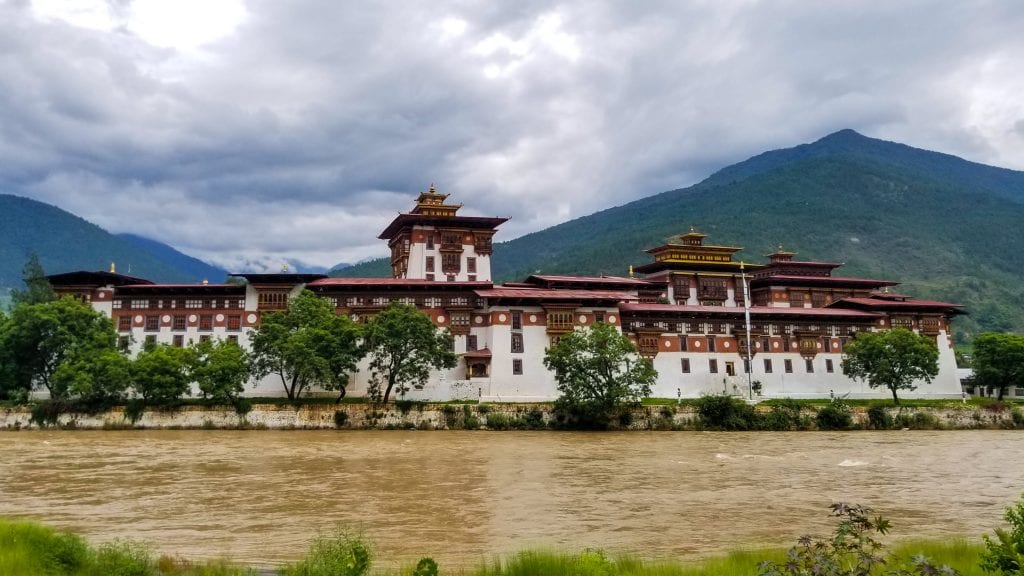
Punakha is a beautiful valley and one of the most visited tourist destinations in Bhutan. While the Punakha Dzong is a gorgeous piece of architecture, Punakha offers some naturally beautiful places to visit too.
I have been to more than 40 countries in the world, and among them, Bhutan is significantly different. It’s a small country of 700,000 people where people still wear their traditional dresses. It’s a carbon-negative country, which means they produce more oxygen than they consume carbon dioxide. You will realize it as soon as you land at the Paro Airport or go to Thimphu, the capital of the country, through the absolutely mind-blowing journey from the airport. As long as you are in Bhutan, you will be surrounded by greenery.
If Paro is your gateway into Bhutan and Thimphu is the cultural capital, Punakha is where the country’s scenery takes over. This is a lower, warmer valley built around a river confluence, a fortress most Bhutanese will tell you is the most beautiful in the country, and a genuine break from temple-hopping in favour of hikes, rapids, and quiet riverside afternoons. While most tourists start their journey in Paro or Thimphu, the valley of Punakha offers many fantastic places to visit besides Phobjikha Valley in Bhutan.
Punakha at a Glance
- Location: Central-western Bhutan, at the confluence of the Mo Chhu and Pho Chhu rivers
- ️ Altitude: ~1,200 metres — noticeably warmer than Paro or Thimphu
- ️ From Thimphu: ~72–77 km, 2.5 to 3 hours via Dochula Pass
- ️ From Paro: ~110–125 km, 4 to 5 hours
- Suspension bridge: ~160 metres — one of the longest in Bhutan
- Punakha Dzong: Built in 1637, former capital of Bhutan until 1955
- ️ Recommended stay: 1 to 2 days
- ️ Entry requirement: Licensed Bhutanese tour operator (except Indian, Bangladeshi, Maldivian nationals)
How to Get to Punakha
Punakha has no airport of its own — every visit happens by road, and the road itself is part of the experience.
From Thimphu: About 72–77 km, taking roughly 2.5 to 3 hours. This is the route most visitors take, and it climbs over the spectacular Dochula Pass at 3,100 metres before descending into the warmer Punakha valley.
From Paro: About 110–125 km, taking roughly 4 to 5 hours, typically routed through Thimphu.
photography tips
Stop at Dochula Pass on the way. This is one of the most photographed spots in Bhutan — 108 memorial chortens known as the Druk Wangyal Chortens, built by the Queen Mother in memory of Bhutanese soldiers, set against a genuinely spectacular Himalayan panorama on a clear day. It sits right on the Thimphu–Punakha road, so there’s no detour required, and the adjacent Royal Botanical Park is worth a short wander if you have the time.
solo traveler?
As with the rest of Bhutan, most foreign visitors need to travel with a licensed local tour operator, who typically arranges the vehicle and driver for this leg as part of your overall itinerary. Indian, Bangladeshi, and Maldivian nationals have simplified entry requirements.
Punakha Suspension Bridge
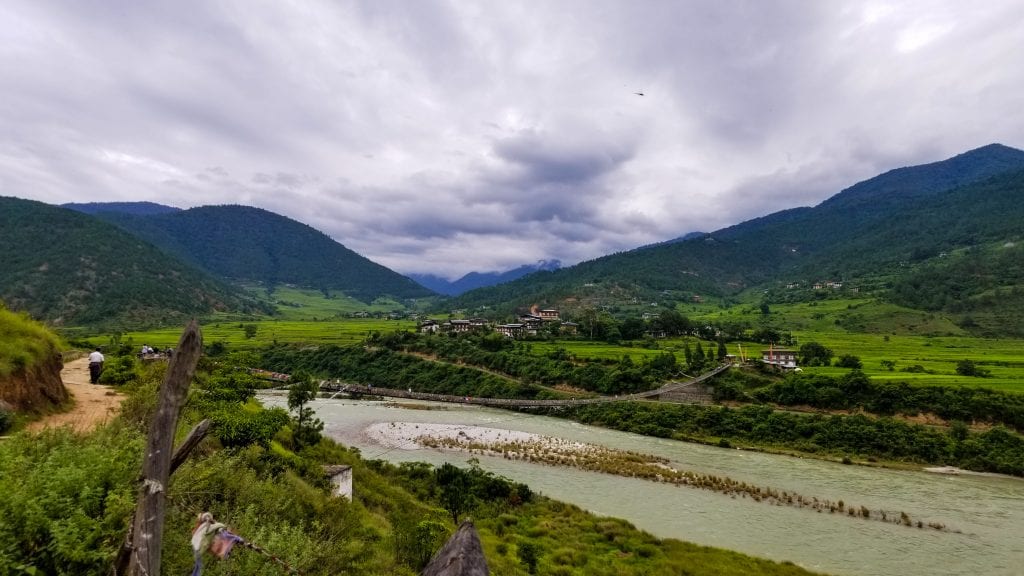 Green Punakha valley, white clouds, flowing river, and the suspension bridge – is there anything missing?
 Start your Punakha exploration from the Punakha suspension bridge. From this location, you will be able to enjoy a panoramic view of the gorgeous Punakha valley. As long as your eyes go, you will see the green mountains. In the lap of the mountains, only a handful of typical houses of Bhutan announce the existence of human beings.
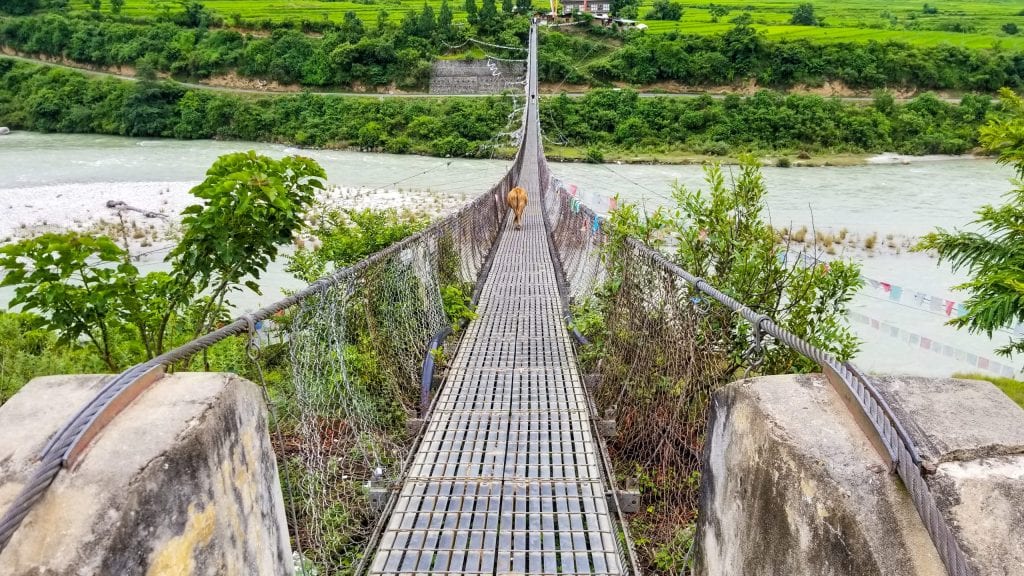 The long suspension bridge in Punakha.
 A mud road will take you near the suspension bridge. At around 160 metres, it’s one of the longest suspension bridges in Bhutan. The bridge is wrapped in prayer flags. It’s mostly for pedestrians, but animals understand its use too. The bridge will start to shake as soon as you start walking on it.
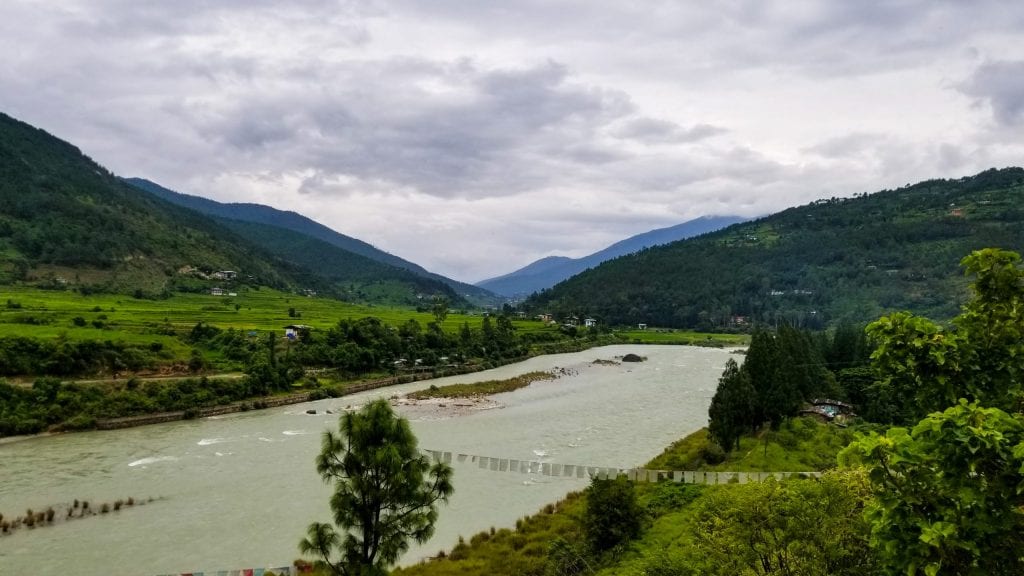 You will get this view from the Punakha suspension bridge.
 Don’t forget to stop midway on the bridge and enjoy the surroundings. From there, you’ll get a better view of the Puna Tsang Chu river and another part of the valley.
Punakha Dzong – Most Beautiful Place to visit in Punakha
I simply loved Punakha Dzong! Punakha Dzong is not only among the most beautiful places to visit in Punakha but the most majestic Dzong in all of Bhutan. This majestic Dzong is located on the bank of the Mo Chhu and Pho Chhu rivers. The great Guru Rimpoche once predicted that a person would come to a mountain shaped like an elephant and construct a temple there. The tip of the elephant-trunk-like Punakha hill was chosen when the dzong was later built.
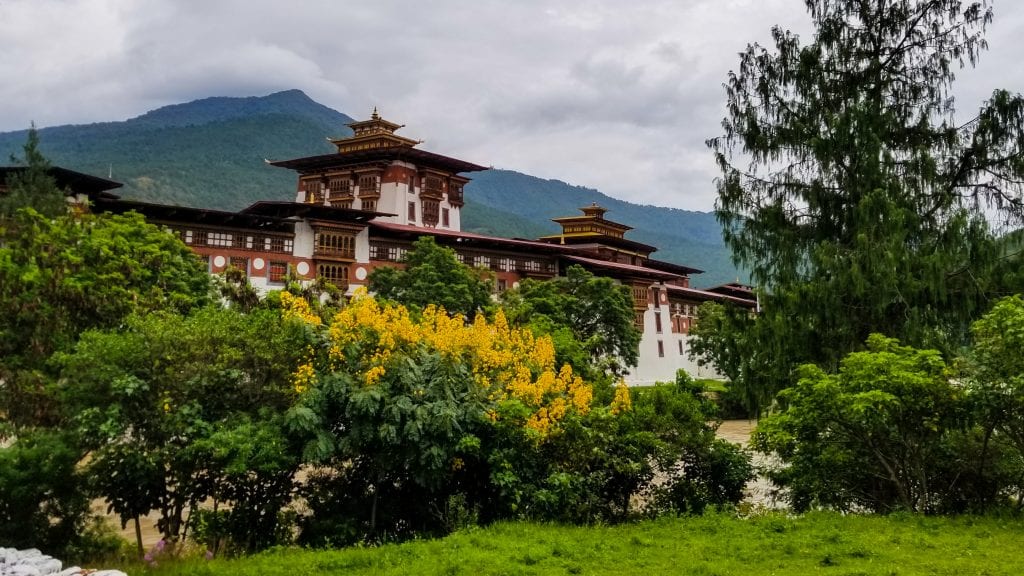 Green, yellow, red, and white – another angle of Punakha Dzong.
 For those who don’t know, a Dzong is a special kind of fortress architecture found in Tibet and Bhutan. Punakha Dzong was built in 1637 — nearly 400 years ago — without using a single nail.
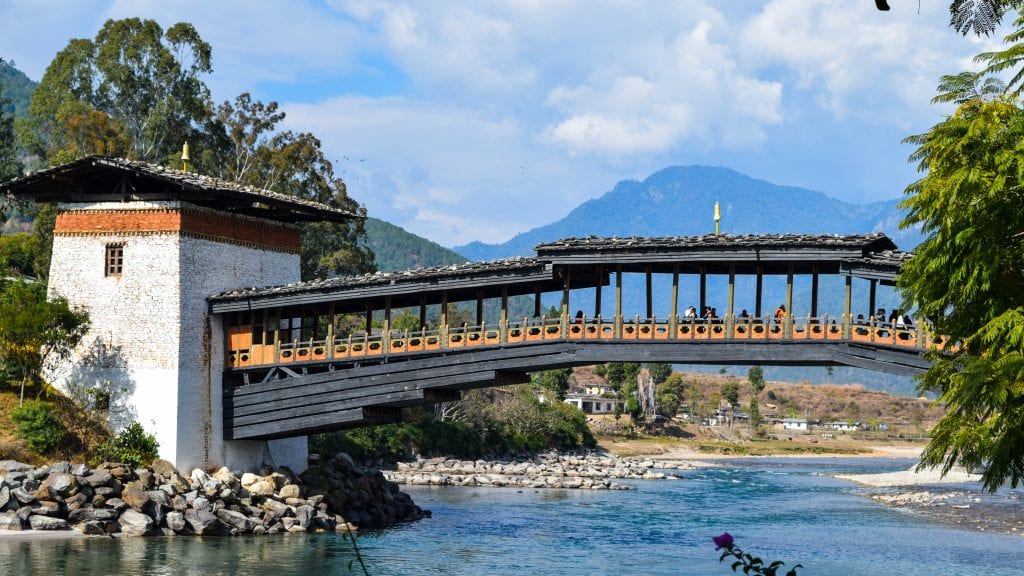 This wooden bridge connects the Punakha Dzong with the entrance gate.
 As there is a river flowing between the Dzong and the main gate, you need to cross a bridge to reach it. The original bridge was swept away by a massive flood, and the current one — a traditional wooden footbridge locally called a Bazam — was rebuilt more recently in its place.
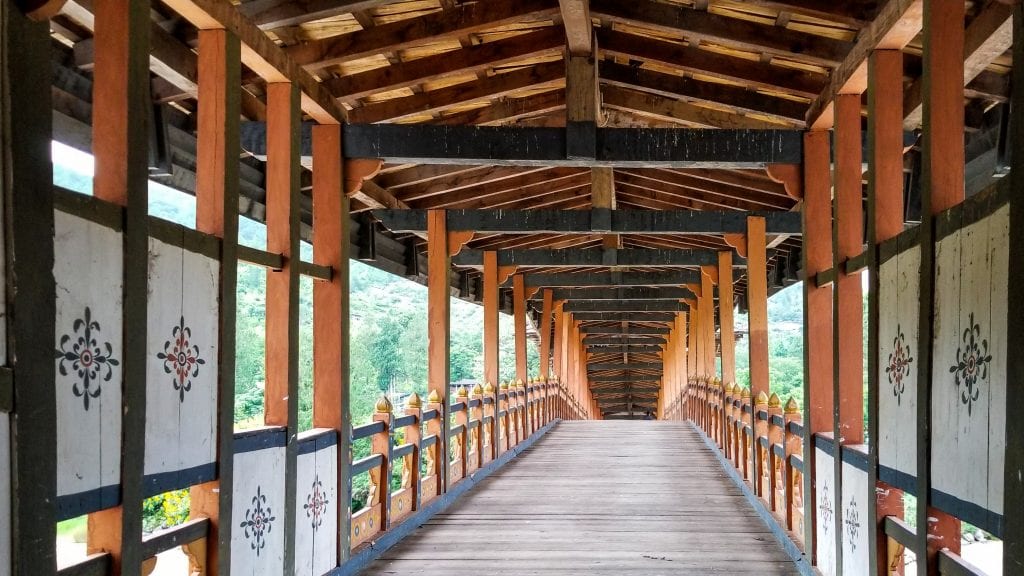 The bridge (locally known as Bazam) to Punakha Dzong is pretty.
 The bridge is made of wood, well designed, and has a gentle curve. From this roughly 55-metre-long bridge, you can see the rivers up close. Walking across it is quite an experience — you’ll feel like you’re entering a new world.
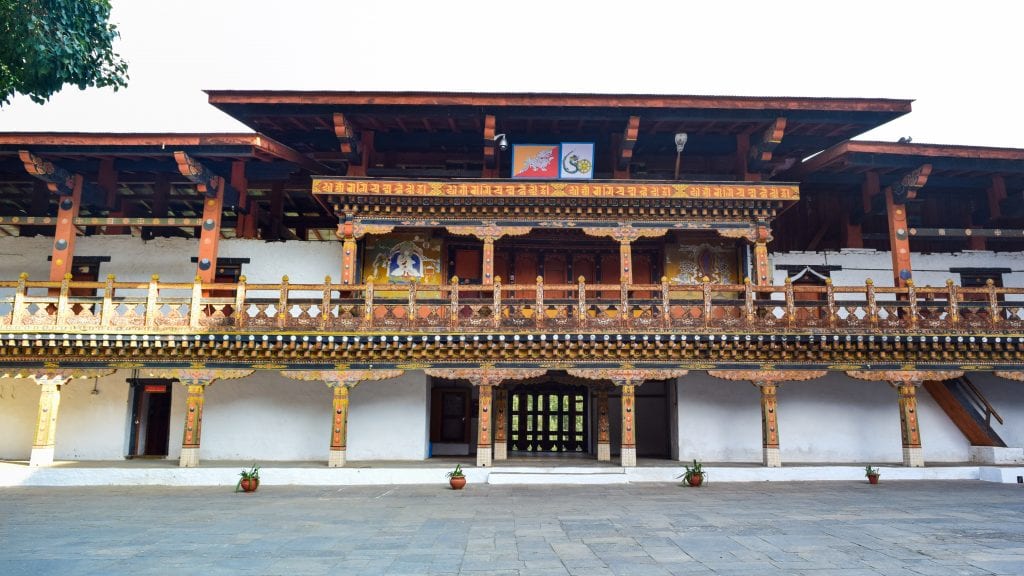 Courtyard of Punakha Dzong
 Once inside, you’ll find a courtyard surrounded by massive architecture. The buildings are painted white and feature intricate wooden design. No wonder Punakha Dzong is one of the most popular places to visit in Bhutan, alongside the Taktsang monastery.
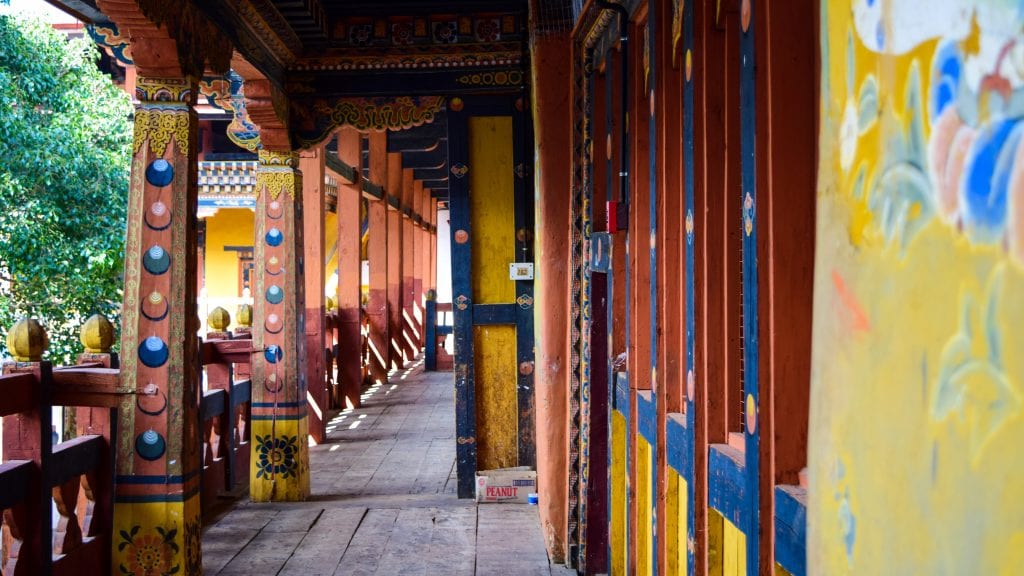 You are on the first floor, this passage leads to different rooms.
 Part of Punakha Dzong is used as the administrative centre of the Punakha district. It was the seat of the Bhutanese government before the capital moved to Thimphu in 1955. Whenever Bhutan has a new king, his crown is handed over at Punakha Dzong. The most recent king of Bhutan got married here in 2011, and every Bhutanese still reminisces about it.
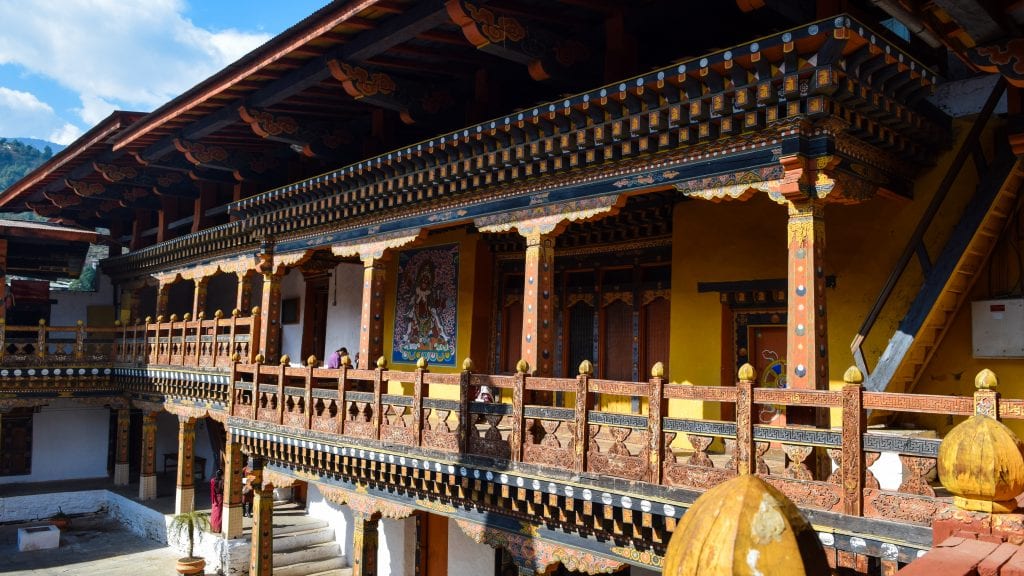 The rectangular shape of the corridor will take you to any places of the building.
 The Dzong is 180 metres in length and 72 metres wide. Unlike most Dzongs, which have two courtyards, Punakha Dzong has three. The central tower, also known as the Utse, is six storeys high.
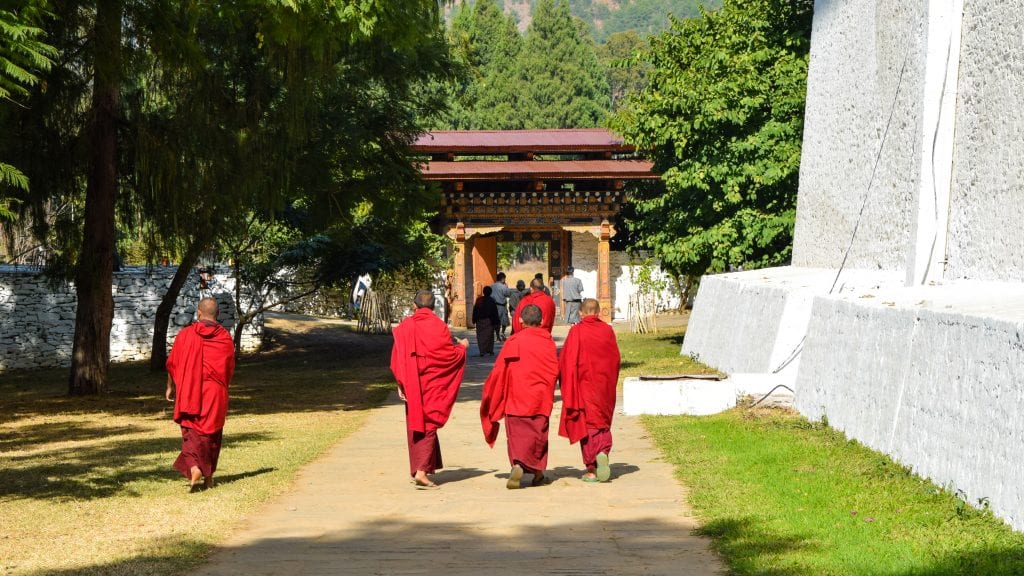 The young Lamas are taking a walk in the Dzong.
 Sadly, the beautiful Punakha Dzong has been affected by calamities over the centuries — flood, earthquake, and fire — and has gone through several rounds of reconstruction as a result.
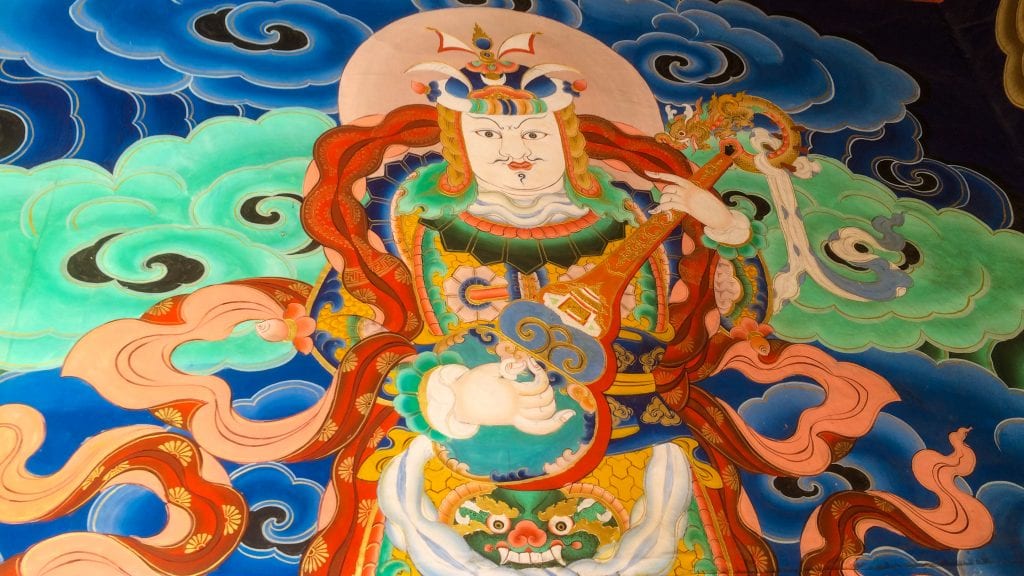 A colorful painting on a wall in Punakha Dzong.
 You will find colourful paintings on the walls. All of them tell stories and depict different creatures — some from the real world, some that seem entirely imagined.
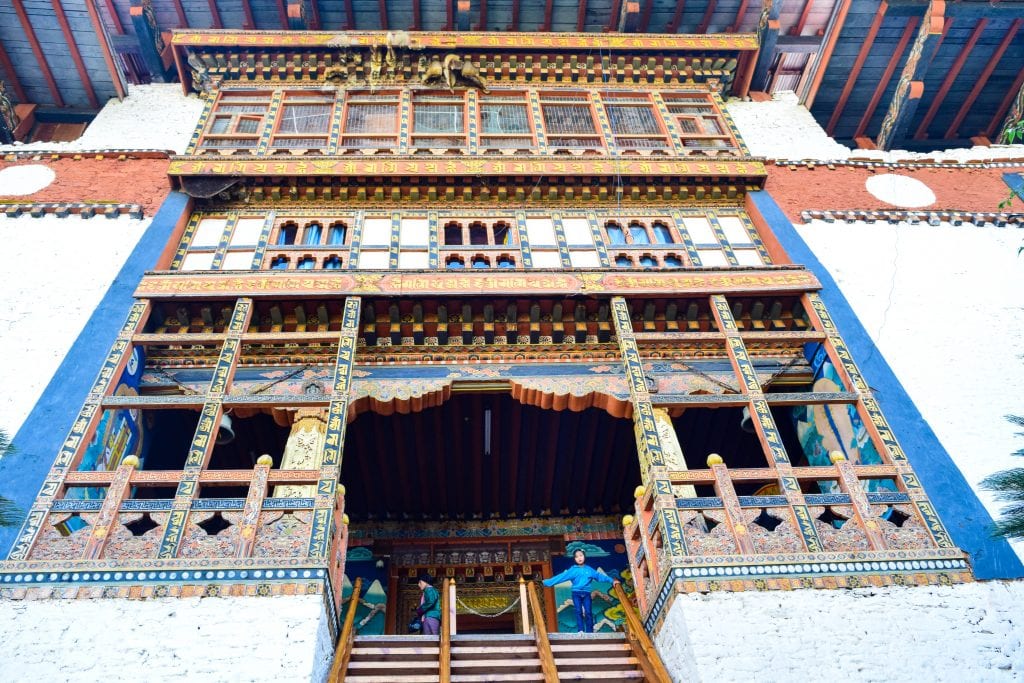 A part of the Punakha Dzong where you can enter with a steep stair.
 As mentioned earlier, Dzongs are built as forts. This one has two entrances: one through the bridge shown earlier, and another on the far side, with a very high gate and steep stairs — designed so that, under attack, the stairs could be pulled up to make entry nearly impossible.
Chimi Lhakhang – One of the interesting Places to visit in Punakha
This place is for adults!
The yellow-roofed Chimi Lhakhang is also known as the fertility temple, where newlyweds and childless women come to pray for children. You’ll understand why from the wall paintings (a phallus with hairy testicles ejaculating). You might find it a bit odd to bring children along, but it’s well worth a visit regardless.
The temple is dedicated to Lama Drukpa Kunley, a 15th-century Tibetan monk known across Bhutan as the “Divine Madman” for his unorthodox, often deliberately shocking teaching methods, which he believed cut through hypocrisy more effectively than conventional preaching. The phallus imagery found here and on houses throughout the surrounding area is regarded locally not as crude but as a genuine symbol of protection against evil spirits and misfortune — a piece of context that makes the temple far more interesting than the initial surprise of seeing it might suggest.
People also come here to name their children, and many leave with the name Chimi. You reach the temple by a short hike through the surrounding rice paddies.
Hike to Khamsum Yulley Namgyal Chorten
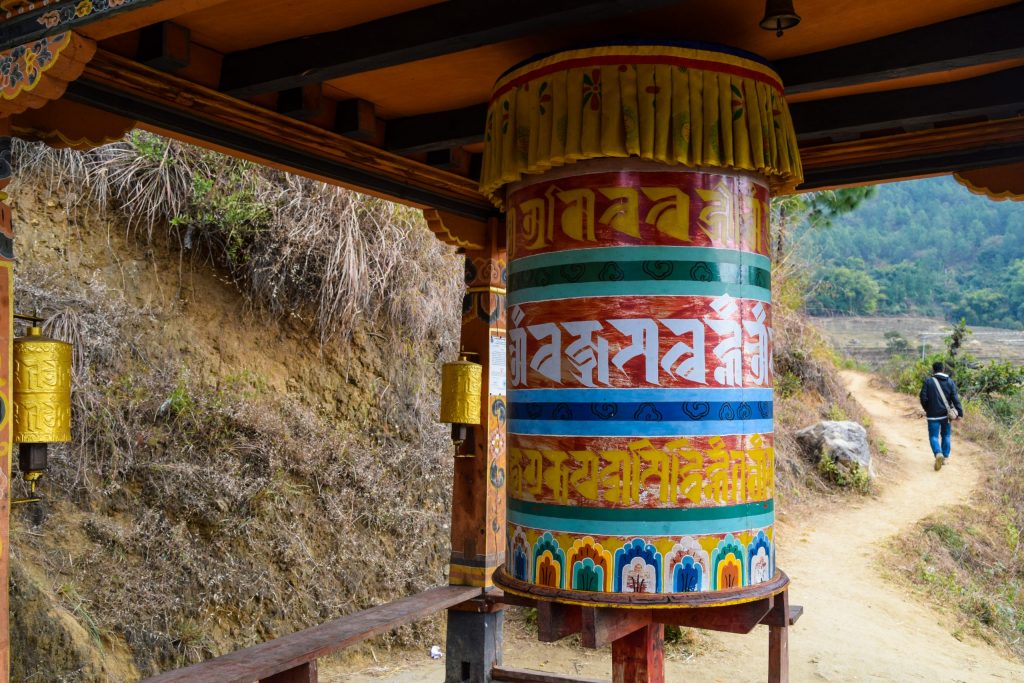 On my way to Khamsum Yulley Namgyal Chorten – that’s the big prayer wheel.
 I love to hike. It gives me pleasure and provides a better view of the areas I’m travelling through. So I asked the locals about a short hike, and they suggested visiting Khamsum Yulley Namgyal Chorten. My journey began on a narrow muddy path, crossing a large prayer wheel.
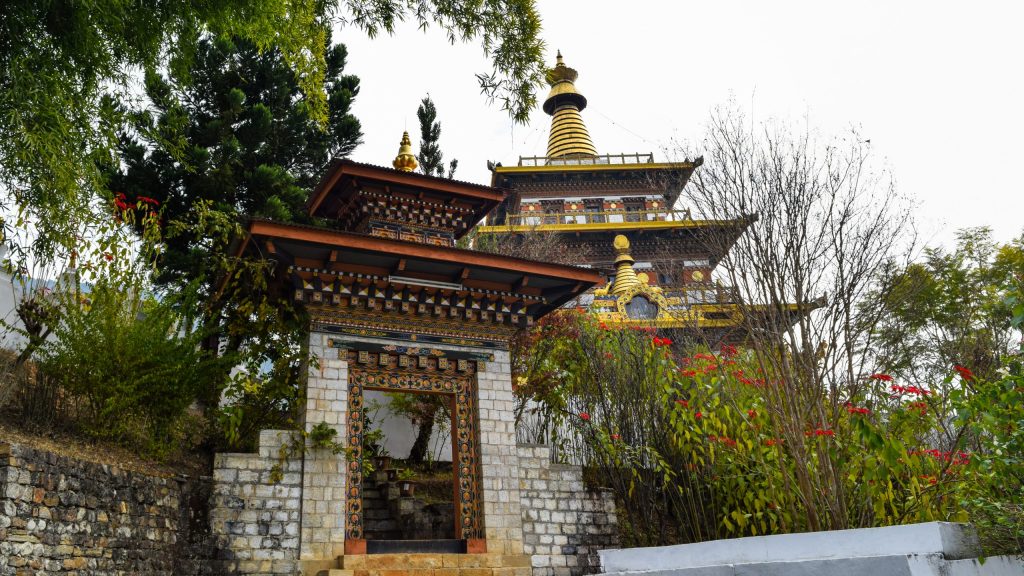 Entrance of Khamsum Yulley Namgyal Chorten, Bhutan
 About 15 minutes of quick hiking brought me to the top, where the chorten sits. I love the entry gates of Bhutanese architecture — simple, colourful, and majestic all at once.
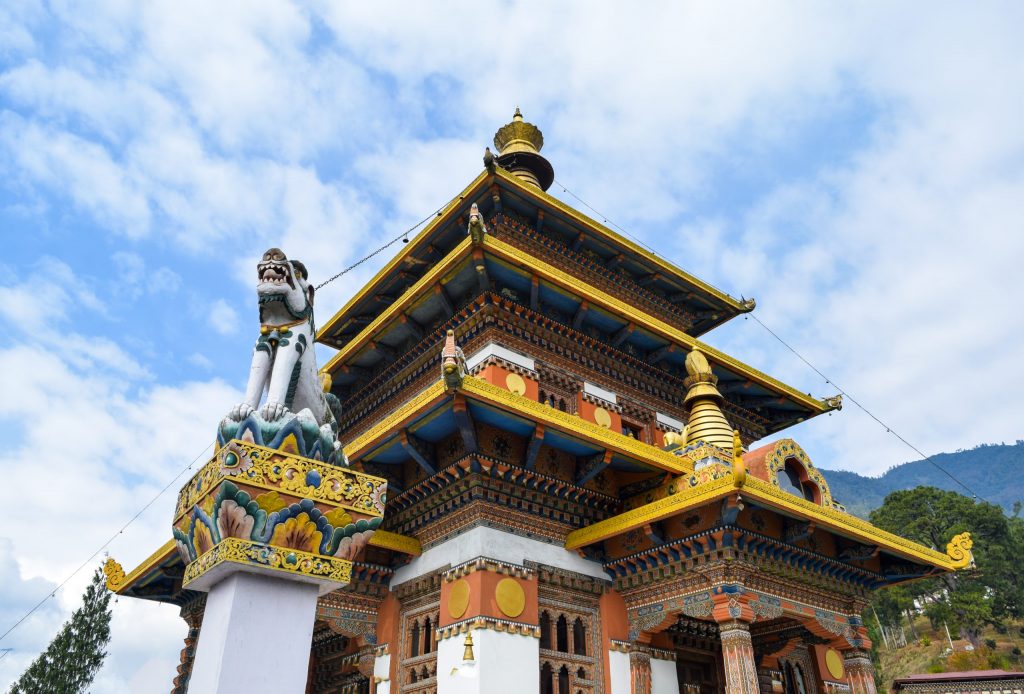 Khamsum Yulley Namgyal Chorten lies on top of a hill in Punakha.
 There wasn’t a soul present at the chorten, so we had it entirely to ourselves. You get a panoramic view of the valley from here, since it sits on a hilltop. The Queen Mother of Bhutan built it in 2004 to bring peace and drive away evil spirits.
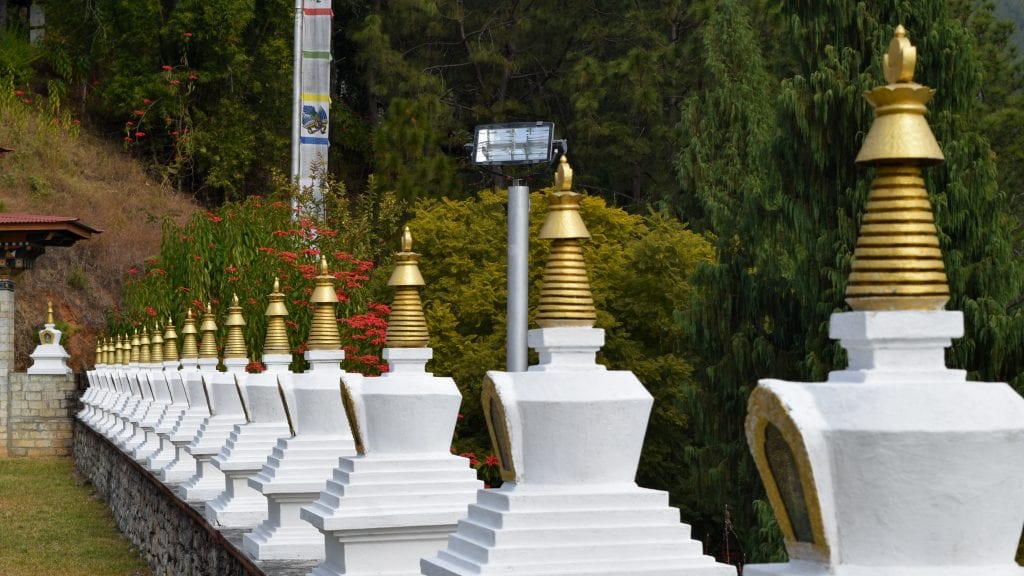 Simple but beautiful golden stupa.
 The base of the stupa is white with a golden top. Although built in recent times, the Bhutanese made sure to keep the design faithful to tradition. It’s open seven days a week, from 6am to 6pm.
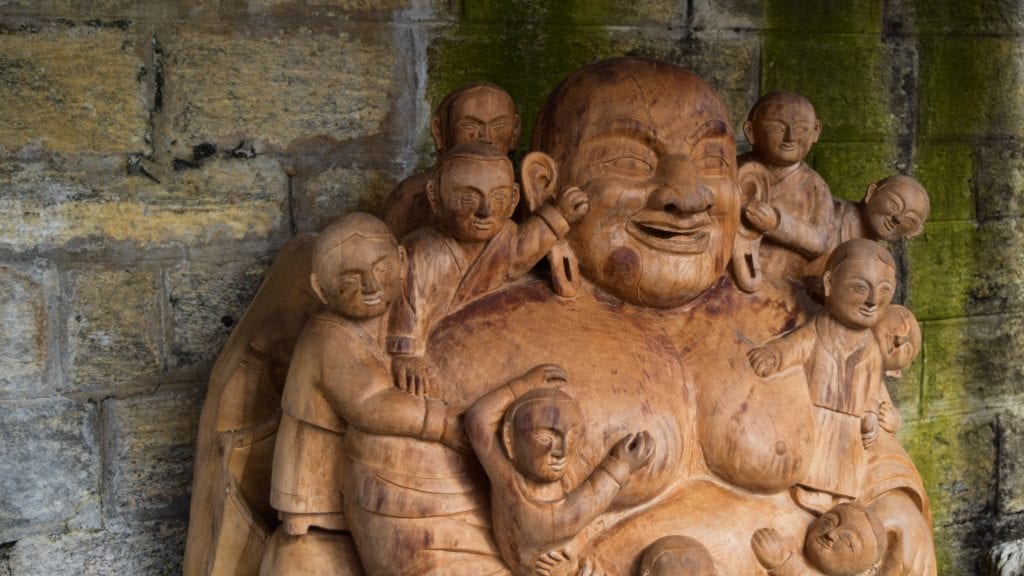 A funny wooden sculpture in Khamsum Yulley Namgyal Chorten
 I found this funny wooden sculpture nearby — a large figure with big ears, smiling, being held up by many smaller figures, some appearing to hang off him entirely. I couldn’t work out the deeper meaning of it. Maybe it’s simply a playful way of portraying a deity. I’m honestly not sure.
There are actually two routes up to the chorten — one via the suspension bridge (roughly 15–20 minutes), and a slightly longer alternative path. Either way, wear proper shoes; the path can be muddy after rain.
Sit in the Lap of Mo Chu and Pho Chu
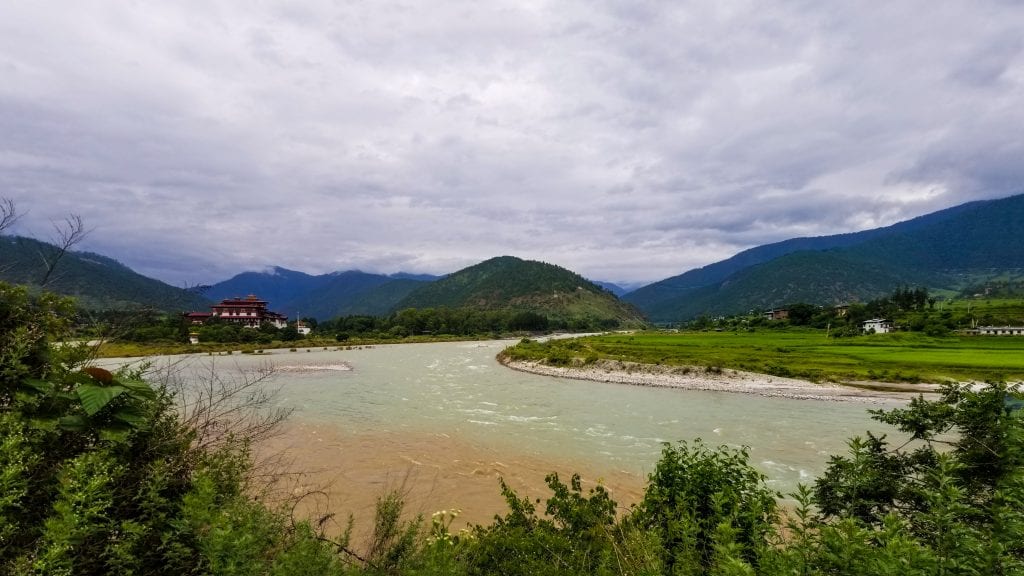 Calm and serene river with strong flow in Punakha
 Just outside Punakha Dzong, you’ll find plenty of peaceful spots to sit, relax, and take in the surrounding nature in the lap of the river. In fact, this is the confluence of two rivers — Mo Chhu and Pho Chhu. Mo Chhu is considered the female (mother) river, while Pho Chhu is the male (father) river. Look closely at the water and you’ll notice the two rivers actually carry slightly different colours where they meet.
Water Rafting – Trigger Your Adrenaline Rush
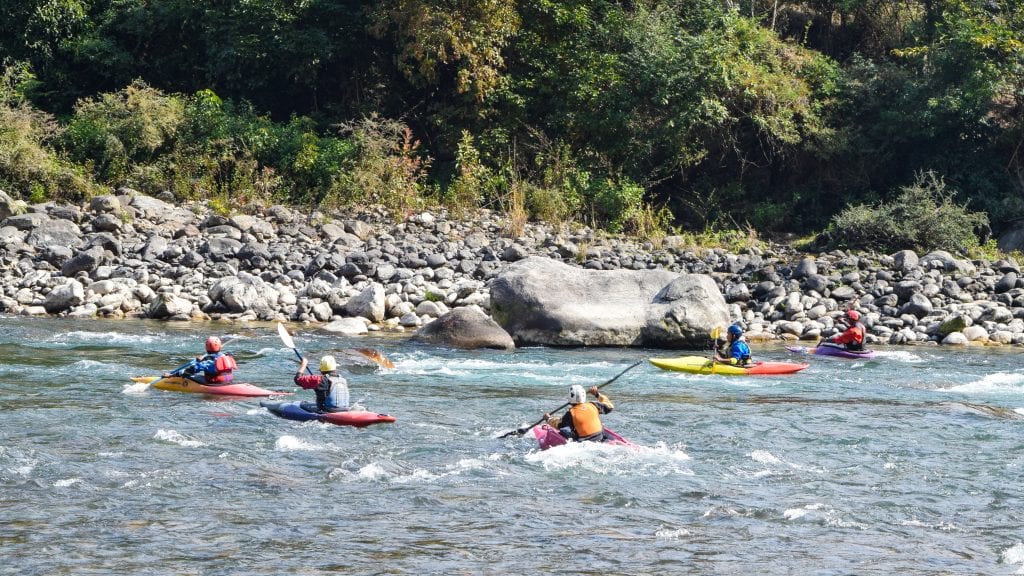 A group of people are busy with handling their vessel in Punakha
 If you’re an adventure seeker, Punakha is a fantastic place for you. You can experience white water rafting here on the Mo Chhu and Pho Chhu rivers. With only grade 4 to 5 rapids over a 10 to 12 kilometre stretch, it’s manageable without being extreme. The route usually ends near Punakha Dzong, and it’s a great way to see the fortress from an entirely different angle.
Sangchhen Dorji Lhuendrup Nunnery
Less visited than the Dzong or the suspension bridge, this nunnery sits on a ridge above the valley and is worth the detour if you have an extra hour. It houses one of the larger communities of Buddhist nuns in Bhutan, and the walk up rewards you with sweeping views back over the Punakha valley — a genuinely peaceful stop if the crowds at the main sights have you wanting somewhere quieter.
Photowalk in Punakha
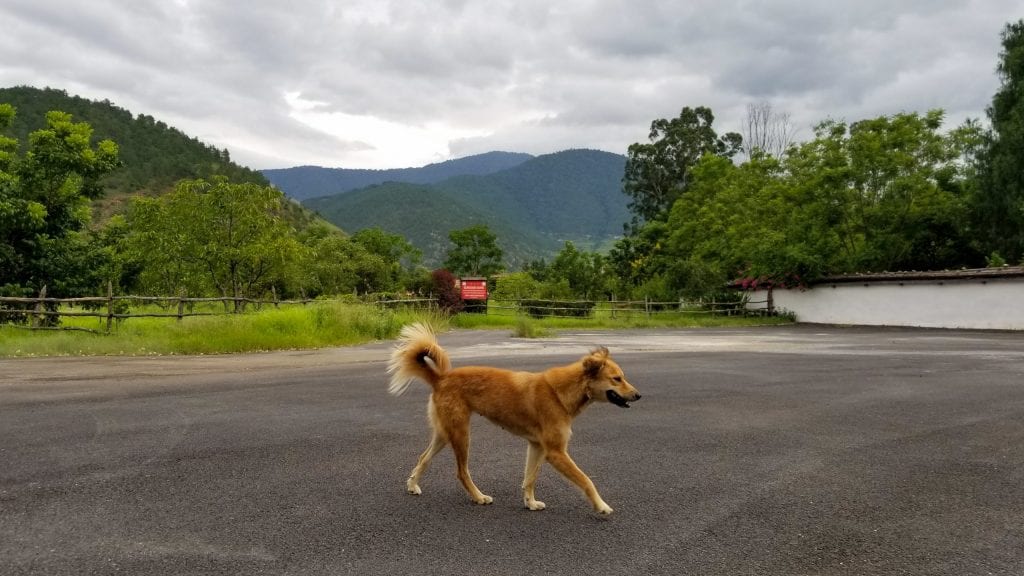 You will find plenty of Dogs in Bhutan.
 Punakha offers plenty of photowalk opportunities. Unlike more conventional places, it doesn’t have a single specific trail for capturing good moments.
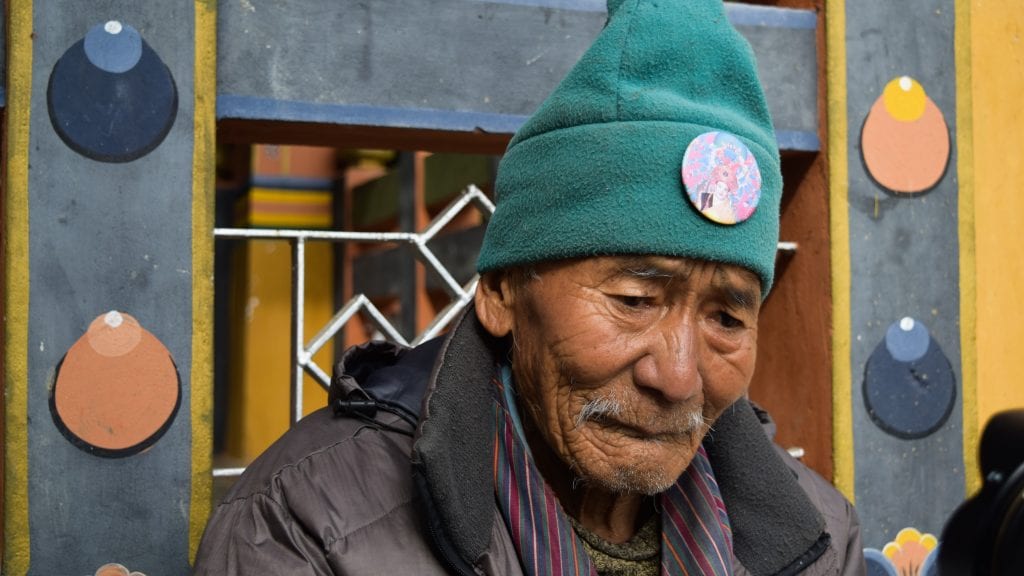 This old man was sitting on his own wearing a badge on his hat.
 You can walk randomly through any part of the valley and find countless good frames. My suggestion would be to head toward the small chortens and walk through the villages.
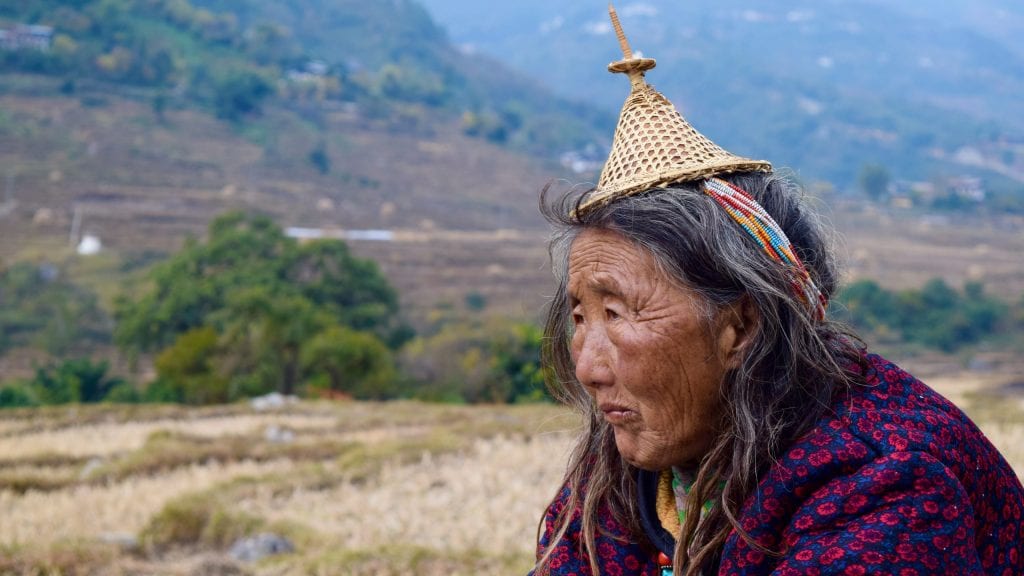 How old is she? She couldn’t tell but she reminds me of my Grandmother.
 I’m not entirely comfortable photographing strangers, but if you’re a portrait lover, you’ll find plenty of good opportunities among the locals. While taking photos, a few people asked for money — I chose not to pay, since it can encourage a habit that isn’t good for the community long-term.
Where to Stay in Punakha
Punakha’s accommodation is smaller and more spread out than Thimphu’s, ranging from riverside lodges to a genuinely excellent boutique resort.
Dhensa Boutique Resort is the standout luxury option — set on a hillside overlooking the valley’s terraced fields, with elegant rooms and consistently strong reviews for both setting and service.
Hotel Lobesa is a smaller boutique property built into the hillside, run personally by its owner — reviewers regularly mention the warmth of the welcome as much as the view.
RKPO Green Resort and Punakha Riverside Lodge are both well-regarded mid-range options directly on the river, a good base if you want to be close to the water without the resort price tag.
Most Punakha hotels are arranged as part of your overall Bhutan tour package. If you’re booking independently, mention proximity to Punakha Dzong or the suspension bridge specifically when comparing options, since the valley is spread out enough that location matters more here than it does in central Thimphu.
A 2-Day Punakha Itinerary
Day 1: Arrive via Dochula Pass, stopping for photos at the 108 chortens if the weather is clear. Head straight to Punakha Dzong and spend a couple of unhurried hours there — it rewards slow exploring more than most Dzongs. Cross the suspension bridge in the afternoon, and if you have energy left, take the short hike up to Khamsum Yulley Namgyal Chorten from there. End the day with a quiet riverside walk near the confluence.
Day 2: Start with Chimi Lhakhang and the walk through the rice paddies to reach it. If white water rafting is on your list, late morning is a good window before the afternoon light gets harsh for photos. Round off the day with a visit to Sangchhen Dorji Lhuendrup Nunnery for a quieter, less-visited perspective on the valley before heading back toward Thimphu or on to your next stop.
If you only have one day, prioritise Punakha Dzong, the suspension bridge, and one of the two hikes rather than trying to fit everything in.
Punakha, Thimphu, and Paro — How They Compare
Since most Bhutan itineraries move between all three, here’s honestly how they differ rather than which is “best”:
- Thimphu is the cultural and administrative heart of the country — Tashichho Dzong, the National Memorial Chorten, museums, the weekend market, and the closest thing Bhutan has to city life.
- Paro is where you land, and where Bhutan’s most iconic sight — Tiger’s Nest Monastery — sits, along with dramatic mountain scenery right from the airport.
- Punakha is the scenic, lower-altitude counterpoint to both — warmer, greener, built around a river confluence, and the best of the three for combining sightseeing with light adventure like hiking and rafting.
None of the three substitutes for the others — most complete Bhutan trips move through all three in sequence, which is exactly why the internal links throughout this guide connect them.
Frequently Asked Questions
Is Punakha worth visiting?
Yes. Punakha Dzong is widely considered the most beautiful fortress in Bhutan, sitting at the confluence of two rivers, and the valley combines that architecture with a suspension bridge, a fertility temple, a hilltop chorten, and white water rafting — a genuinely well-rounded stop on any Bhutan itinerary.
How many days do you need in Punakha?
One full day covers the highlights comfortably — Punakha Dzong, the suspension bridge, and either Chimi Lhakhang or the Khamsum Yulley Namgyal Chorten hike. Two days allows a more relaxed pace with time for both hikes and white water rafting.
How do you get to Punakha?
By road only — Punakha has no airport. From Thimphu it’s about 72 to 77 km, roughly 2.5 to 3 hours via the scenic Dochula Pass. From Paro it’s about 110 to 125 km, roughly 4 to 5 hours. As with the rest of Bhutan, foreign visitors (apart from Indian, Bangladeshi, and Maldivian nationals) need to travel with a licensed local operator.
How long is the Punakha suspension bridge?
About 160 metres, making it one of the longest suspension bridges in Bhutan. It crosses the Po Chhu river close to Punakha Dzong and is draped in prayer flags along its length.
What is Chimi Lhakhang known for?
It’s Bhutan’s fertility temple, dedicated to Lama Drukpa Kunley, a 15th-century monk known as the Divine Madman for his unconventional teaching methods. Newlyweds and couples hoping to conceive visit to pray, and the temple and surrounding houses are decorated with phallus imagery, regarded locally as a symbol of protection rather than anything crude.
Did you like the Places to visit in Punakha?
I visited different places in Punakha twice — once in August and once in December. If you look closely at the photos, you should be able to spot the differences. Some are brownish, others lush green. I wrote a guide about the best time to visit Bhutan, which you might want to read before planning your trip.
Locations of Places to Visit in Punakha
Continue Your Bhutan Trip
Booking Your Bhutan Trip
- Confirm your visa, SDF, and transport arrangements with a licensed Bhutanese tour operator before you fly
- Dhensa Boutique Resort, Hotel Lobesa, RKPO Green Resort, or Punakha Riverside Lodge for accommodation (links to be added — see note at top of file)
Liked the Places to Visit in Punakha? Pin It!
Every guide on A Walk in the World is written to help you have the best possible trip. I only recommend hotels, tours, and experiences I’d genuinely choose myself, and I don’t accept payments or sponsorships from operators in exchange for positive coverage. Some of the booking links on this site are affiliate links, which means I may earn a small commission if you book through them, at no extra cost to you. Thanks for trusting my guides and supporting the blog!
Please visit:
Our Sponsor
Related Posts


Virgin Hotels Las Vegas Celebrates the Official Launch of Cherry Rewards
LAS VEGAS – Spending time at Virgin Hotels Las Vegas…

Los Angeles Chargers players rescued from Dallas hotel elevator
article INGLEWOOD, CALIFORNIA - AUGUST 12: Helmets of the Los…