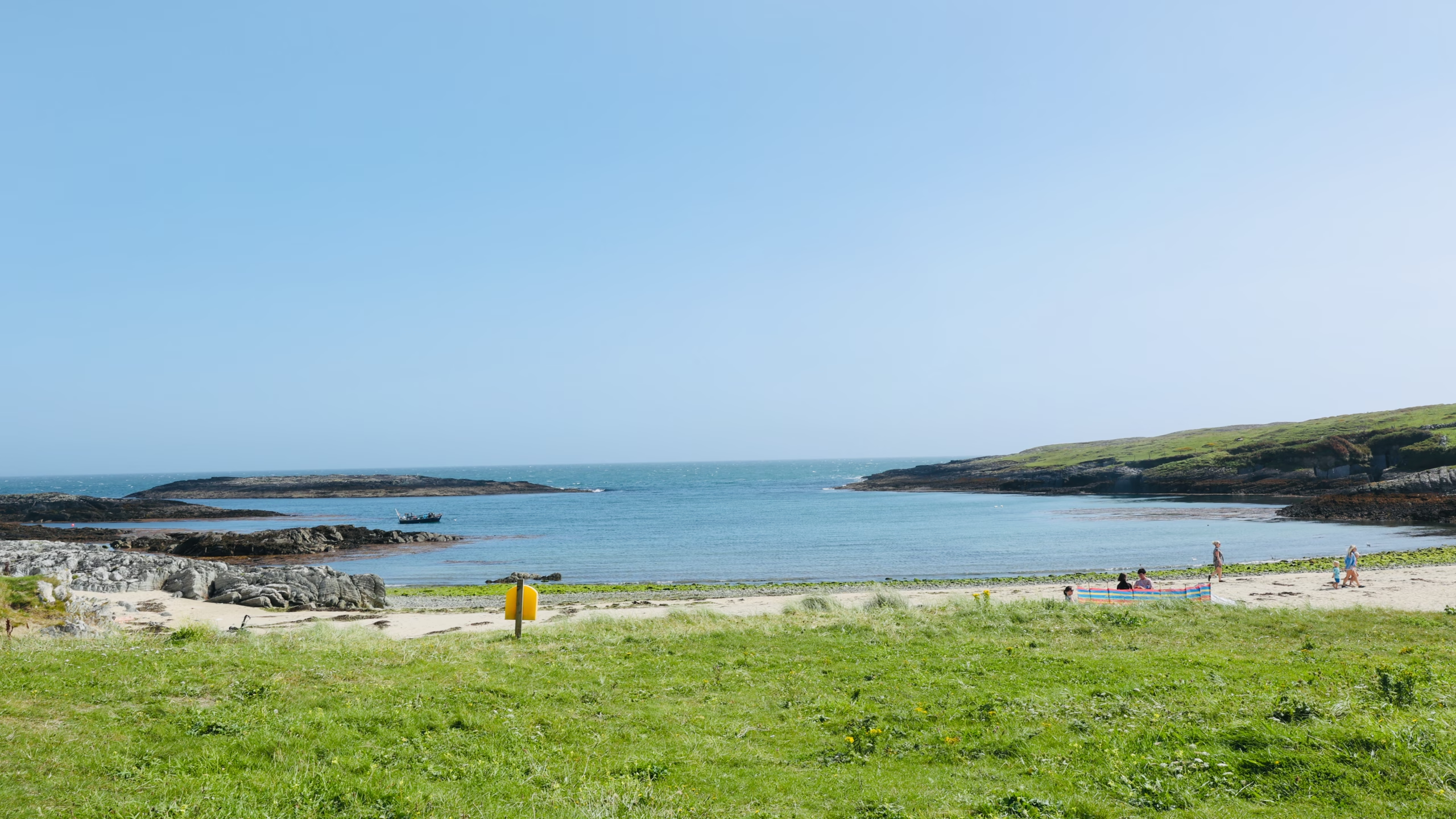
Galley Cove Beach is one of West Cork’s quietest and most rewarding stretches of sand, a small sheltered cove near Crookhaven that most visitors drive straight past. The water is calm and remarkably clear, the crowds are thin even in August, and the headland directly above hides one of the most surprising stories on the whole Mizen Peninsula. Here’s what to expect at Galley Cove, how to find it, and why it’s worth pulling over for.
The Beach That Doesn’t Advertise Itself
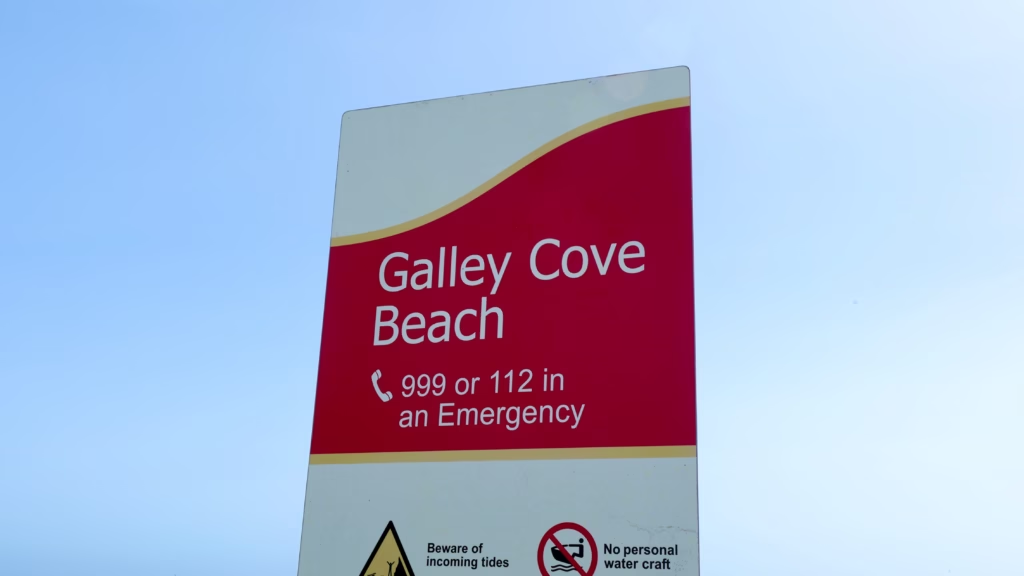 The Galley Cove Beach sign — your landmark for finding the beach
There’s a particular pleasure in finding a beach nobody told you about.
You’re driving the Mizen Peninsula, following the road west toward Crookhaven, and somewhere along the way, if you’re paying attention and catch the small sign, you turn down a lane and arrive at Galley Cove Beach. Sandy, sheltered, the water remarkably clear, and a handful of people who clearly know something most visitors don’t.
In August, on a day when every famous Irish beach is packed, Galley Cove has a few families and a scattering of locals. That’s the whole crowd.
It’s no accident. Galley Cove doesn’t appear on most Ireland itineraries. It isn’t a Blue Flag beach with a big car park and ice cream vans. It’s a small, sheltered cove on the Wild Atlantic Way, sitting inside a designated Special Area of Conservation, and it’s quietly close to perfect.
What Galley Cove Beach Is Actually Like
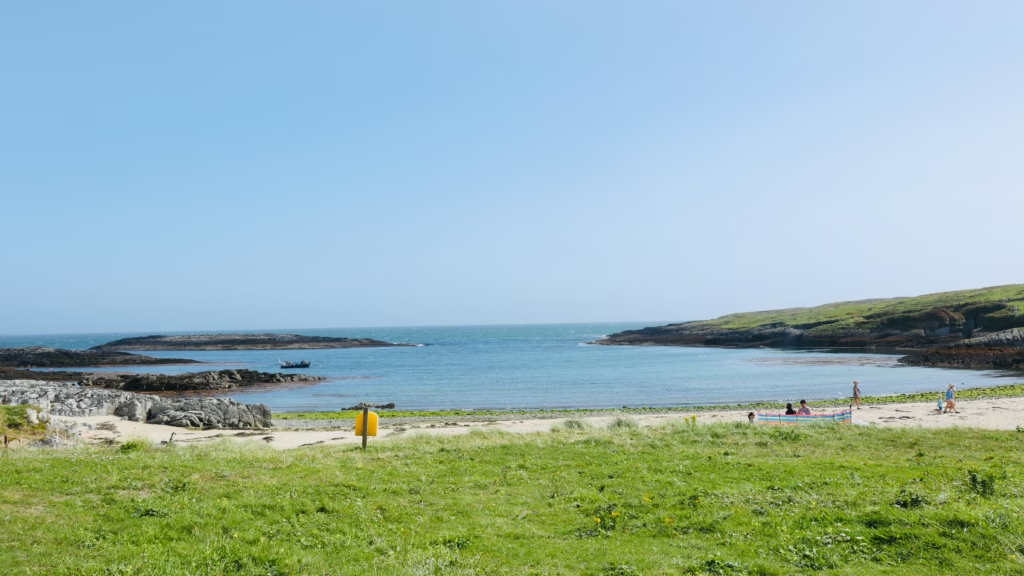 Galley Cove Beach near Crookhaven — sheltered, clear, and remarkably uncrowded even in peak summer
The cove faces roughly east, which shelters it from the prevailing Atlantic wind that batters the west-facing beaches further along the peninsula. The water is calm in a way the open-Atlantic beaches nearby never manage, and the sand is clean and pale.
It isn’t a big beach, maybe 250 metres of sand at most, tapering into rocky outcrops at each end. The shape is a neat crescent, tucked behind low headlands on either side. And the water is startlingly clear; the Special Area of Conservation status protects the ecosystem by law, and you can see the difference.
The afternoon I was there, late August, about as good as West Cork gets, the sky was blue and the water was, somehow, a colour you’d expect in the Mediterranean rather than in Ireland. Not the temperature, mind you, that stayed firmly Atlantic, but the clarity and the light together produced a blue that felt earned rather than borrowed.
The Marconi Story
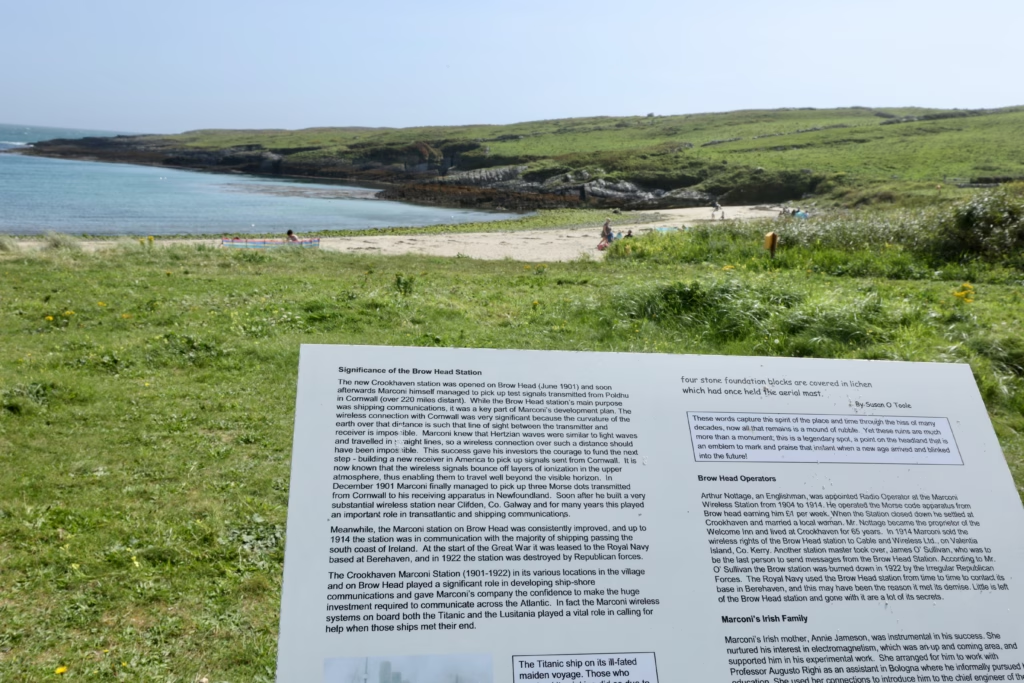 The Marconi wireless station information board at Galley Cove — the Titanic and Lusitania connection is explained here
What sets Galley Cove apart from other Irish beaches isn’t only the water. It’s the history sitting directly above it.
The headland over the cove is Brow Head, and Brow Head was home to one of Guglielmo Marconi’s earliest wireless stations. In 1901 he set up a transmitting and receiving station here as part of his pioneering work on long-distance radio. The Crookhaven station became an important link in ship-to-shore communication through the early 20th century and, most strikingly, the Marconi wireless systems carried by both the RMS Titanic and the RMS Lusitania connected into this same network when those ships sent their distress calls. The station was destroyed in 1922, and a sculpture and information board in the beach car park now mark what it meant.
Beside the board stands the memorial the community raised to the station, turned out to face the sea.
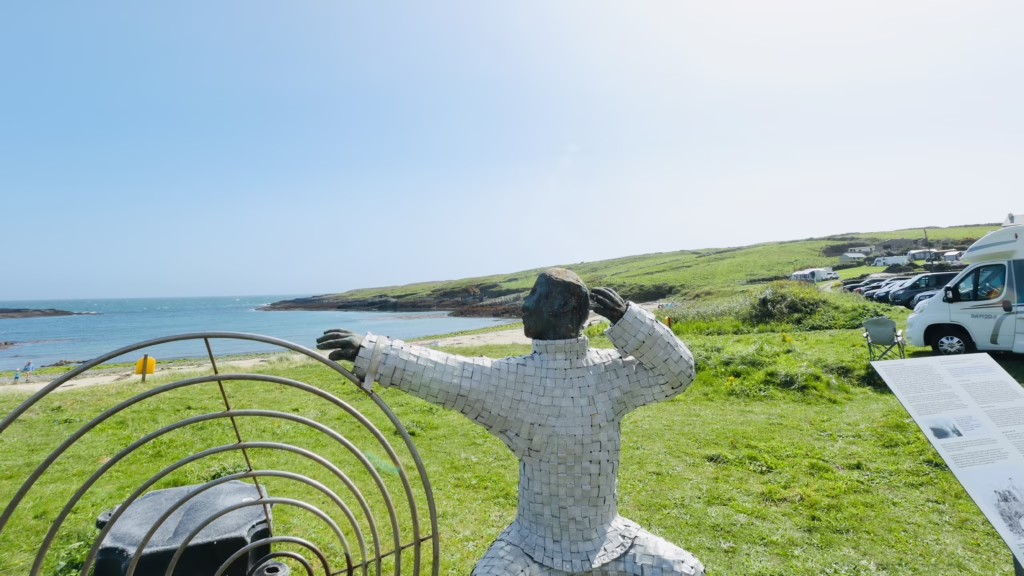 The Marconi sculpture at Galley Cove, commemorating the wireless station on Brow Head above
That link, between a quiet beach on a quiet Irish peninsula and one of the great communications breakthroughs of the 20th century, is exactly the sort of thing that makes West Cork so endlessly rewarding. The history is everywhere here, usually unmarked, usually missed. Galley Cove is a lovely beach. It also happens to sit below the place that helped change how the world talked to itself.
Swimming at Galley Cove
That sheltered aspect makes Galley Cove one of the safer swimming spots on the Mizen Peninsula. The water is calmer than on the open Atlantic beaches, the tides are gentle, and the sand shelves gradually.
In August the water is cold, this is the Atlantic whatever the colour hints at, but not punishingly so. Wild swimming has taken off across West Cork in recent years, and Galley Cove has its share of regulars who swim it year-round.
A couple of practical notes before you go in. The beach sign warns about incoming tides, and the cove can fill quickly at high water, so check the tide times before you settle in near the edge. There are no lifeguards, and personal watercraft aren’t allowed.
Getting There
Galley Cove Beach is about 1.5km west of Crookhaven village, on the road that carries on toward Brow Head.
From Crookhaven, follow the road west out of the village and watch for the beach sign on the left after roughly 1.5km; it’s a standard Irish beach sign and easy enough to catch. From Mizen Head it’s about 15 minutes by car, heading north-east toward Crookhaven. There’s a small free car park beside the beach that fills on warm summer weekends but is manageable in shoulder season. There are no facilities at the beach itself, though Crookhaven village, 1.5km back, has a pub and a few food options. Entry is free.
Fitting Galley Cove into the Day
Galley Cove works beautifully as a 30-minute stop inside a longer day on the peninsula. The obvious pairing is with Brow Head, the headland right above it, allowing an hour for the walk up and back, and with Crookhaven village, 15 minutes away for a coffee or a look at the harbour.
As part of a full day from Cork:
- Seskin, for the Bantry Bay viewpoint on the way down
- Galley Cove Beach, swim or explore, 30 to 45 minutes
- Brow Head walk, around an hour
- Three Castle Head / Dunlough Castle, 2 hours
- Mizen Head Signal Station, 1.5 hours
- Back via Schull
Full Mizen Peninsula day trip guide from Cork
Why Galley Cove Is Worth Stopping For
It isn’t the most spectacular beach in Ireland, nor the most dramatic or the most famous. But it’s sheltered, clean, clear and almost entirely uncrowded, and it comes with a genuinely remarkable story sitting right overhead.
In a country where the well-known beaches can be overrun in summer, Galley Cove is the kind of find you feel quietly smug about. Stop here. Swim if you’re brave. Read the Marconi board. Then look up at Brow Head and picture what was happening on that headland 120 years ago, before driving on. The peninsula still has plenty left to give.
Nearby
Planning a West Cork road trip but prefer not to drive? The West Cork to Mizen Head Full Day Tour from Cork covers Galley Cove, Brow Head and Mizen Head in one guided day, a good option if you’d rather leave the narrow lanes to someone else.
Have you been to Galley Cove Beach? Tell me what you made of it in the comments.
Found this useful? Save it to Pinterest for your West Cork planning.
Please visit:
Our Sponsor
Related Posts

Sandos Hotels & Resorts Debuts Additions and Renovations Across its Mexico Portfolio
Playa del Carmen – After a busy year of development,…

From hype to frontline impact: Building trust through thoughtful AI
AI is everywhere. Open LinkedIn and it’s a firehose of…
Why These Hotels in London, the Maldives, and New York City Are Turning Heads in 2025
ME London Photo: Courtesy of Me London 336-337 The Strand,…