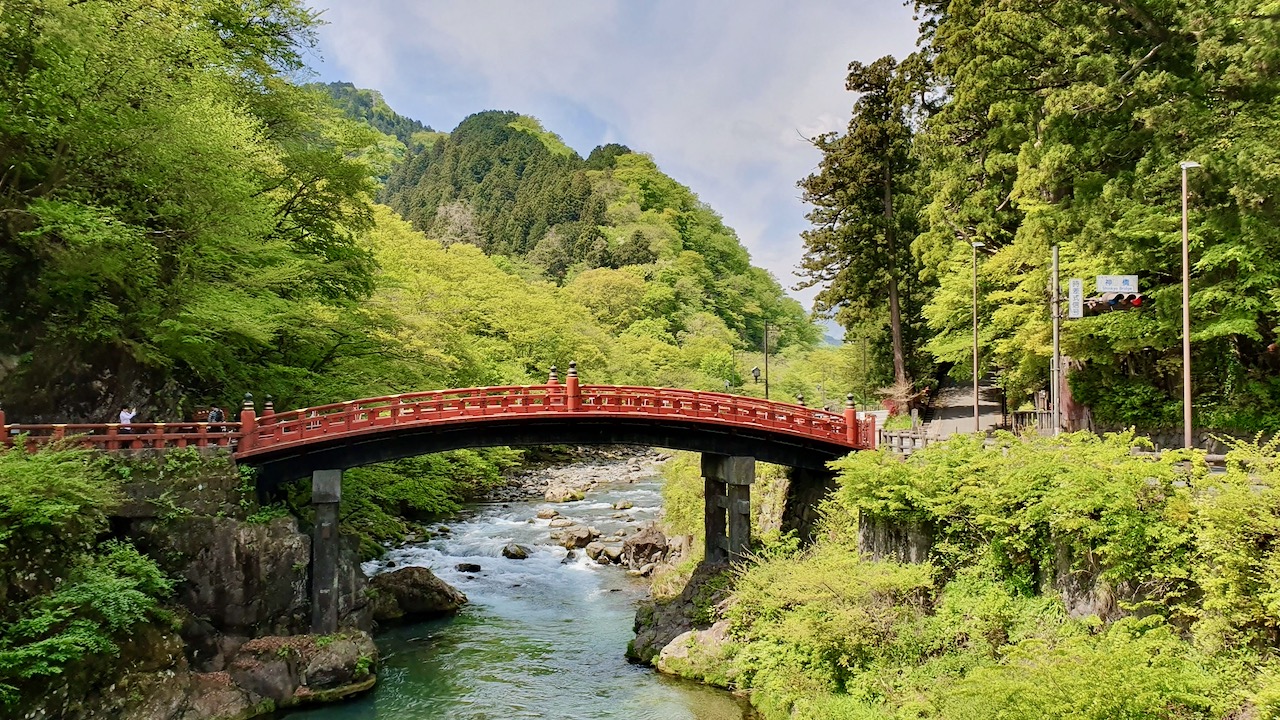
Nikko is a small but beautiful city in Japan. It is located in Togichi prefecture in a mountainous setting and is a popular tourist weekend gateway from Tokyo. This photo guide will tell you about a list of things to do in Nikko.
I love nature. A remote scenic village attracts me more compared to a megacity. Yes, I know — a city like Tokyo has many things to offer — amusements, nightlife, food, people — but I would always choose a quiet lake on the backdrop of a snow-capped mountain over a nightclub.
So whenever I visit Japan, I run somewhere from Tokyo. Somewhere scenic. The dilemma is that most charming places require hours of travel. Nikko is a refreshing exception.
Just 2 hours from Tokyo by train, Nikko packs more into a small area than almost anywhere else in Japan — UNESCO World Heritage shrines, a spectacular waterfall, a volcanic crater lake, mountain hiking, and natural hot springs, all accessible without a car. When I boarded a train from Tokyo on Friday night, I did not know what to expect. I returned on Sunday night with some of the best memories of any Japan trip I have taken.
Visiting Japan for the first time? Read these essential tips for Japan.
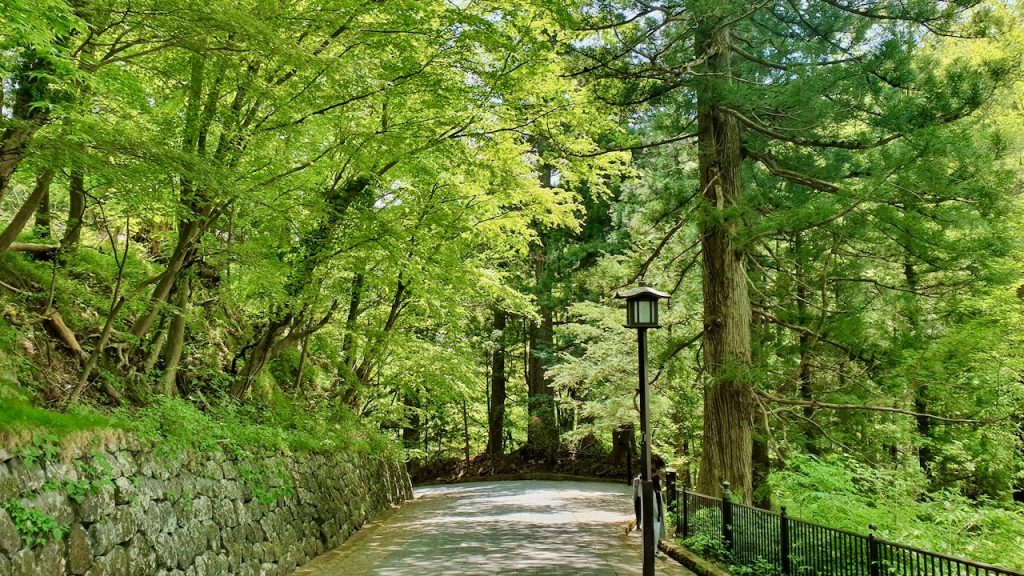 A green forested path in Nikko
QUICK FACTS — NIKKO (2026)
- Distance from Tokyo: ~150 km north (Tochigi Prefecture)
- Journey time: ~2 hours by Tobu Limited Express from Asakusa
- Best time to visit: November (autumn foliage) or late April (cherry blossom)
- How many days: 1 day possible; 2 days ideal
- Pass to buy: Nikko World Heritage Area Pass (2-day unlimited buses, ¥2,000)
- Main attraction: Tosho-gu Shrine — UNESCO World Heritage, mausoleum of Tokugawa Ieyasu
- ️ 2026 Update: Akechidaira Ropeway closed for renovations until September 2027
- Car needed: No — all major sites accessible by bus with the Nikko Pass.
How to Get from Tokyo to Nikko
Tobu Railway — Cheapest and Most Convenient
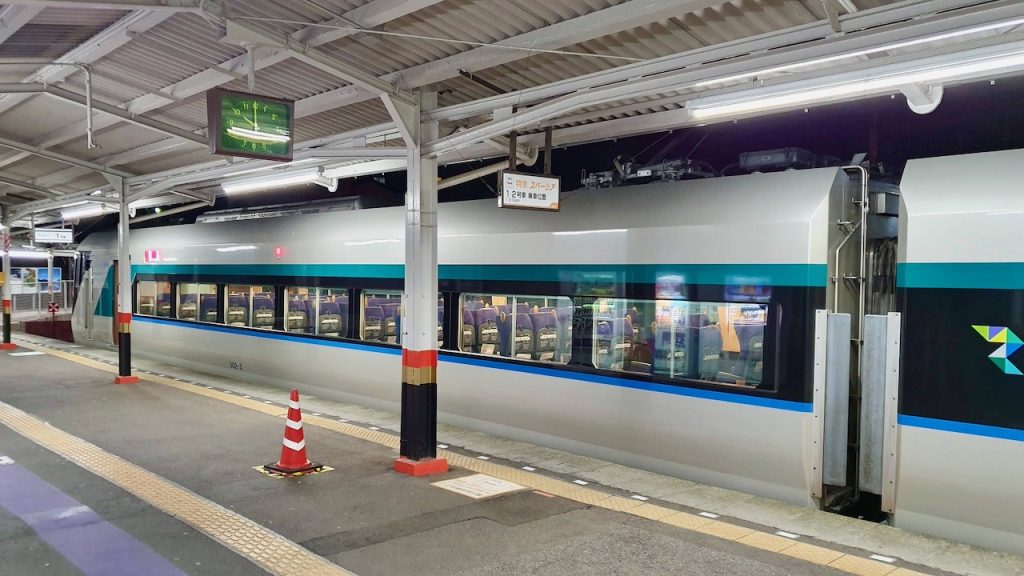 It’s 10:00 PM in Nikko and my train has just arrived.
The best route is the Tobu Limited Express (Spacia or Revaty) from Asakusa Station directly to Tobu-Nikko Station — approximately 1 hour 50 minutes, around ¥2,700–3,050 one way. No transfers. The earliest reasonable morning departure leaves Asakusa around 7:30 AM, arriving in Nikko before 10 AM.
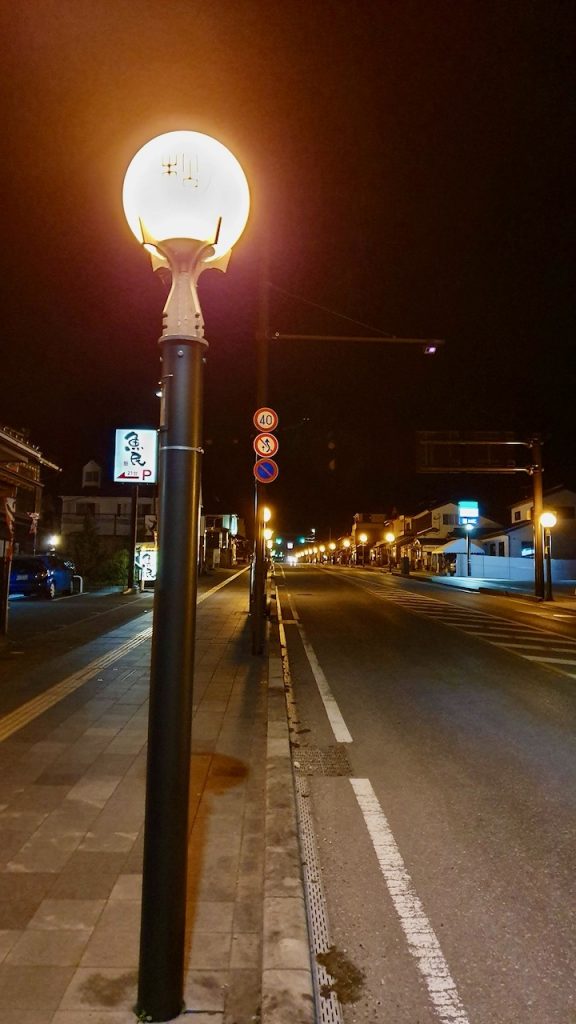 There was not a single person on the street at night in Nikko.
Take the first morning train. By arriving before 10 AM, you beat the day-trippers from Tokyo who fill the shrine complex by mid-morning. The difference in crowds is significant.
JR Route — For JR Pass Holders
Take the JR Tohoku Shinkansen from Tokyo Station to Utsunomiya (50 minutes, covered by JR Pass), then transfer to the JR Nikko Line to Nikko Station (45 minutes, also JR-covered). Total approximately 1 hour 40 minutes, free with a JR Pass.
Buy the Nikko Pass First
At Tobu-Nikko Station, buy the Nikko World Heritage Area Pass (¥2,000 for 2 days). This covers unlimited bus rides across all central Nikko and Okunikko routes — every site in this article is included. Buy it before doing anything else. It pays for itself within the first two bus journeys.
Guided Day Tour Option
Rather not handle transport yourself? Several guided tours depart daily from Tokyo:
Best Time to Visit Nikko
| Season | When | What you get |
|---|---|---|
| Autumn | Mid–late November | Most spectacular: maples turn gold and red around the shrines. Crowded on weekends — go early. |
| Spring | Late April–early May | Cherry blossoms along the Daiya River and Shinkyo Bridge. Less crowded than autumn. |
| Summer | June–August | Lush green forests, cooler than Tokyo due to altitude. Good for hiking. |
| Winter | December–February | Snow transforms the shrines. Yumoto Onsen at its best. Fewest tourists, most serene. |
My visit: I was there in the second week of May — cherry blossoms had mostly gone but the greenery was vivid and the crowds had thinned. A good sweet spot between peak seasons.
Nikko vs Hakone — Which Should You Choose?
Both are popular day trips from Tokyo. They are different enough that the choice depends entirely on what you want.
| Nikko | Hakone | |
|---|---|---|
| Main draw | UNESCO shrines, waterfall, hiking | Mount Fuji views, onsen, open-air museum |
| Character | Historical, religious, mountainous | Volcanic, scenic, resort |
| Best for | Culture + nature combination | Fuji views + relaxation |
| Travel time from Tokyo | ~2 hours | ~85 minutes |
| Best season | November (foliage), April (blossom) | Year-round |
Verdict: Choose Nikko for history, UNESCO heritage, and mountain hiking. Choose Hakone for Mount Fuji views and onsen culture. If you have time for both, they make the perfect pair — read the best places to see Mount Fuji for the Hakone angle.
Things to Do in Nikko — Day 1: Shrines, Bridges & the Mountains
We commenced our exploration early in the morning. We obtained a two days pass straight away (See below for further information) and waited for our bus to appear in front of the Nikko Train Station.
Shinkyo Bridge
We started with this iconic bridge. Shinkyo — meaning Sacred Bridge — belongs to Futarasan Shrine and is a UNESCO World Heritage Site, ranked among Japan’s three finest bridges.
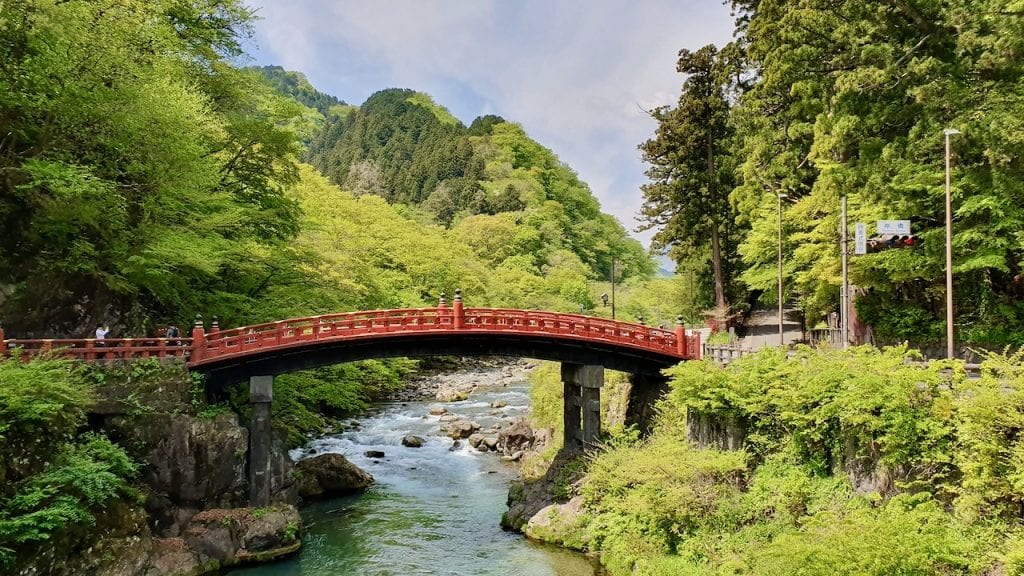 Shinkyo Bridge — one of Japan’s three finest bridges, and the entrance to Nikko’s UNESCO shrine complex. The vermilion colour against the forest is one of the most recognisable views in Japan.
The vermilion colour, the arch, and the Daiya River below with its fast transparent water over massive rocks — it is one of those compositions that looks better in person than in photographs. Arrive early to photograph it without other visitors in the frame.
The legend: 1,300 years ago, a priest named Shōdō could not cross the powerful Daiya River. He prayed, and God appeared with two twisted snakes that formed a rainbow-coloured bridge. The bridge has been rebuilt many times since 766 AD but the design has never changed.
Admission: ¥300 to cross (optional — free to photograph from the outside).
Tosho-gu Shrine — The Heart of Nikko
Crossing Shinkyo Bridge leads to a staircase climbing through ancient cedar trees toward the Shrines and Temples of Nikko — a UNESCO World Heritage Site covering over 100 religious structures built across 1,200 years.
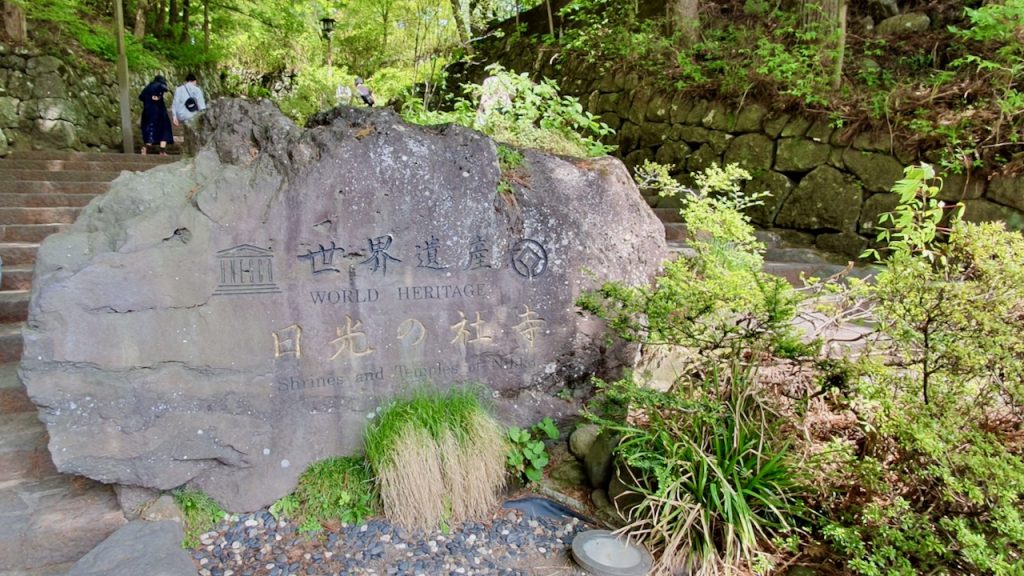 The stone entrance marker to the UNESCO Shrine and Temple complex — stairs ascending through ancient cedar trees to Tosho-gu, the most ornately decorated shrine in Japan.
The centrepiece is Tosho-gu Shrine — the mausoleum of Tokugawa Ieyasu, founder of the Tokugawa shogunate that ruled Japan for over 250 years. Built in 1617 and expanded in 1634, it is the most lavishly decorated shrine in all of Japan. Every surface is carved — more than 508 individual carvings covering every beam, bracket, and panel. The longer you look, the more details appear.
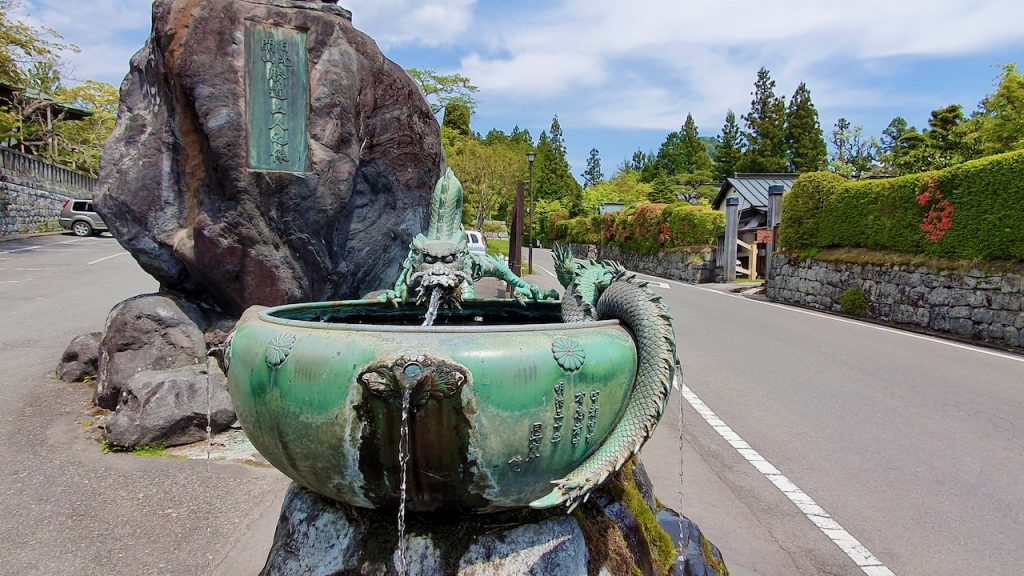 A dragon-headed purification fountain inside the shrine complex — water rather than fire, symbolising the dragon’s role as a water deity in Shinto mythology.
What not to miss inside:
The Mausoleum Steps: Beyond the sleeping cat, 207 stone steps climb to Tokugawa Ieyasu’s mausoleum itself, situated on a wooded hilltop in the cedar forest.
Yomeimon Gate (Gate of Sunsets): The most ornate gate in Japan. Said to be so beautiful that visitors could stand admiring it from sunrise to sunset. The carving density is extraordinary.
Nemuri-neko (Sleeping Cat): A small carving of a sleeping cat above one of the inner gates, famous as a symbol of peace — a cat so content it sleeps surrounded by sparrows.
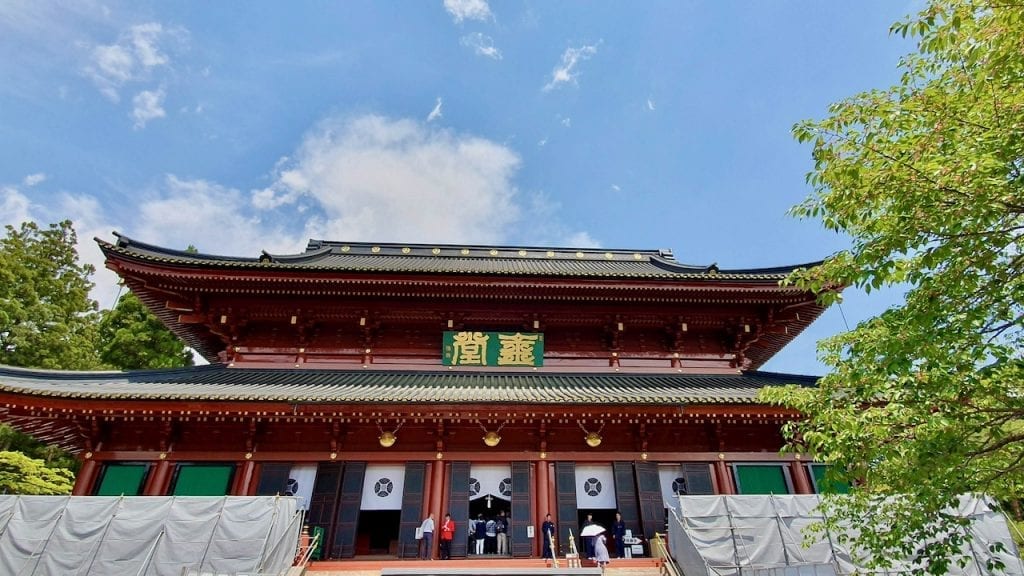
However, if you are a temple lover, and not a frugal like me, look inside of Rinnoji Temple.
Rinnoji Temple: Nikko’s most important temple, also within the complex. Founded in the 8th century, its main hall houses three enormous gilded Buddhist statues. The adjacent Shoyoen garden is a beautiful autumn foliage spot.
The entrance fee is worth it. Tosho-gu complex admission is approximately ¥1,600. It includes the Yomeimon Gate, the sleeping cat, and the mausoleum. Most visitors consider this the single highlight of Nikko.
⏰ Arrive before 10 AM. Coach tours from Tokyo arrive by late morning. The cedar forest approach is particularly atmospheric in early morning light.
Kanmangafuchi Abyss — The Hidden Gem
Just outside the central shrine area, a short walk leads to the Kanmangafuchi Abyss — a narrow riverside gorge carved by volcanic lava from Mount Nantai. Along the trail stands a row of approximately 70 moss-covered stone Jizo statues, their hats askew, quietly contemplating the river. Called the “Bake Jizo” (Ghost Jizo), local legend says that counting them on the way in and on the way out always yields a different number.
The gorge is quiet even when the shrine complex is crowded. About 30 minutes to walk there from the shrines and back.
Admission: Free.
Hike to Karikomi Lake
We used the day pass to take a bus toward Yumoto Onsen. An hour of winding mountain road dropped us at Yunoko Lake. We ate at a restaurant nearby, found the trailhead by crossing the Yunodaira marsh (the sulphur smell was powerful enough to almost turn us back), crossed a road, and the trail to Karikomi Lake began.
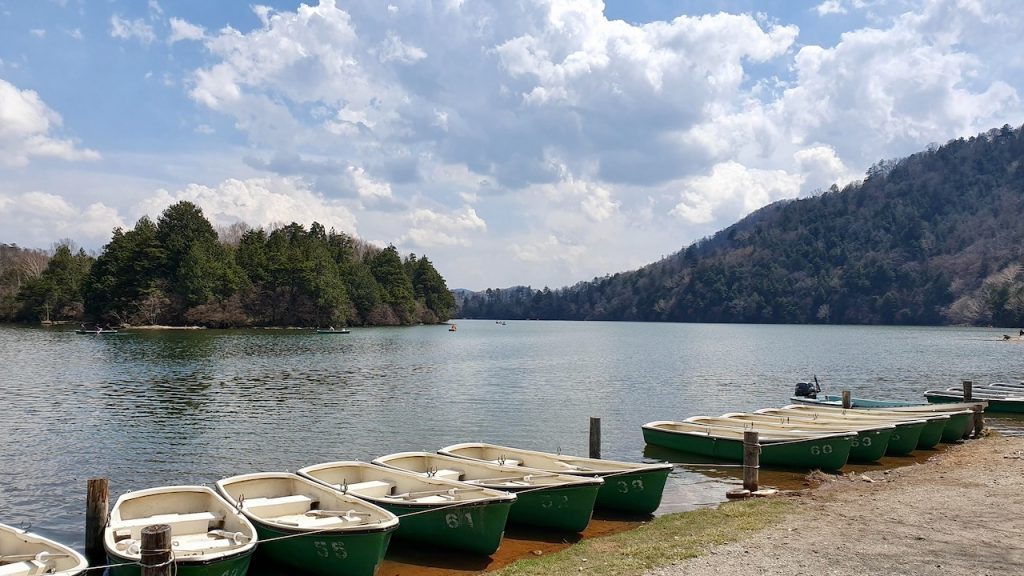 Yunoko Lake at the base of the Karikomi Lake trail — the starting point for the most rewarding hike in the Nikko area.
Two hours of hiking through forest and patches of snow brought us to Karikomi Lake. This was the most memorable part of the trip. The altitude, the silence, the view of the undisturbed lake surrounded by forest — photographs do not capture it.
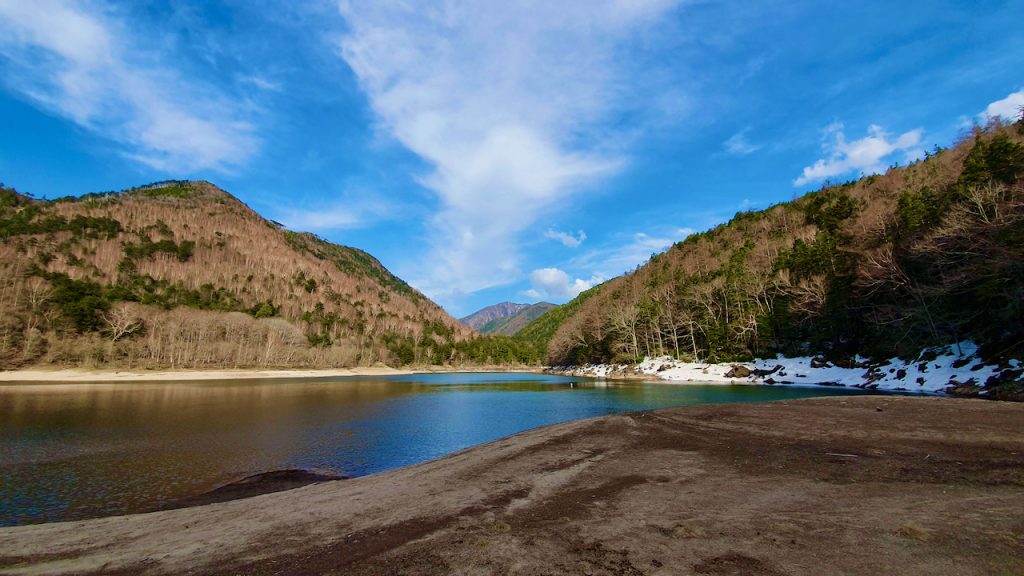 Karikomi Lake after a 2-hour hike through forests and snow — the most memorable moment of the entire Nikko trip.
Full hike details: Hike to Karikomi Lake.
Yumoto Onsen
We returned from Karikomi before sunset and walked to Yumoto Onsen. The name means “origin of boiling water.” The foot bath is free.
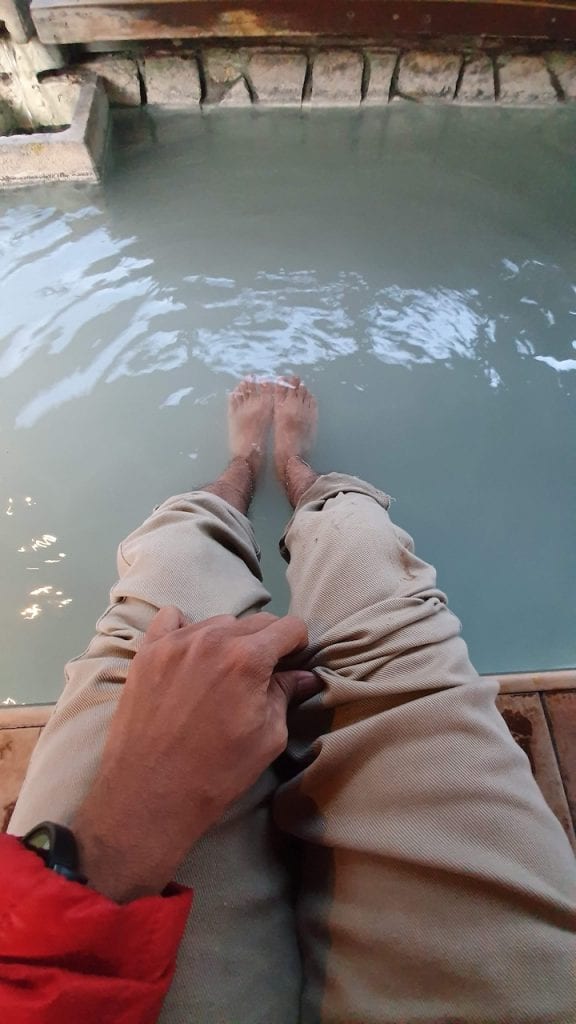 Yomoto Onsen – I didn’t want to miss the free foot onsen!
I placed my foot into the water. It was hot enough to burn. Two seconds, then out. Five seconds, then out. Gradually longer. The result was overcooked feet and genuine, deep relief.
If you hike to Karikomi Lake, the onsen is the perfect ending to the day. If you do not hike, it is still worth experiencing.
Things to Do in Nikko — Day 2: Waterfalls, Lake & Nature
Akechidaira Ropeway
️ Important
The Akechidaira Ropeway is closed for major renovations from January 16, 2026 until approximately September 2027. The cable car is not operating.
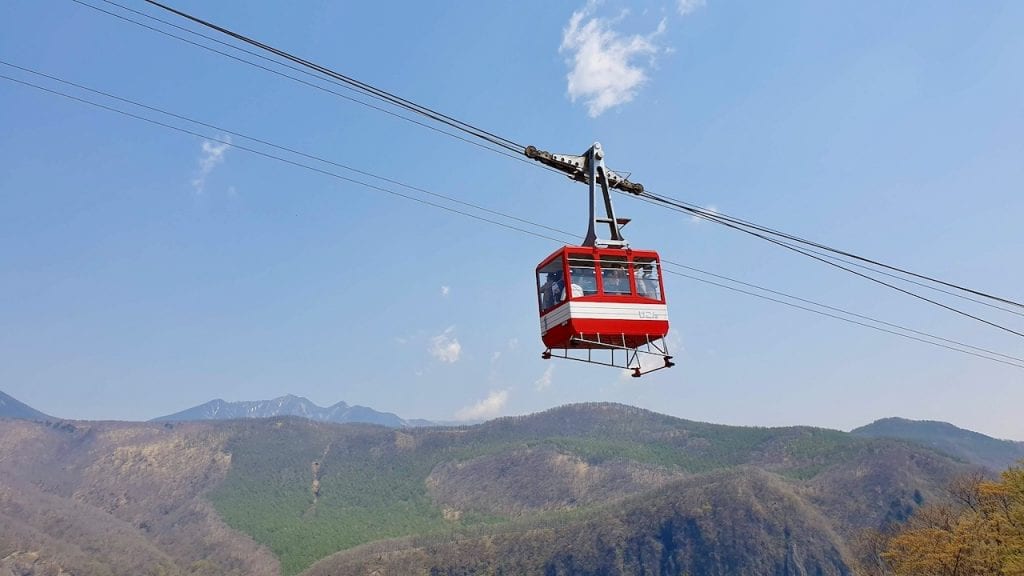 The Akechidaira Ropeway — currently closed for renovations until September 2027. The plateau observation area below remains accessible.
The free Akechidaira Plateau observation area at the base is still accessible by bus and offers views across the Irohazaka Valley. Take the bus toward Chuzenji Onsen and get off at the Akechidaira stop.
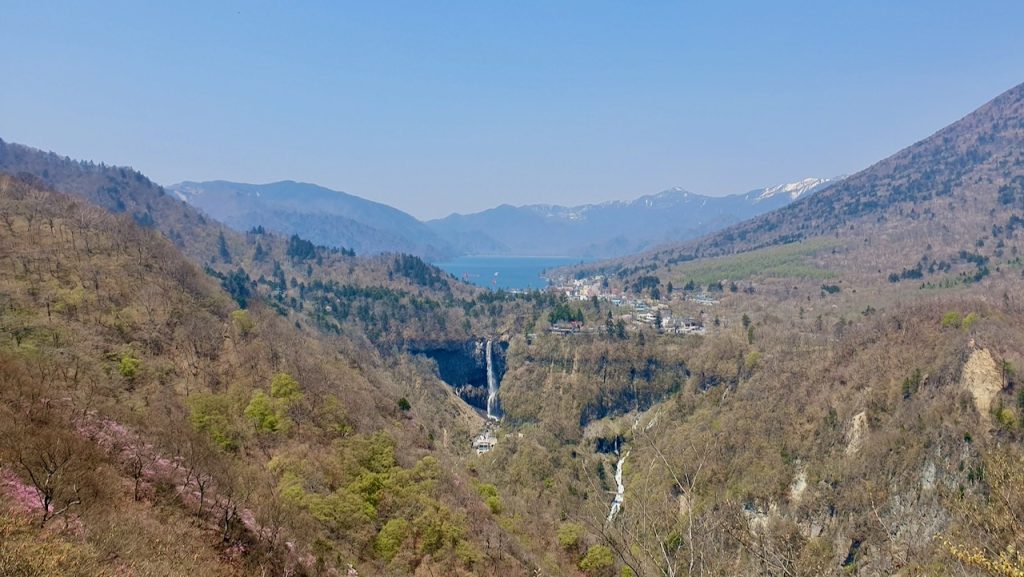 Can you see the waterfall far? Yes, that’s Kegan waterfall. We will go there shortly.
Alternative for elevated views: A 2-hour hiking trail connects Lake Chuzenji to the upper observation deck outside of winter — demanding but rewarding.
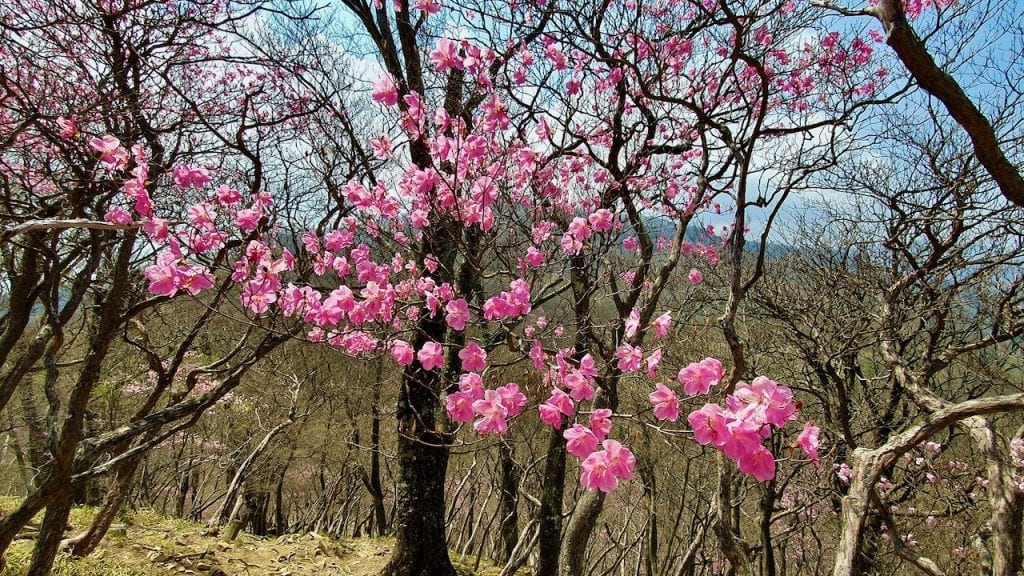 This is cherry blossom, isn’t it?
When the ropeway was operating (and when it reopens in September 2027), the 5-minute cable car ride for ¥730 to the upper deck gave panoramic views of Kegon Waterfall and Lake Chuzenji — some of the finest views in all of Nikko. It will be worth adding back to the itinerary when it reopens.
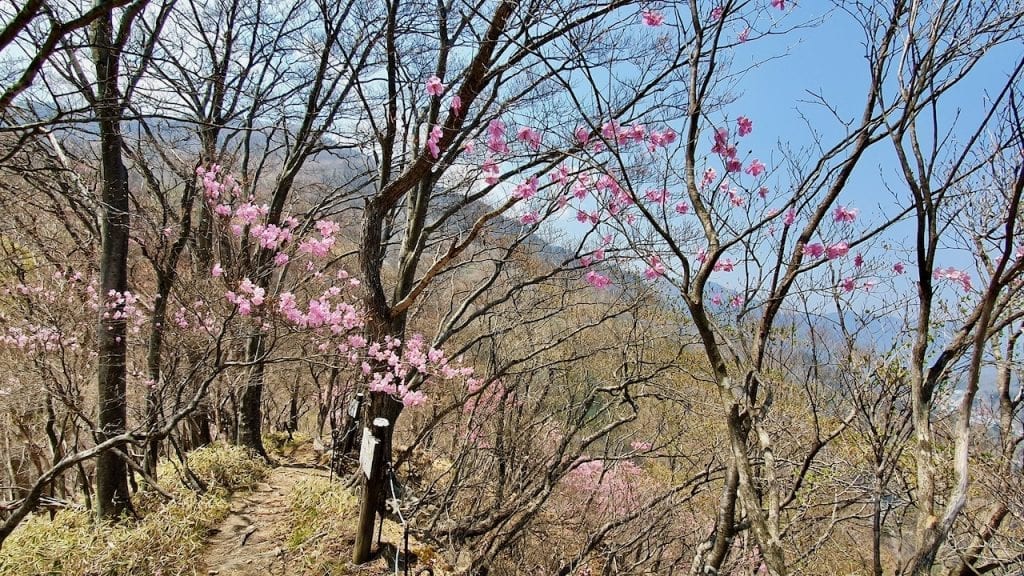 We wanted to go through this trail, but, decided not to go.
Kegon Waterfall
Get off the bus at Chuzenjiko Onsen station. Kegon Waterfall is a short walk from there.
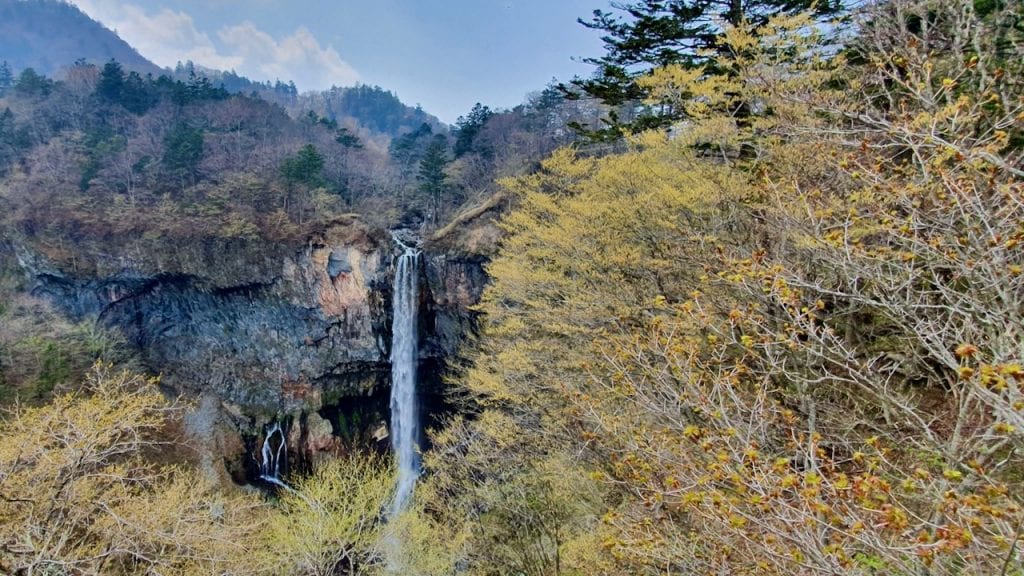 Kegon Waterfall — 97 metres, one of Japan’s top three waterfalls. The free upper deck gives a complete view; the paid elevator takes you to the thundering base.
Fed by Lake Chuzenji — a volcanic lake formed when Mount Nantai’s eruption blocked the valley 20,000 years ago — the 97-metre Kegon Waterfall is one of Japan’s top three waterfalls. The discharge is heavy. The sound carries from some distance.
Video of the Kegon Waterfall
Two observation options: the free upper deck gives a complete full-height view (where we watched). The paid elevator (~¥570) takes you to the thundering base. Both are worth it if you have time.
Ryuzu Falls — The Bonus Waterfall
A short bus ride from Kegon Falls, Ryuzu Falls (Dragon Head Falls) is a wider, more flowing waterfall where water splits around a rock formation resembling a dragon’s head. Less famous than Kegon and far less crowded. In autumn, surrounding maple trees turn vivid red and orange, making this one of the best foliage spots in Nikko.
Admission: Free.
Bike Ride Around Lake Chuzenji
A walk from Kegon Waterfall brings you to Lake Chuzenji. We rented Docomo electric bikes — download the app, tap your card, and the bike unlocks. A little pressure on the pedal and it flew.
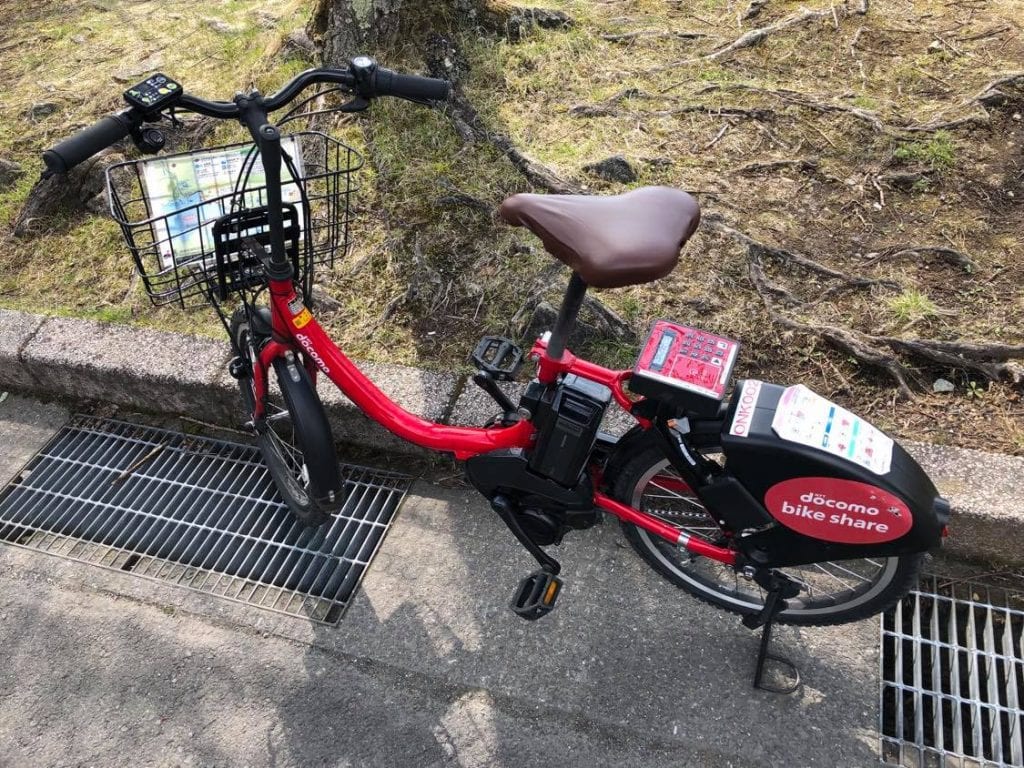 You can rent a bike in lake Chuzenji – we enjoyed riding this docomo electric bike there
It was an enjoyable ride round the lake. As it was an electric bike, I did not need to pedal much. A little press, and it flew.
There was pavement right beside the lake. When we wished to walk, we just got down from the bike, parked it somewhere and enjoyed our time.
You can ask about the suggested routes for getting the best view while renting the bike at reception. Japanese are so helpful everywhere, they will spend a lot of time helping you.
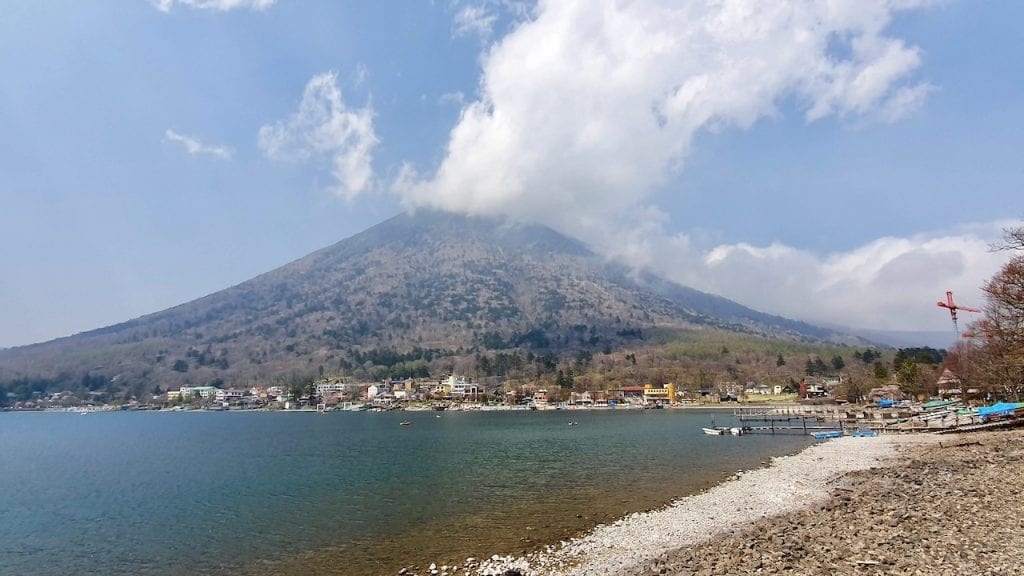 Mount Nantai looks similar to Mount Fuji – so, it’s called mini Fuji at times
We rode the lakeside path all the way to the Italian Embassy Villa Memorial Park. The view of the lake from that section is wide and clear. The villas were developed as an international summer resort in the late 19th century; part of the villa and a small museum are open to the public.
Ask for the recommended route map when renting. The staff are exceptionally helpful and will mark the best viewpoints.
Kayaking on Lake Chuzenji
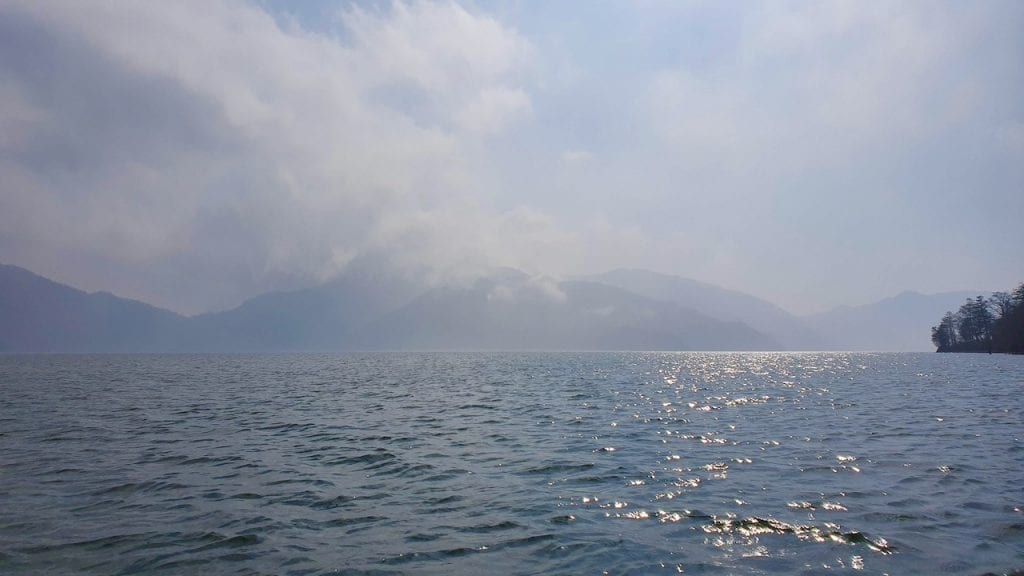 Rowing on Lake Chuzenji — mist, strong current, Mount Nantai ahead. An hour well spent.
After cycling, we sat on a bench by the water and could not resist renting a rowing boat. Strong current, midlake mist, Mount Nantai dead ahead. We rowed to the middle of the lake and spent an hour in the surroundings.
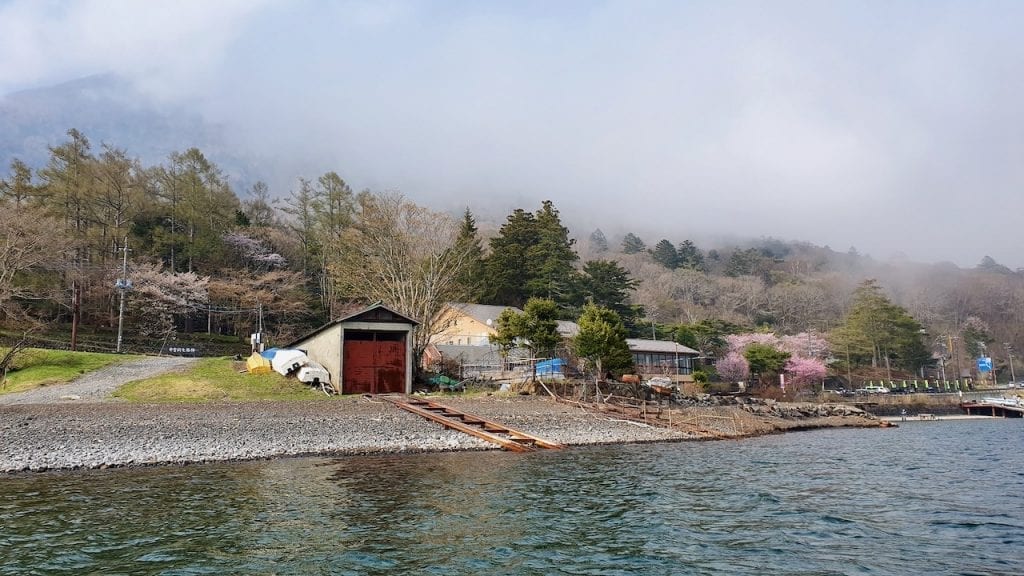 Our rowing time i Lake Chuzenji is over
I recommend the rowing or kayaking option over the double-decker sightseeing boat — the experience is completely different. The waves from the sightseeing boats made our rowing harder, which made the whole thing funnier.
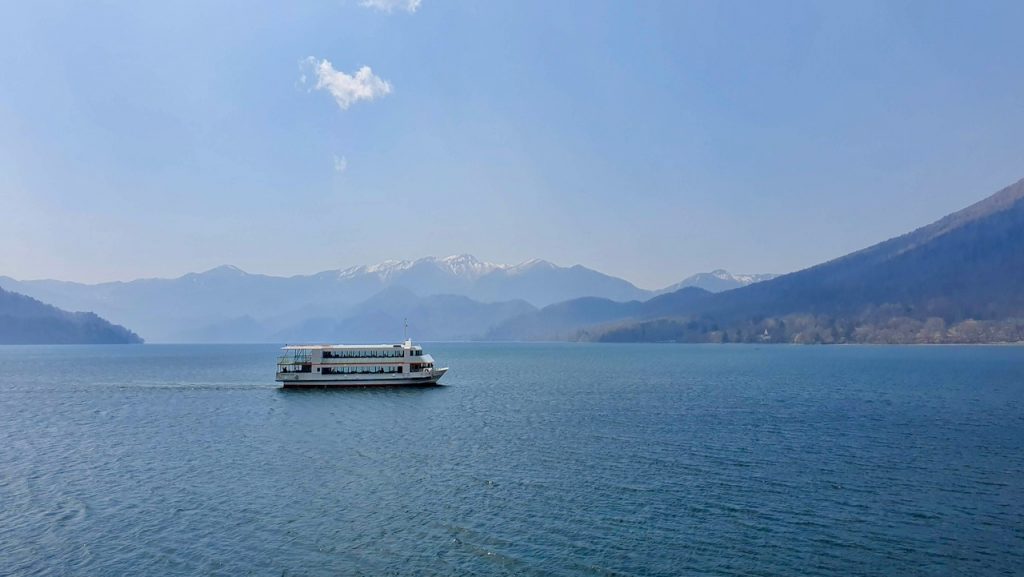 Double-decker sightseeing boat on Lake Chuzenji — a guided alternative if you prefer not to row.
Chūzen-ji Temple
It was already evening. Stairs just across the highway led up to Chūzen-ji Temple. We did not go inside — the park beside it, with cherry blossoms and the quiet of late afternoon, was enough.
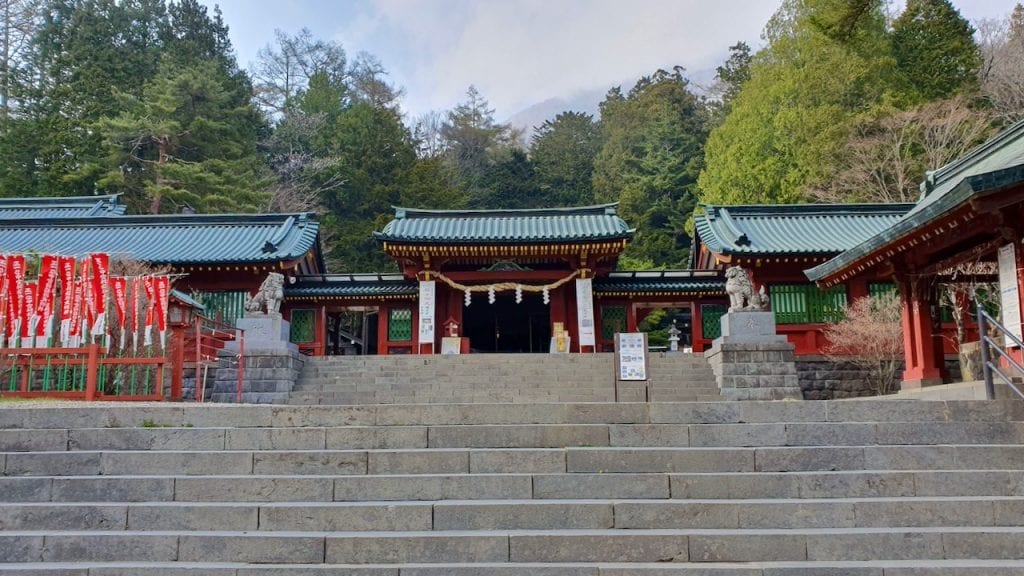 Chūzen-ji Temple in Nikko
Cherry blossoms and a pretty colorful bench made me take a picture.
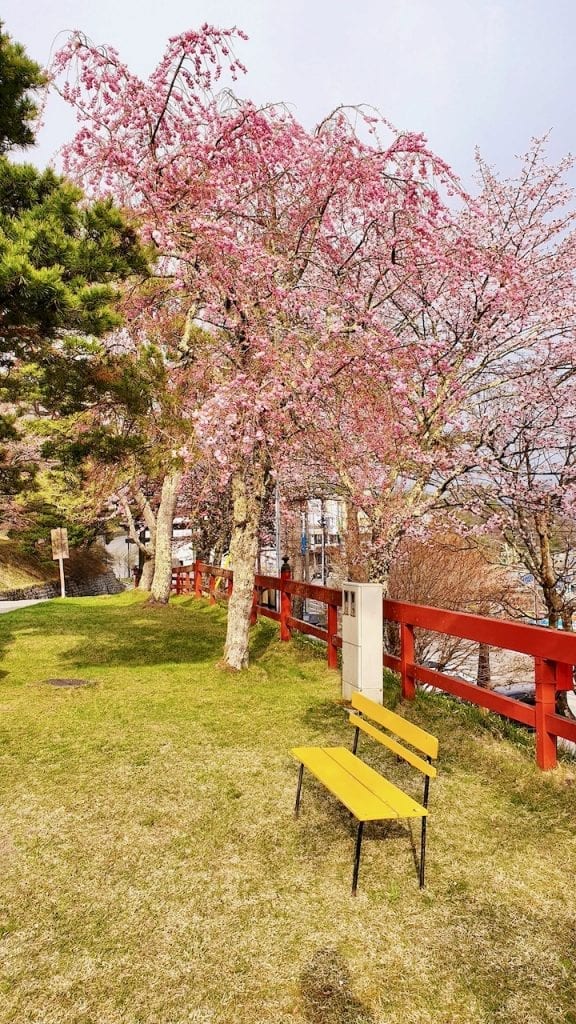 A park near Chūzen-ji Temple – the place for taking rest!
I felt a gentle sadness as our time in Nikko was ending. On the bus back through the winding mountain road, I recapped two days of shrines, forests, waterfalls, and mountain lakes. That was when I decided to return in autumn.
Food in Nikko
When we checked in at the hotel on the first night, it was already 10:30 PM. We were starving and craved for food. Nikko is a compact town and sleeps early. When I got out in pursuit of food, we noticed everything closed.
However, we didn’t give up. We hammered all the restaurants on the street and got the reward of our dedication. The discovery of a restaurant which served that late lightened our face like a 100-Watt bulb. They welcomed us to a private room where we relaxed on the floor. The traditional Japanese restaurant had a variety of cuisines to choose from. We ordered a lot of food.
That dinner was delicious, we went back there the next night, too. I want to show you some photos of them to make you feel jealous!
Where to Stay in Nikko
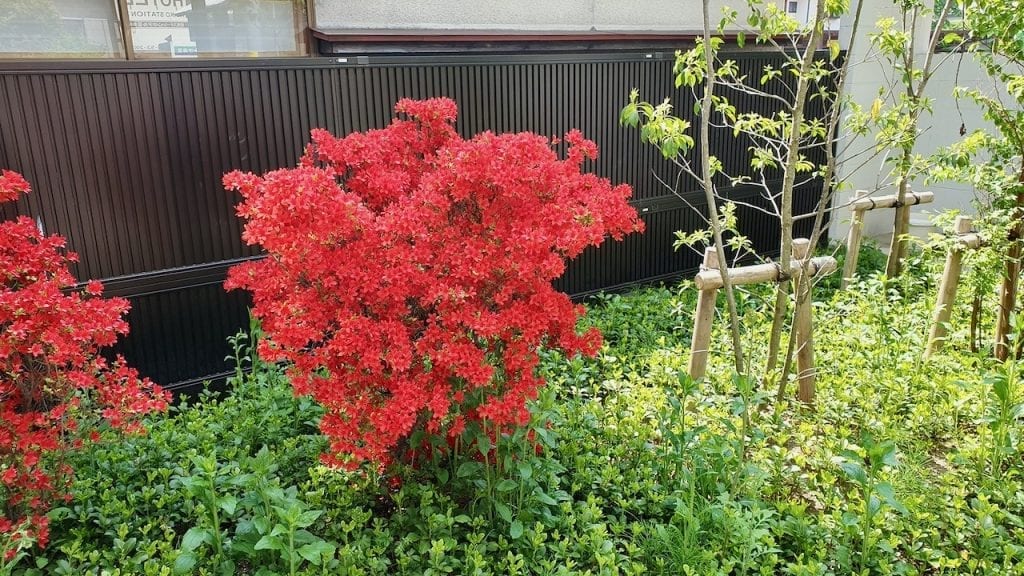 Just outside of our hotel in Nikko, I loved the quiet neighbourhood
We stayed at Nikko Station Hotel II — US$72 per night for two, 400 metres from the station. Clean, practical, and perfectly located for an arrival at 10 PM.
Nikko Station Hotel II on Agoda
For a more traditional experience, ryokans near Kinugawa Onsen offer private onsen baths and kaiseki dinners — a completely different style of overnight stay.
Practical Notes
- Nikko’s bus routes pass through mountains with many sharp bends — if you have motion sickness, take medication before boarding.
- I visited in the second week of May. Excellent timing for avoiding peak season crowds while keeping good weather.
- Although I covered everything above in 2 days, a 3–4 day visit is very easy to fill.
- A Japan Rail Pass covers the JR route via Utsunomiya but not the Tobu Railway.
Nikko Pass — Is It Worth It?
Yes. The Nikko World Heritage Area Pass (¥2,000 for 2 days) covers unlimited buses between central Nikko and Yumoto Onsen — every site in this article is included. Buy it at Tobu-Nikko Station before your first bus. It pays for itself within 2–3 journeys.
The Nikko All Area Pass (¥4,000 for 4 days) extends coverage to Kinugawa Onsen — only worth it if you are staying 3–4 days.
Nikko Travel Map
I have put the places I described in this blog on a Google Map. You can use this map to navigate and plan your trip.
Frequently Asked Questions
Is Nikko worth visiting as a day trip from Tokyo?
Yes — it is one of the best day trips from Tokyo. The UNESCO shrine complex alone justifies the journey. Add Kegon Waterfall and Lake Chuzenji and you have a genuinely full day. Two days is better.
Can you do Nikko in one day?
Yes, if you focus on the central area: Shinkyo Bridge, Tosho-gu Shrine, Kegon Falls, and Lake Chuzenji. Arrive before 10 AM and take the last bus back around 5–6 PM.
How far is Nikko from Tokyo?
Approximately 150 km north. By Tobu Limited Express from Asakusa, the journey takes about 1 hour 50 minutes.
What is Nikko most famous for?
Tosho-gu Shrine — the most ornately decorated shrine in Japan and mausoleum of Tokugawa Ieyasu, founder of the Tokugawa shogunate. Also famous for Kegon Waterfall, Lake Chuzenji, and autumn foliage.
Is the Nikko Pass worth buying?
Yes. The 2-day World Heritage Area Pass (¥2,000) covers unlimited buses across all major sites. It pays for itself within 2–3 journeys.
Is the Akechidaira Ropeway open?
No — closed for major renovations from January 16, 2026 until approximately September 2027. The free plateau observation area at the base is still accessible, but the cable car and upper deck are not operating.
Do I need a car in Nikko?
No. All major attractions are accessible by the bus network covered by the Nikko Pass.
Is Nikko better than Hakone for a day trip?
They offer different experiences. Nikko is best for history, UNESCO shrines, and mountain nature. Hakone is best for Mount Fuji views and onsen culture. If you can do both, they complement each other perfectly.
Nikko reveals itself slowly. The shrine complex takes your breath away with its carving and scale. The waterfall surprises with its size. The lake opens up after an hour of mountain road. And Karikomi Lake rewards the people who walk. Spend two days and you will leave wanting to come back in a different season — I already know I will.
Planning your wider Japan trip? Read the 3-Day Kyoto Itinerary and the 4-Day Tokyo Itinerary.
Liked this guide? Pin it for later!
Please visit:
Our Sponsor
Related Posts

ALH Acquires Premium Site for Marriott Dual-Brand Hotel in Bastrop, Texas
American Liberty Hospitality (ALH), a Texas-based hotel development and management…

Hyatt Hotels, THOR Industries And Other Big Stocks Moving Lower On Monday
U.S. stocks were higher, with the Nasdaq Composite gaining over…

Top three reasons a hotel-specific CRM outshines generic solutions
Experience is everything in hotels today. And a Customer Relationship…