I did not plan this post the way I planned the others. There was no single walk, no single day. This is what happens when you add up four nights of wandering Hobart’s waterfront, its heritage streets, its markets, and its museums, then step back and look at what you actually did.
If you are planning a Hobart trip and want the real shape of the city rather than a top-ten list copied from somewhere else, this is that.
One thing worth saying upfront: this guide covers Hobart itself, not the day trips. If you are after Bruny Island, the Hobart to Freycinet run, Rosny Hill, or Bellerive, those each have their own dedicated posts linked throughout and at the end. This one stays focused on what the city proper has to offer, on foot.
The quick answer
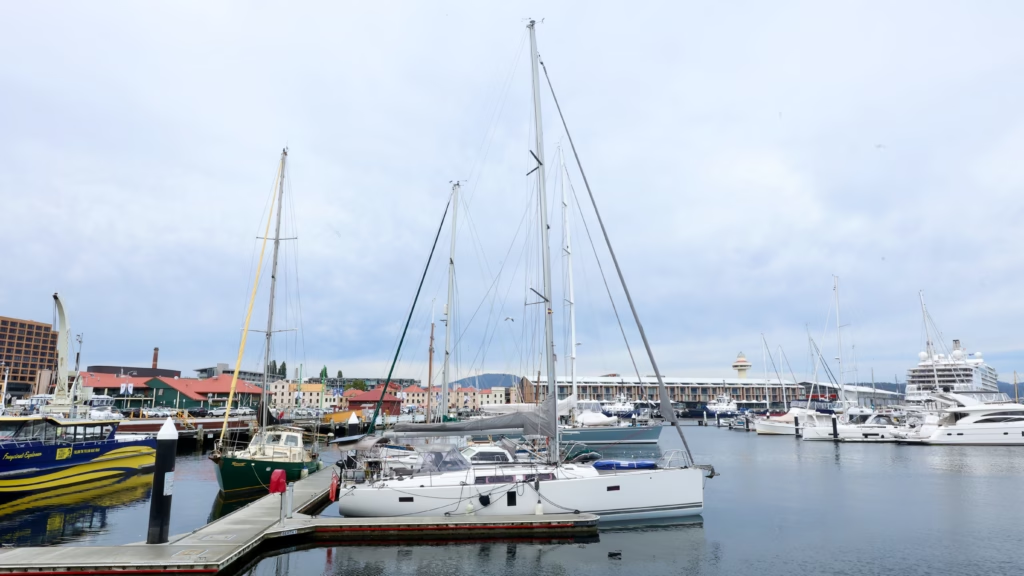 Sailing boats and motor cruisers moored at Hobart’s waterfront marina, Sullivans Cove, Tasmania.
Hobart rewards walking more than any other Australian capital I have visited. Base yourself near Sullivans Cove or Salamanca, and you can reach the waterfront, the CBD heritage precinct, Salamanca Market, Battery Point, and TMAG entirely on foot. Add day trips out to Rosny Hill, Bellerive, and Bruny Island, and a couple of hours at MONA, and you have a properly full trip.
The waterfront: Sullivans Cove, Constitution Dock, and Victoria Dock
This stretch of water is the heart of Hobart, and I came back to it more than once. Constitution Dock and Victoria Dock sit side by side, both still working fishing harbours as much as tourist attractions, with lobster pots stacked on deck and boats named things like Clementine and Passage moored a few metres from the footpath.
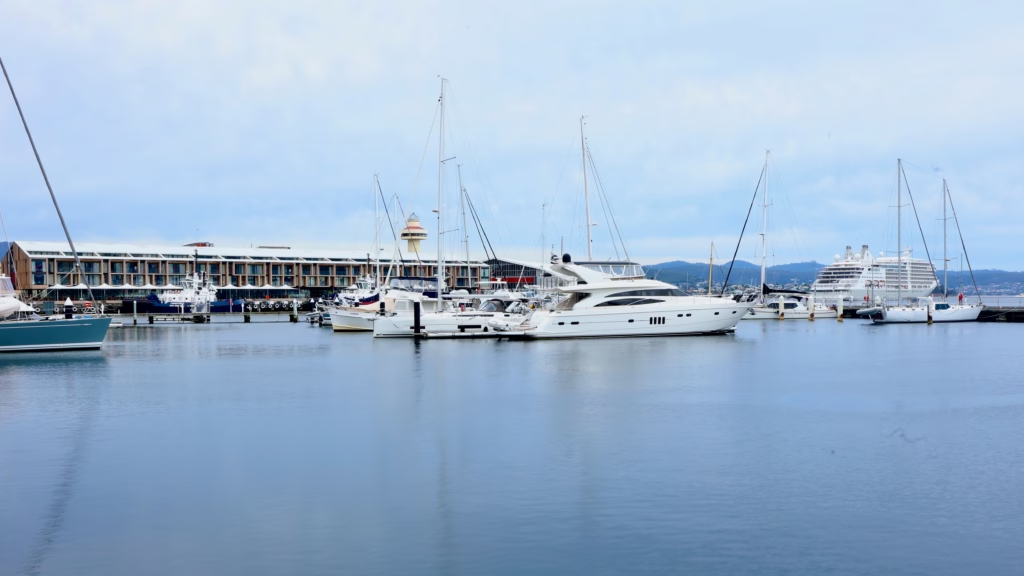 A Hobart waterfront marina showing the range of vessels moored there, from sailing boats to luxury motor yachts, with a cruise ship visible in the background.
The marinas along here run the full range, sailing boats moored a few berths down from luxury motor yachts, with a cruise ship or a heritage lighthouse tower usually visible somewhere in the background depending which way you are facing.
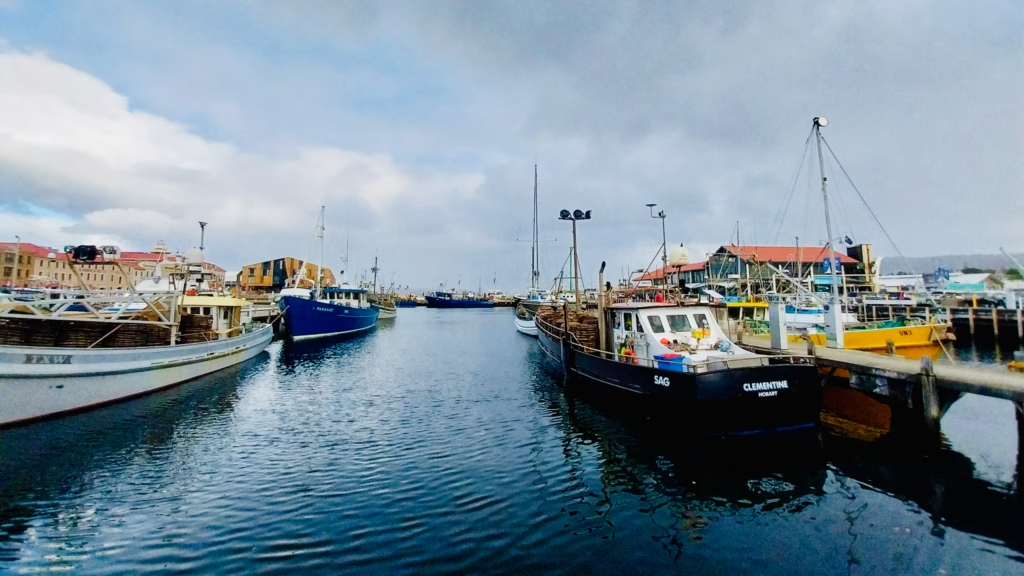 Fishing boats moored at Constitution Dock, Hobart, including the vessel Clementine, part of Hobart’s working fishing fleet.
Walk a little further round and the working boats take over from the pleasure craft, which is really what gives this stretch of waterfront its character.
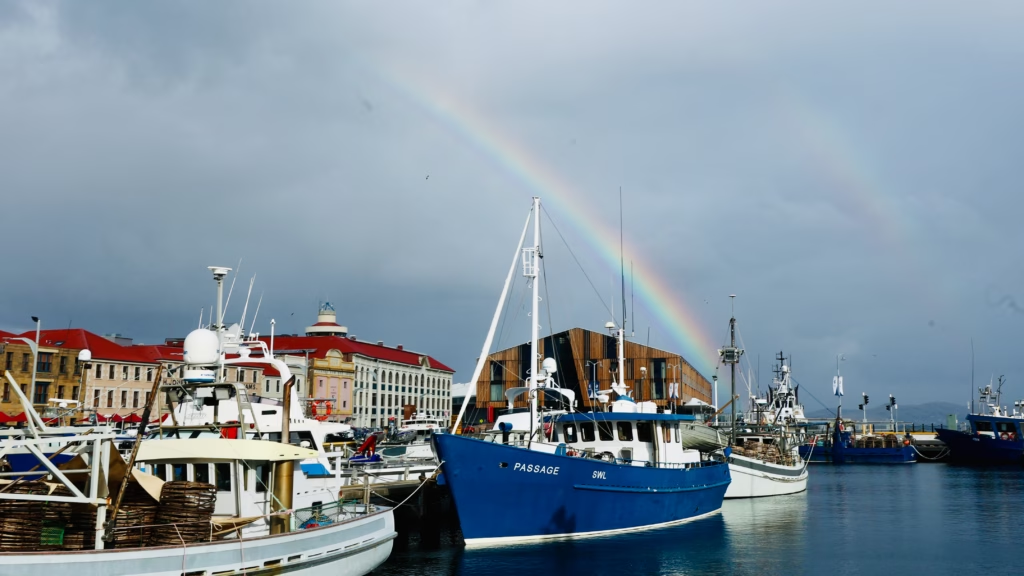
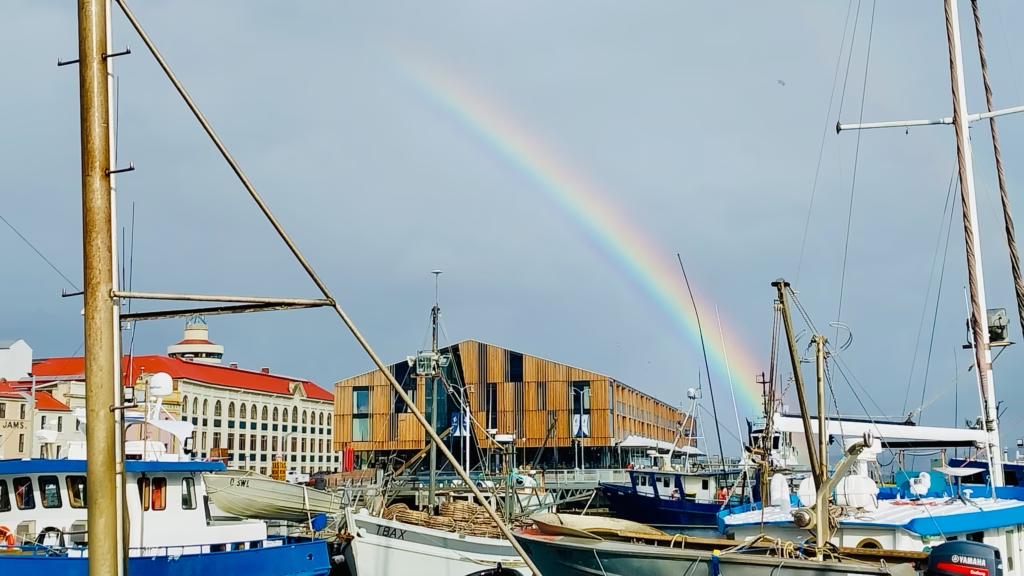 A rainbow over Hobart’s waterfront fishing boats at Victoria Dock, appearing after a rain shower cleared into sun.
I got lucky one evening. A rain shower cleared just as the sun found a gap, and a full rainbow arced straight down over the docks, caught almost the same moment on two different cameras.
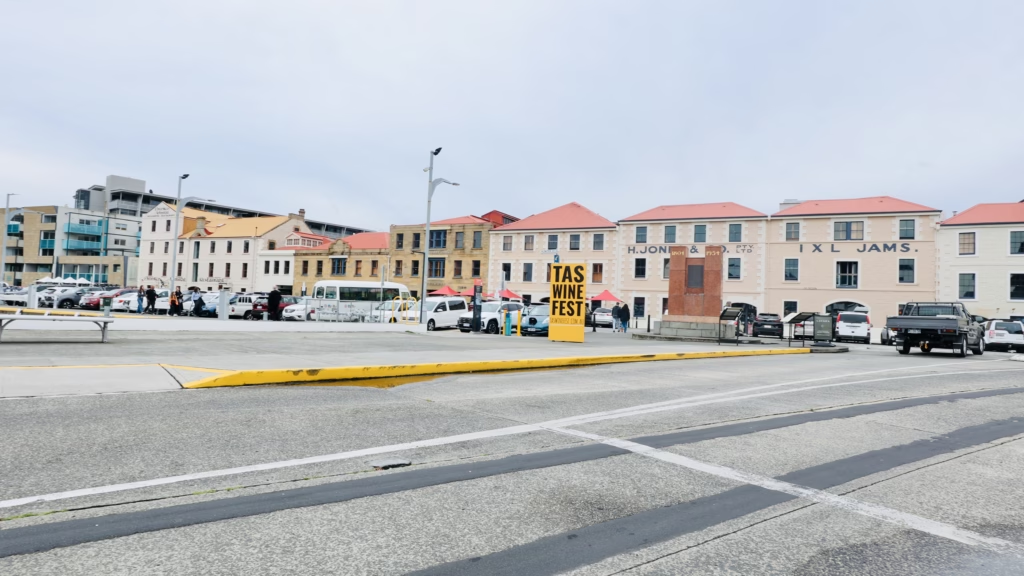 The IXL precinct doubling as festival ground
The IXL Jam Factory and Henry Jones precinct anchors the northern end, the old H. Jones & Co. jam warehouse now shared between a hotel, galleries, and part of the University of Tasmania’s waterfront campus. The open ground around the buildings doubles as event space, I passed through during the Tasmanian Wine Festival, stalls set up right against the heritage sandstone.
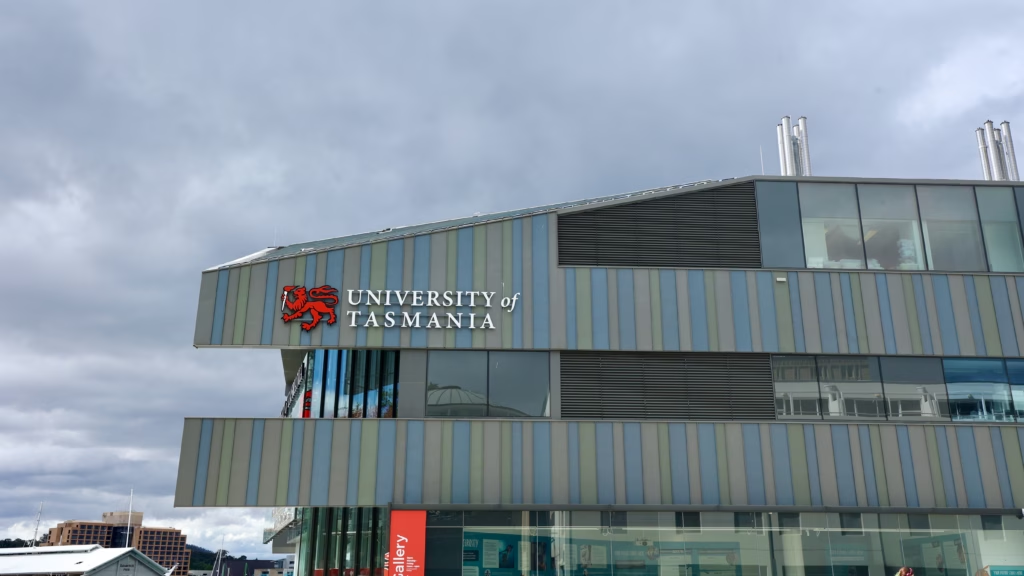 The old jam factory, now shared with the university
A tall-masted sailing ship was moored near the old Telegraph Hotel when I visited, one of several heritage vessels that appear on the Hobart waterfront from time to time.
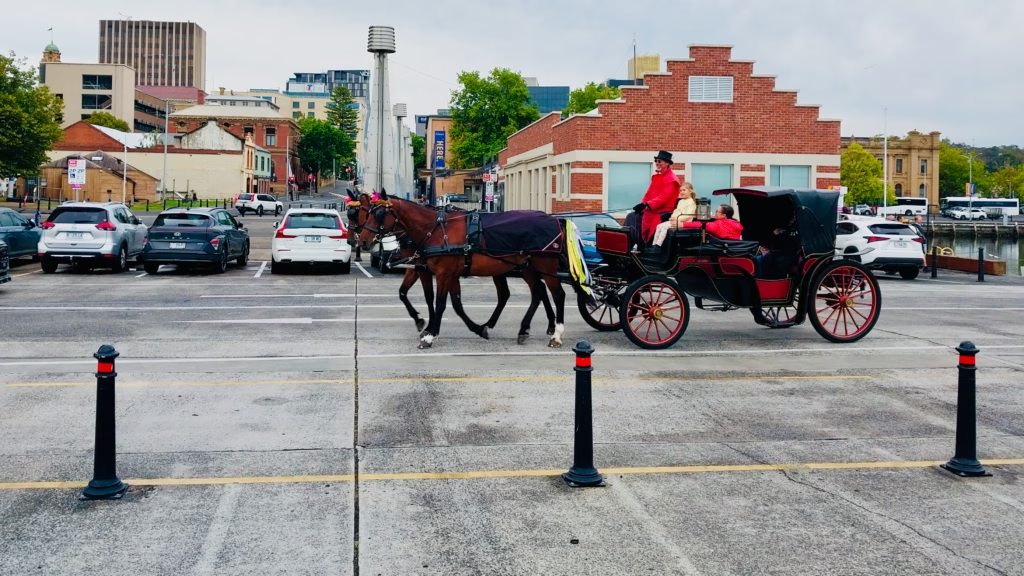 A horse-drawn carriage with a costumed driver passing modern buildings on Hobart’s waterfront, Sullivans Cove.
Horse-drawn carriages still do the rounds here, a driver in full costume walking two horses past the modern glass buildings, tourists riding behind. It is a slightly odd, slightly lovely thing to watch, colonial transport moving through a very contemporary skyline.
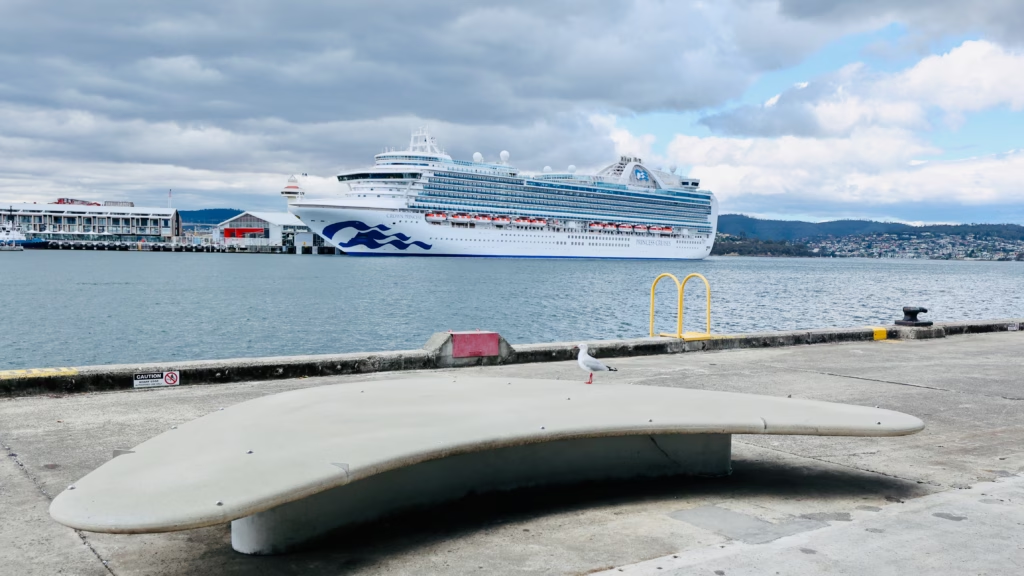 A view from the wharf near Hobart’s cruise ship berths, showing the open sightlines and quiet corners that make this a good spot for photos.
Good vantage point
The wharf area near where the big cruise ships berth has excellent photo opportunities, open sightlines across the water with the ships or the working boats in frame, and enough quiet corners that you are not fighting crowds for the shot.
If you would rather see the waterfront from the water, the Derwent River Historic Harbour Cruise covers Sullivans Cove and the river’s maritime history at a relaxed pace. If you are visiting on a cruise ship day, like the Crown Princess passengers I saw docked here, the Hobart Wanderer shore excursion is built specifically around a single day in port.
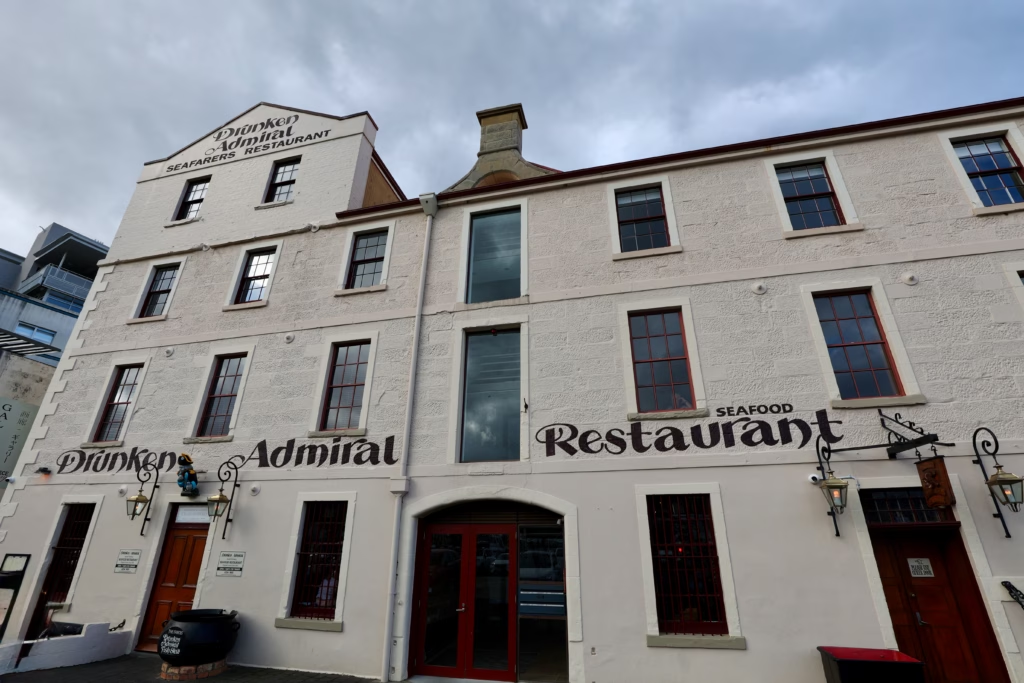 The Drunken Admiral Seafarers’ Restaurant on Hobart’s old wharf, a long-running seafood restaurant with hand-painted signage.
I ate dinner one night at the Drunken Admiral, a long-running seafood restaurant on the old wharf with a striking whitewashed facade and hand-painted signage. Old-school seafarers’ tavern atmosphere, and it has clearly been feeding Hobart visitors for decades.
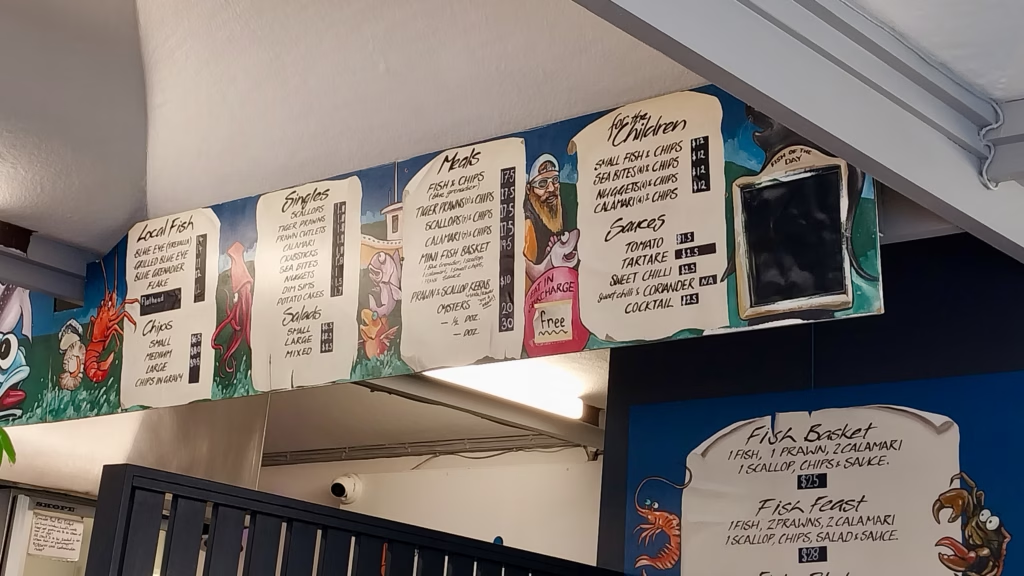 The Dock’s hand-painted menu, fish and chips by the water
For something quicker, The Dock at Constitution Dock is one of several fish-and-chip style stalls right on the water, the kind of place with a hand-painted menu board and a queue of locals who know exactly what they want.
A CBD heritage walk you can build yourself
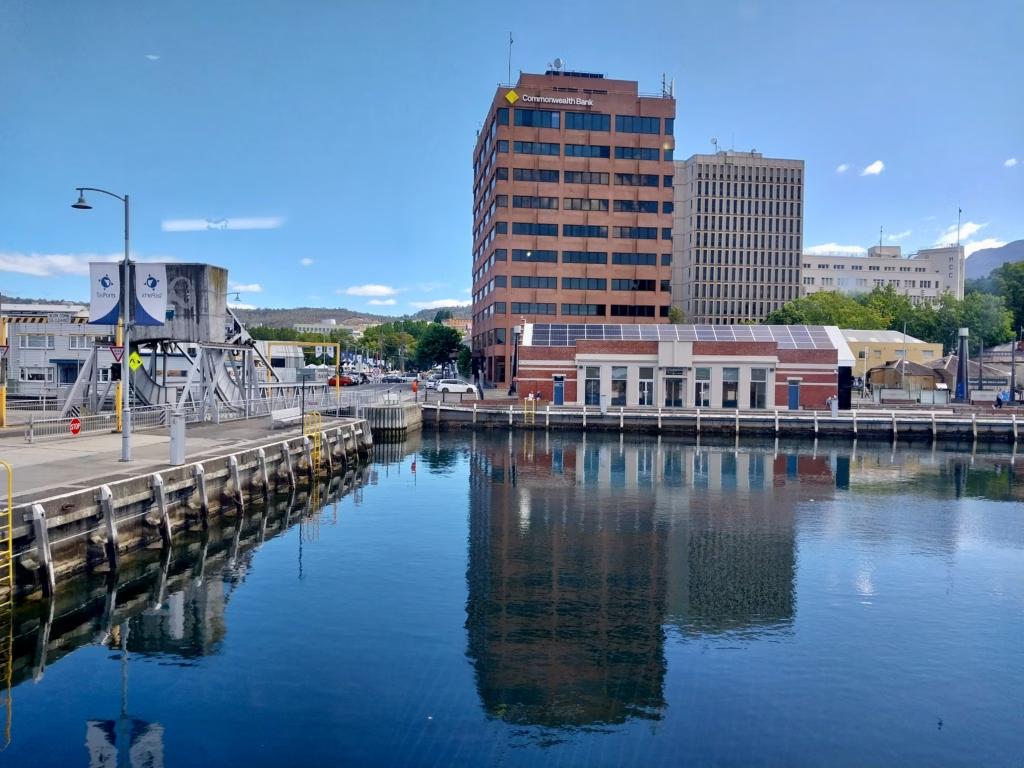 Sullivans Cove in Hobart, showing heritage sandstone government buildings alongside modern architecture, with yachts moored in the foreground.
Hobart’s CBD is small enough to cover an impressive spread of colonial and early twentieth-century architecture in an afternoon. Sullivans Cove itself sets the tone before you even reach the main streets, heritage sandstone government buildings sitting right alongside modern glass, yachts moored in the foreground on a clear day.
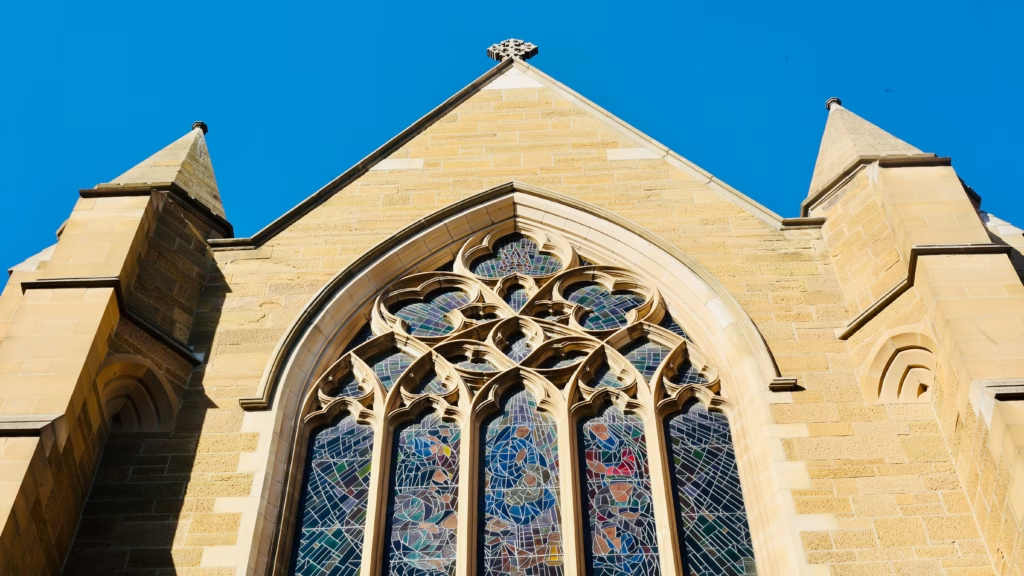 Gothic Revival sandstone facade and stained glass window of St David’s Cathedral on Murray Street, Hobart.
St David’s Cathedral on Murray Street is the standout, a Gothic Revival sandstone church with an elaborate stone rose window and stained glass, one of Hobart’s oldest ecclesiastical buildings.
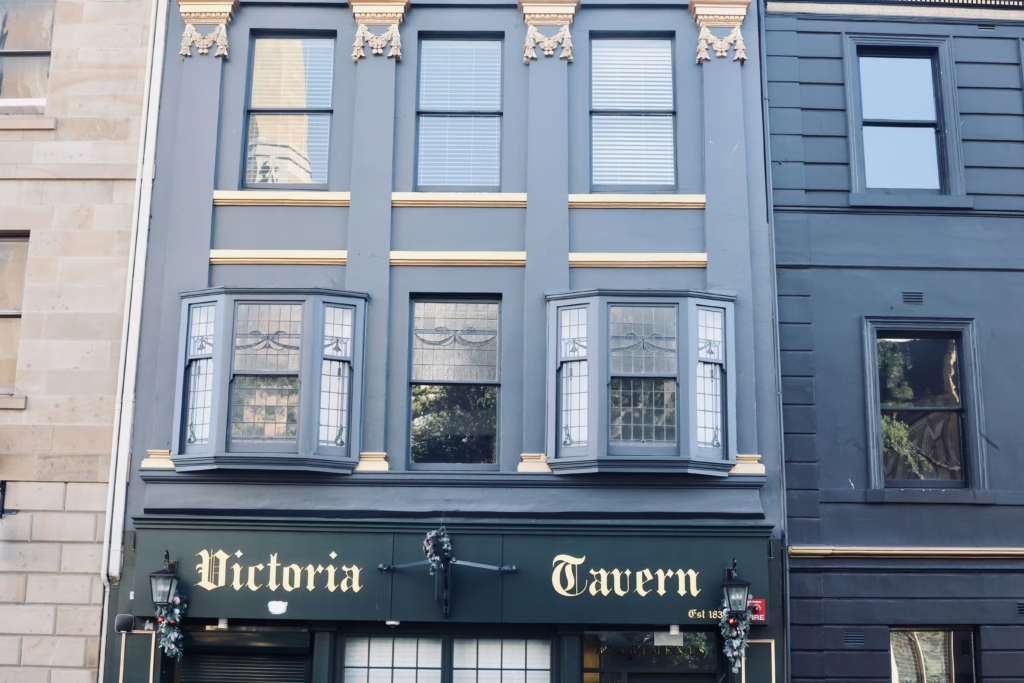 Historic Victoria Tavern signage on Murray Street, Hobart, established 1839, now converted to heritage apartments.
Directly across the road, the Victoria Tavern building still carries its original gold-lettered signage, first licensed in 1839 and once considered one of Tasmania’s oldest continuously operating pubs. Worth knowing before you go looking for a pint: the tavern itself has closed, and the space is now heritage apartments. The facade remains, which is what makes it worth a photo, just do not expect to walk in for a beer.
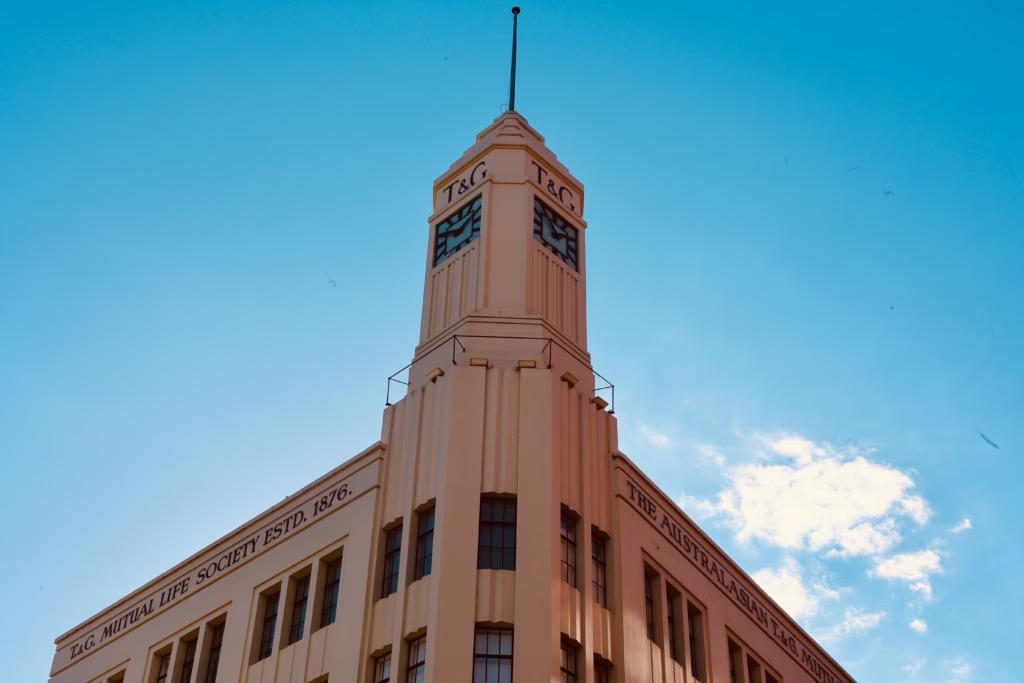 Art Deco clock tower of the T&G Building at the corner of Collins and Murray Streets, Hobart, built 1938.
A few blocks over, the T&G Building at the corner of Collins and Murray Streets is one of Hobart’s genuine Art Deco landmarks, built in 1938 with a tall stepped clock tower that still carries the Temperance and General Mutual Life Assurance Society name across its face.
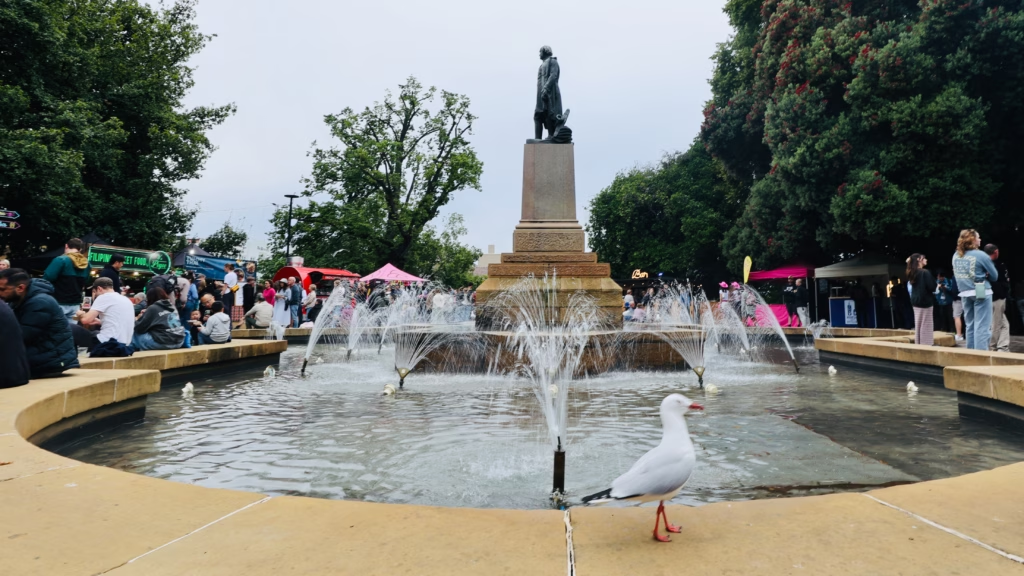 Franklin Square, a resting point in the middle of the CBD
Franklin Square, with its bronze statue of Sir John Franklin and central fountain, is a natural resting point in the middle of the CBD, and it doubles as an event space, I caught a street food market in full swing there.
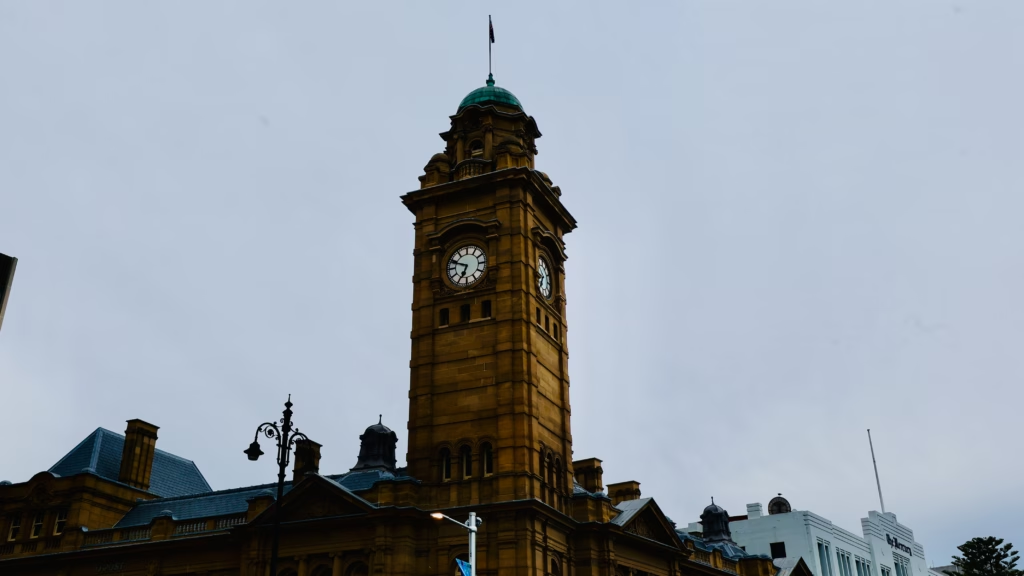
Hobart’s GPO clock tower, at the corner of Elizabeth and Macquarie Streets, is said to be modelled loosely on Big Ben, and it is one of the more photogenic landmarks in the CBD skyline.
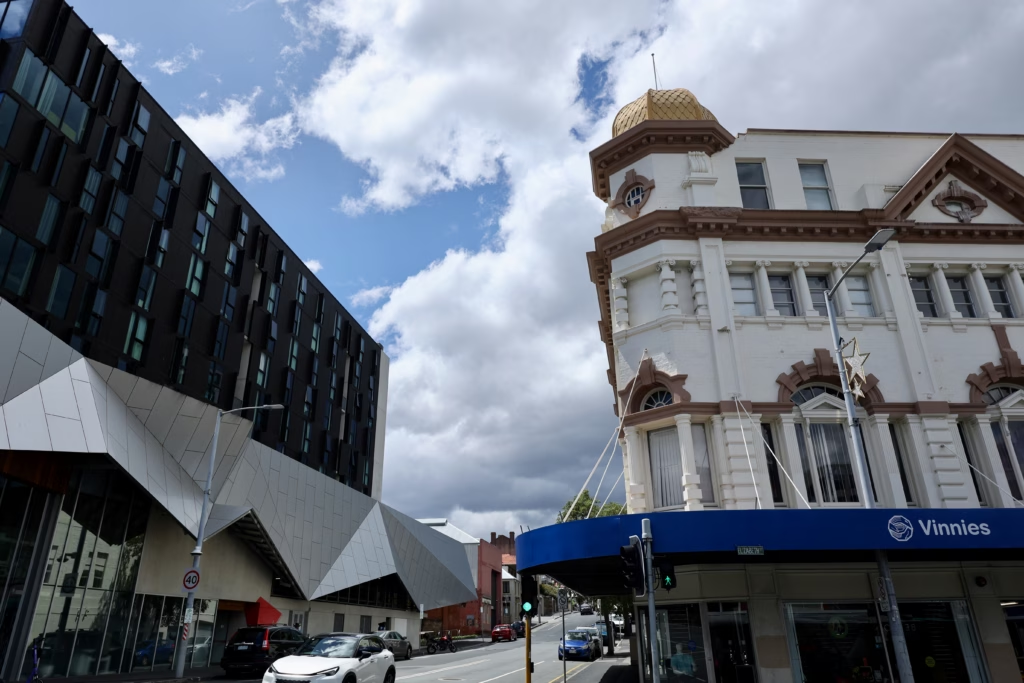 Red Herring’s Surf Co, home to the Surfing Tasmania Museum, on Elizabeth Street, Hobart.
Along Elizabeth Street, keep an eye out for Red Herring’s Surf Co, which doubles as the Surfing Tasmania Museum, a properly unexpected find in a city better known for convict history than surf culture.
 A large-scale mural on Melville Street, Hobart, depicting a figure reaching toward a native marsupial, part of the city’s street art trail.
And on Melville Street, part of Hobart’s public street art trail, a large-scale mural of a woman reaching toward a small native marsupial through a circular hole in a wardrobe was one of the more striking pieces of public art I came across.
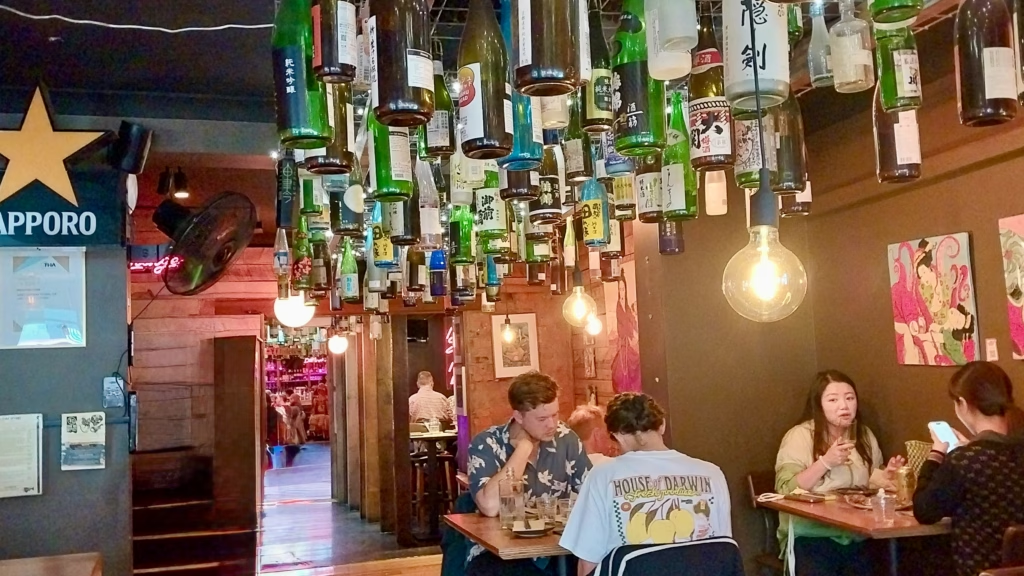 Interior of Bar Wa Izakaya, a Japanese izakaya restaurant on Elizabeth Street, Hobart, with sake bottles hanging from the ceiling.
For dinner one evening, Bar Wa Izakaya on Elizabeth Street was the standout, sake bottles hanging from the ceiling, a proper Japanese share-plate menu, and a reputation as one of Hobart’s best-regarded restaurants for a reason.
A few more come up consistently enough in Hobart’s food scene to be worth flagging, even though I did not eat at these myself this trip. For breakfast or a pastry, Pigeon Whole Bakers in the CBD supplies many of the city’s other cafes and is well known for a reason, and Berta, with its teal-tiled counter, does a seasonal menu built around local produce. For something more of an occasion, The Point, the revolving restaurant atop Wrest Point, gives you a full rotation of Hobart views over dinner, and Templo is a tiny, well-reviewed set-menu Italian spot if you want an intimate night out. For the full picture, including hatted restaurants, a whisky trail, and honest price tiers, see Where to Eat in Hobart.
The big set pieces: TMAG, MONA, and beyond
Some of Hobart’s best attractions deserve, and have, their own full write-up. Rather than compress them into a paragraph here, I have linked out to the full posts.
TMAG, the Tasmanian Museum and Art Gallery, is free, on the waterfront, and easily worth half a day. I go deep on the Thylacine Gallery, the Antarctic connections, and everything else in the full TMAG guide.
MONA, the Museum of Old and New Art, is Hobart’s most famous single attraction, ticketed, subterranean, and deliberately provocative. I cover the ferry, the cost, and how to pair it with TMAG in that same post.
Salamanca Market and Battery Point make one of the best walking days in the whole city, sandstone warehouses, historic cottages, and a proper climb up Kelly’s Steps. The full route, with honest tips for both market day and any other day, is in the Salamanca to Battery Point walk.
Rosny Hill and Bellerive, on the eastern shore, give you the best sunset views in Hobart along with a properly underrated afternoon walk. Covered fully in Best Sunset in Hobart.
A few more worth knowing about
These are spots I did not personally visit on this trip, but they come up constantly in any serious account of Hobart, and I would rather flag them plainly than leave a gap in a guide meant to be comprehensive.
The Royal Tasmanian Botanical Gardens include a Sub-Antarctic Plant House, a cool misted room recreating conditions on Macquarie Island, a nice quiet echo of the Antarctic thread that runs through TMAG.
Cascade Brewery, Australia’s oldest, sits below kunanyi/Mt Wellington in a striking Gothic sandstone building and is worth the short trip out from the CBD if you have a car or are combining it with a mountain visit. The Cascade Brewery Tour covers the history and a tasting if you would rather not just look at the building from outside.
The Cascades Female Factory preserves the site where convict women were held, a truly important and sobering part of Tasmania’s colonial history, and part of the broader Tasmanian convict sites UNESCO listing.
Practical things nobody tells you
This is the section I wish I had read before arriving.
Public toilets are scarce in the CBD. I struggled to find enough of them across four days. Shopping centres are the reliable fallback, the mall with Mecca Maxima inside was where I ended up more than once.
Shops close earlier than you might expect
Most CBD shops wind down by early evening, and Sundays in particular can catch you out with reduced hours or closures. Plan your shopping for daytime, and check ahead if you are relying on somewhere specific being open.
Public buses need a Greencard, or exact change. Hobart’s Metro buses run on the Greencard smartcard system, which gives a discount and handles transfers cleanly. Paying cash on board means exact coins, and a couple of drivers were kind enough to wave me through without payment when I did not have the right change. I would not count on that as a strategy though. Also worth knowing: services run less frequently than you might expect from a capital city, so build in extra waiting time rather than assuming a bus will be along any minute.
One important update since my visit: Tasmania introduced a statewide free public transport trial in early 2026. Sources differ on exactly when it ends, some point to mid-2026, others suggest it runs longer, so check the current Metro Tasmania website before you travel. Fares may be free, discounted, or back to normal by the time you read this.
If you want Tasmanian whisky or wine to take home, Hop Vine & Still is a well-regarded independent bottle shop with a strong local spirits focus and knowledgeable staff. For wine specifically, the Tasmanian Wine Centre on Collins Street specialises almost entirely in Tasmanian labels.
Weather note
Hobart really does four seasons in a day. Layer up regardless of the forecast, and do not be surprised if a rain shower clears into full sun within the hour, that is exactly how I got the rainbow shot.
Getting around and getting help
The Hobart Visitor Information Centre, on Elizabeth Street, is worth knowing about beyond just picking up a map, many of the guided tours below use it as their meeting or pickup point, so it is a useful landmark to confirm before booking anything.
Four tour options cover most needs, whether you want history explained as you walk, a broader overview, or just a set window of time filled properly.
If you are driving in from the airport or combining Hobart with day trips further out, DiscoverCars is what I use to compare hire rates.
Sorting accommodation?
I stayed north of the CBD at Nightcap at Carlyle, real value but a bus or drive from everything in this guide. For a full area-by-area breakdown, Sullivans Cove, Salamanca, the CBD, and beyond, see Where to Stay in Hobart.
FAQ
How many days do you need in Hobart?
Three to four days covers the CBD, waterfront, Salamanca, Battery Point, TMAG, and one eastern-shore evening comfortably. Add a day each for MONA, Bruny Island, and Mt Wellington if you want the fuller picture.
Is Hobart walkable?
Yes, more than any other Australian capital I have visited. The CBD, waterfront, Salamanca, and Battery Point are all connected on foot. The eastern shore (Rosny Hill, Bellerive) requires a bus, ferry, or car.
What is the best month to visit Hobart?
Summer (December to February) gives the longest daylight and mildest weather, though Tasmania’s weather is unpredictable regardless of season. I visited in January and had everything from full sun to sudden rain within the same afternoon.
Do I need a car in Hobart?
Not for the CBD, waterfront, or Battery Point. A car or hire day becomes useful for Cascade Brewery, Mt Wellington, the eastern shore, or day trips further afield.
Is MONA worth the ferry trip?
Most visitors say yes, even those who find the content confronting. It is a properly unusual museum experience, covered in full in the TMAG post’s MONA section.
Where can I find public toilets in central Hobart?
They are limited. Shopping centres, including the mall on Elizabeth Street with Mecca Maxima, are a reliable option if you are caught out.
Is public transport free in Hobart right now?
Tasmania ran a statewide free public transport trial starting in early 2026. Whether it is still active depends on when you are reading this, check the current Metro Tasmania website before you travel.
Final thoughts
Hobart is a city best experienced by walking further than the itinerary suggests you need to. Every wrong turn I took led somewhere worth photographing, a mural, a heritage pub facade, a cricket ground, a flock of galahs. If you only have a couple of days, prioritise the waterfront, Salamanca, Battery Point, and TMAG. If you have longer, everything else in this guide is properly worth the extra legwork.
For the rest of your Tasmania trip, do not miss the Mount Wellington guide, the Bruny Island day trip, and the Hobart to Freycinet day trip. For where to eat while you are in the city, Where to Eat in Hobart covers restaurants, cafes, and a whisky trail, and Where to Stay in Hobart breaks the city down by area if you have not booked yet. Heading north afterwards, the Launceston things to do guide picks up where this one leaves off. Once it is live, our 3 Days in Hobart itinerary (link when live) will pull every one of these pieces into a single day-by-day plan.
Every guide on A Walk in the World is written to help you have the best possible trip. I only recommend hotels, tours, and experiences I’d genuinely choose myself, and I don’t accept payments or sponsorships from operators in exchange for positive coverage. Some of the booking links on this site are affiliate links, which means I may earn a small commission if you book through them, at no extra cost to you. Thanks for trusting my guides and supporting the blog!
Please visit:
Our Sponsor
Related Posts
Music Tourism: How Concerts Impact the Hospitality Industry
Remove your hotelier’s hat for a moment and consider this…
The Value of Soft Brands with Prime Group and Faro Blanco Resort
The last two decades have seen an explosion in soft-branded…
Treehouse Hotels Opens First Manchester Location
Late in 2019, London’s hospitality scene got a new addition…