Nara is easy to underestimate. I went expecting to feed some deer and be done in a few hours. I came back having spent a full day and still felt like I’d missed things. Japan’s first permanent capital — before the seat of power moved to Kyoto in 794 — Nara is quieter than Kyoto, less crowded than Tokyo, and in some ways more concentrated in its historical significance. Eight UNESCO World Heritage Sites in a single city. One of the world’s largest bronze Buddha statues. And yes, several hundred deer that roam freely and have absolutely no fear of humans.
A Nara day trip from Kyoto is the most popular day trip in all of Japan. Here is everything you need to know to make the most of it.
QUICK FACTS — NARA DAY TRIP
- Distance from Kyoto: ~46 km
- Journey time: 35–60 minutes depending on train
- Best station to arrive at: Kintetsu-Nara (closer to the park)
- How much time do you need: 5–7 hours for a comfortable full day
- Best time to arrive: Before 10 AM — deer and temples are quieter
- Cost of deer crackers: ¥200 per pack (buy from official vendors only)
- Most important tip: Show empty hands when your crackers run out
- 2026 note: Kofuku-ji’s Sarusawa-Ike pagoda reflection is under renovation until 2031
How to Get from Kyoto to Nara
There are two main options and the difference matters.
Kintetsu Line (Recommended)
The Kintetsu Railway is the faster, more convenient option. Take the Kintetsu Kyoto Line Limited Express from Kyoto Station directly to Kintetsu-Nara Station — approximately 35 minutes, ¥1,280 per person. No transfers needed. Kintetsu-Nara Station deposits you underground, steps from Kofuku-ji and the entrance to Nara Park.
Tip: The Kintetsu also offers the Aoniyoshi luxury sightseeing train between Kyoto, Nara, and Osaka. It runs only 4 times a day and requires a reservation (around ¥1,800 total including the base fare), but the interiors are beautiful and the experience itself is part of the trip. Worth considering if you want to start the day in style.
JR Line (If You Have a JR Pass)
The JR Miyakoji Rapid train runs from Kyoto Station to JR Nara Station — approximately 45 minutes, ¥720. If you have a JR Pass, this is free. The trade-off: JR Nara Station is about 1.2 kilometres west of Nara Park’s main attractions, adding a 15–20 minute walk to your day.
Which should you choose?
| Kintetsu | JR | |
|---|---|---|
| Journey time | ~35 minutes | ~45 minutes |
| Cost | ¥1,280 | ¥720 (free with JR Pass) |
| Station location | Steps from Nara Park | 15–20 min walk from park |
| Transfers needed | None | None |
| Best for | Everyone without JR Pass | JR Pass holders |
Coming from Osaka Instead?
Nara works equally well as a day trip from Osaka — about 30–40 minutes by Kintetsu from Kintetsu Namba Station, or 45 minutes by JR from Osaka Station. If your itinerary runs Kyoto → Nara → Osaka (or vice versa), this flows naturally without backtracking.
What to Do in Nara — A Full Day Itinerary
Morning: Arrive Before 10 AM
The deer and the temples are both calmer before the tour groups arrive at mid-morning. Take the earliest convenient train from Kyoto, aim to be at the park by 9:00–9:30 AM, and start with the sites furthest from the station before working your way back.
Nara Park and the Deer
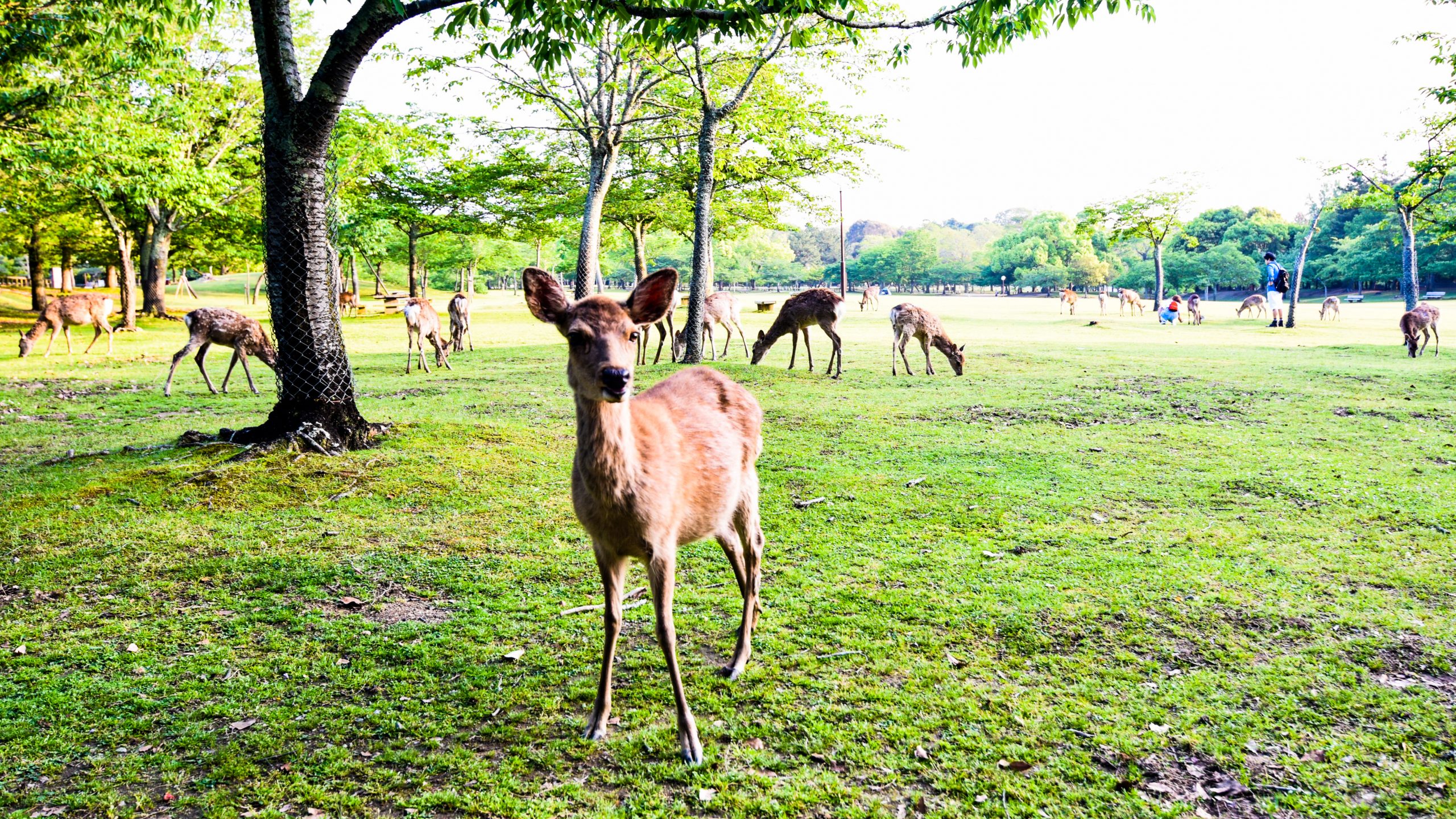
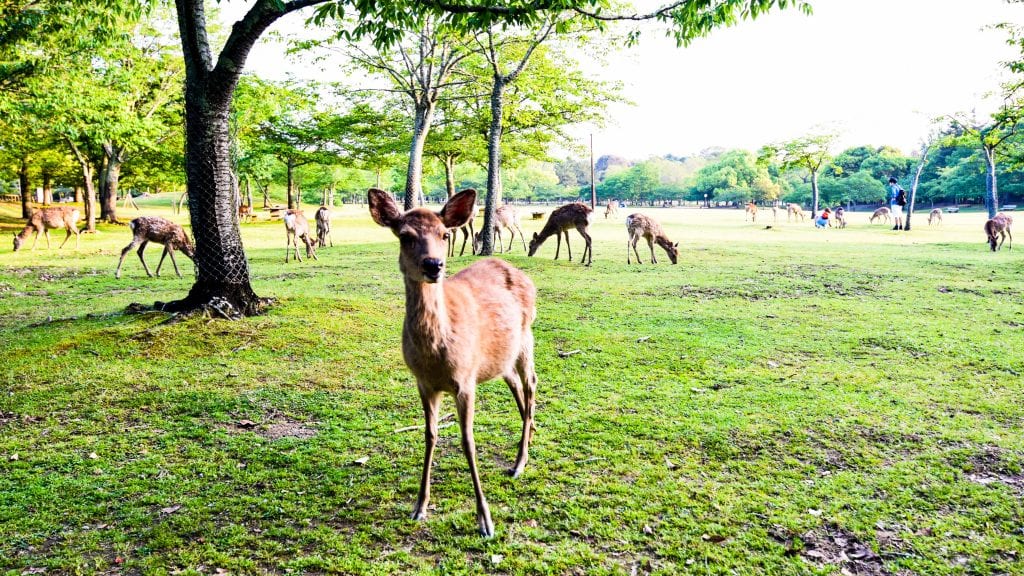 Nara Park deer — tame, friendly, and extremely motivated by the deer crackers sold at stalls throughout the park. Show empty hands immediately when you run out.
Nara Park is not really a “park” in the conventional sense — it is a vast open green space that encompasses most of central Nara, through which hundreds of sika deer roam freely. The deer are technically wild but have lived alongside humans for over 1,000 years, which has made them entirely unafraid of people and entirely motivated by the prospect of food.
Deer crackers (shika senbei): Sold by vendors throughout the park for ¥200 per pack. Buy from the official vendors — the packs are biodegradable and specifically designed for the deer. Do not feed them human food.
Honest deer feeding advice:
- The moment you buy crackers, nearby deer will notice. They will approach, nudge, and occasionally nip at your bag or clothes.
- Offer one cracker at a time with a flat palm.
- When your crackers are finished, hold up both empty hands facing outward — the deer recognise this and will move on to the next person.
- Do not wave crackers above your head for photos. The deer will rear up and it becomes chaotic quickly.
- Most encounters are completely charming. The deer are genuinely one of the most remarkable urban wildlife experiences in Asia — they bow in exchange for crackers, which never gets old.
Prefer to explore on two wheels? The E-Bike Nara Highlights tour (GetYourGuide) covers Todai-ji, Kasuga Shrine, the deer park, and a traditional knife-maker’s workshop by electric bike — a good option if you want to cover more ground without the full walking distance, or simply want a guide to add context to what you are seeing.
Todai-ji Temple — Japan’s Largest Bronze Buddha
Todai-ji is the centrepiece of Nara’s UNESCO World Heritage cluster and one of the most significant Buddhist temples in Japan. Built in 752, it houses the Daibutsu — the Great Buddha — a 15-metre bronze statue of Vairocana that required over 350,000 people to build, according to historical records. The main hall (Daibutsuden) is the largest wooden building in the world, despite being only two-thirds of its original size after it was rebuilt following fire damage.
Standing in front of the Daibutsu is one of those genuinely humbling experiences. The scale is difficult to grasp until you are standing at its feet.
Admission: ¥600. Open 7:30 AM to 5:30 PM (shorter hours in winter). Budget 45–60 minutes.
Tip: There is a pillar inside Todai-ji with a hole at the base the same size as one of the Buddha’s nostrils. Legend says that anyone who can squeeze through it will be granted enlightenment. Children regularly make it. Most adults do not.
Kofuku-ji Temple
Kofuku-ji sits immediately adjacent to Kintetsu-Nara Station and is often the first thing visitors see on arriving. It dates to 669 and was originally built in Kyoto before being relocated to Nara in 710. The temple has two pagodas — the five-storey pagoda (currently under renovation until 2024) and the three-storey pagoda — and the Central Golden Hall, which houses a gleaming gilded Buddha.
Admission: Outer grounds free; Central Golden Hall ¥300. Open 9:00 AM to 5:00 PM.
Isuien Garden — The Finest Garden in Nara
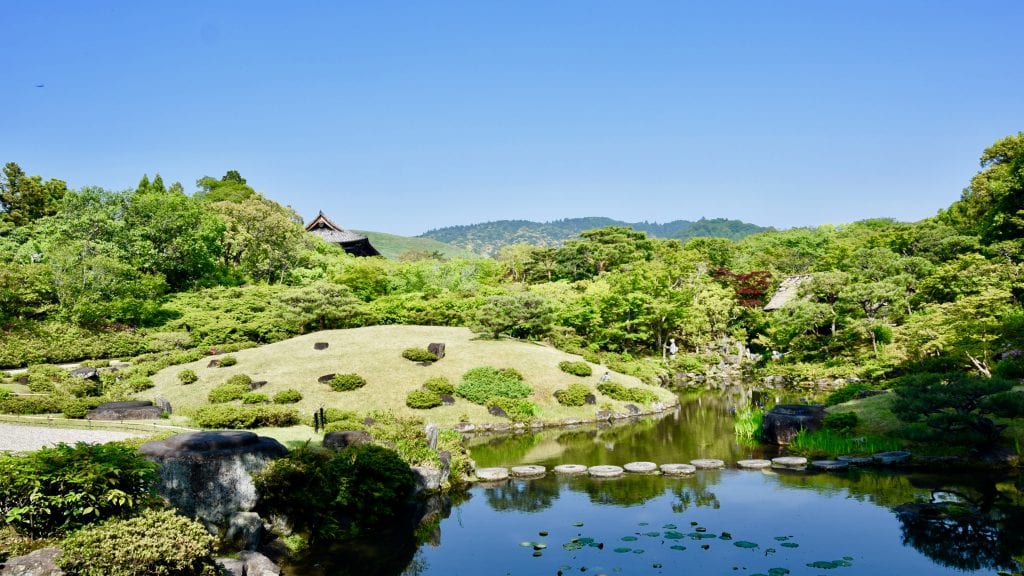 Isuien Garden in Nara — 17th century strolling garden with Mount Wakakusayama as a borrowed backdrop. One of the most serene places I visited in Japan.
Isuien Garden is my favourite place in Nara, and possibly the most undervisited. This Edo-period strolling garden from the 17th century uses the technique of shakkei (borrowed scenery) — the garden is designed so that Mount Wakakusayama forms the natural backdrop, making the mountain feel like part of the garden itself.
The pond at the garden’s centre is shaped so that the Japanese character for “water” (mizu) can be read in its outline — a level of intention in landscape design that still feels remarkable three centuries later. Decorative stones, sculpted hedges, stone lanterns, and a small tea house complete the picture. It is calm in a way that the more crowded temple grounds are not.
Admission: ¥1,200 (includes entry to Neiraku Art Museum within the grounds). Open 9:30 AM to 4:30 PM. Closed Tuesdays.
Kasuga Taisha Shrine
Kasuga Taisha is Nara’s most important Shinto shrine, established in 768 to protect the city. It sits at the edge of Nara Park, approached through a forested path lined with more than 2,000 stone lanterns — donated by worshippers over the centuries and lit twice a year during the Lantern Festival in February and August.
The orange torii gates and lantern-lined approach make this one of the most photogenic walks in Nara, particularly in the early morning when the light filters through the ancient cedar trees. Anyone who has been to Fushimi Inari in Kyoto will recognise the aesthetic immediately — Kasuga has the same vermilion gateway tradition.
Admission: Outer grounds free; inner sanctuary ¥500. Open from 6:30 AM.
Nigatsudo Hall — Best Sunset in Nara
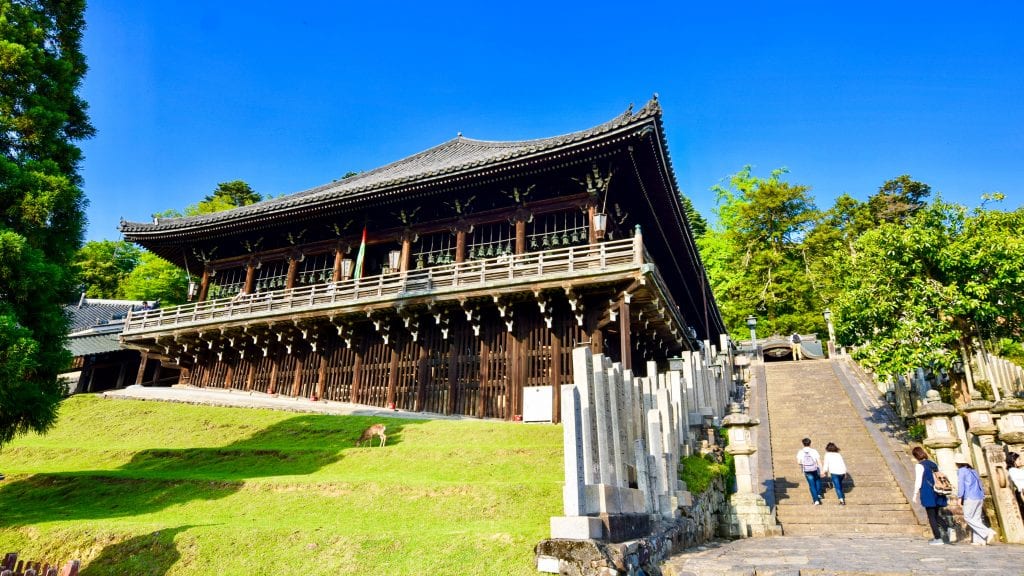 Nigatsudo Hall at Todai-ji — reached by a short staircase and worth every step. The best sunset view in Nara is from its wooden balcony.
Nigatsudo is a sub-hall of the Todai-ji complex, perched on a small hill a short walk from the main Daibutsuden hall. It requires climbing a staircase — which most visitors skip, heading straight for the Great Buddha — which means that even on busy days, Nigatsudo is quiet.
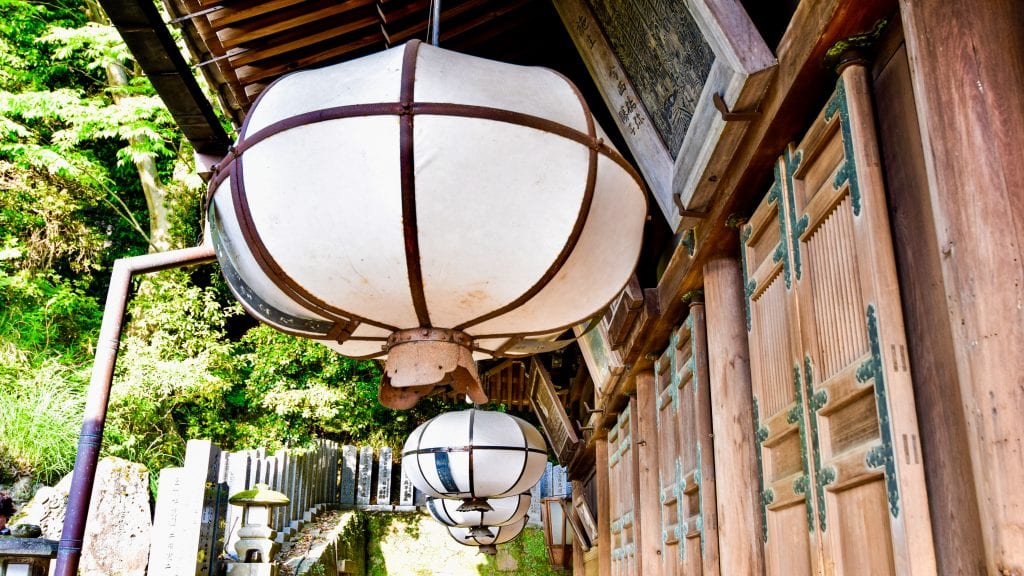 The hanging lamps inside Nigatsudo — the intricacy of the woodwork and the warmth of the light make this an unexpectedly moving space.
The wooden balcony looks out over Nara and offers the best sunset view in the city. If your timing allows, be here in the late afternoon as the light changes. The interior is remarkable too: elaborate wooden curves, and rows of hanging lanterns whose warmth transforms the space into something unexpectedly intimate.
Admission: Free. Open 7:30 AM to sunset.
⏰ Tip: If you can only do one thing in Nara that most visitors miss, this is it. Arrive 30 minutes before sunset and stay until the light is gone.
What to Eat in Nara
Kakinoha sushi — Nara’s most famous local food: rice and fish (often mackerel or salmon) wrapped in persimmon leaves. The leaf adds a subtle flavour and the format is traditional to the Nara region. Available at specialist shops near Kintetsu-Nara Station.
Warabi mochi — a soft, jelly-like sweet made from bracken starch and rolled in kinako (roasted soybean flour). Different from the regular mochi found elsewhere and particularly good in Nara.
Higashimuki Shopping Street — a covered arcade immediately outside Kintetsu-Nara Station with dozens of restaurants, cafes, and food stalls. Good for lunch midway through the day without having to plan ahead.
Cultural Experiences Worth Booking in Advance
Beyond temples and deer, Nara has some excellent hands-on cultural experiences that book up quickly:
- Kimono and Tea Ceremony: The Nara Kimono and Tea Ceremony Experience (GetYourGuide) lets you dress in a traditional kimono and participate in a formal tea ceremony — two of the most distinctly Japanese experiences in a single booking. Walking through Nara Park in a kimono, surrounded by deer, is genuinely memorable. Book in advance as slots are limited.
- Private World Heritage Tour: The Nara World Heritage Private Tour (Klook) is a fully private guided tour covering Nara’s UNESCO sites with a knowledgeable English-speaking guide. Worth it if you want depth on the history of each site rather than walking through on your own.
Practical Tips for Your Nara Day Trip
Arrive early. By 10 AM, tour buses begin arriving and the main sites fill up. By 1 PM, Nara Park is crowded. The deer are calmer and the temples quieter in the morning.
Wear comfortable shoes. Everything in Nara is walkable but you will cover 8–12 kilometres over a full day, much of it on uneven stone paths and temple stairs.
Take a full day, not a half day. Nara is often described as a “half day trip” and this undersells it. If you rush Todai-ji, Kasuga Taisha, Isuien Garden, and Nigatsudo, you will not enjoy any of them properly. Allow 5–7 hours.
Luggage storage: Available at both Kintetsu-Nara Station and JR Nara Station. If you are travelling with large bags between cities, store them here for the day (around ¥500–800 per bag).
Cash: Many smaller vendors and temple admission counters still prefer cash. Bring at least ¥3,000–5,000 in yen.
2026 note: Kofuku-ji’s pagoda reflection in Sarusawa-Ike pond — one of Nara’s most photographed scenes — is not currently viewable as the pond area is under renovation until 2031.
Renting a car: If you want to visit sites beyond central Nara — particularly Horyu-ji Temple (the world’s oldest surviving wooden structure, 20 minutes south by car) or the Yoshino mountain area — a rental car is the most practical option. Public buses to these outlying sites run infrequently. Compare car hire rates via Discover Cars — they aggregate local and international agencies for the best price.
Book a Guided Tour
If you would rather not handle the logistics yourself, several tours run from both Kyoto and Osaka:
How Long to Spend in Nara?
Half day (3–4 hours): Nara Park deer + Todai-ji only. Fine if you are short on time, but you will feel rushed and miss Isuien Garden and Nigatsudo — the two most memorable parts of the visit.
Full day (5–7 hours): The right amount. Covers Kofuku-ji, Nara Park, Todai-ji, Isuien Garden, Kasuga Taisha, and Nigatsudo at sunset without rushing.
Overnight: Worth considering if you want to see the Lantern Festival (February and August), explore the quieter temple districts in the early morning, or combine Nara with nearby Yoshino or Horyu-ji temple.
Frequently Asked Questions
Is Nara worth a day trip from Kyoto?
Yes, without hesitation. Nara is often described as just “the deer place” but it is significantly more than that. The scale of Todai-ji, the calm of Isuien Garden, and Nigatsudo at sunset are experiences that most visitors rank among the highlights of their Japan trip. If you have a spare day from Kyoto, Nara is the right choice.
How long do you need in Nara?
A full day — 5 to 7 hours on the ground. A half day (3–4 hours) gets you Nara Park and Todai-ji, but you will have to skip Isuien Garden, Kasuga Taisha, and Nigatsudo, which are the parts that make the visit memorable rather than just ticked off. Arrive before 10 AM and stay until sunset for the best experience.
Is Nara better as a day trip from Kyoto or Osaka?
Both work equally well in terms of logistics — Nara is about 35–45 minutes from either city by Kintetsu train. The choice depends on your itinerary. If you are spending several days in Kyoto, day-trip from Kyoto. If your base is Osaka, go from there. Many travellers visit Nara between the two cities on a travel day, stopping for the afternoon before continuing on.
Can you see Nara in half a day?
You can, but you will feel the time pressure. Nara Park and Todai-ji alone take 2 to 3 hours if you are not rushing. Add Kasuga Taisha and the walk there, and a half day is gone before you reach Isuien Garden. If half a day is all you have, go early and prioritise Todai-ji and the deer — but know that you are leaving the best parts for a future visit.
Do I need to book anything in advance for Nara?
The temples and park are all walk-in with no advance booking required. What fills up are the guided tours and cultural experiences — the kimono and tea ceremony, private UNESCO tours, and the e-bike tour all require advance booking, especially during cherry blossom season (late March to mid-April) and autumn foliage (mid-November). Train tickets can be bought on the day, though the Aoniyoshi luxury train requires a reservation.
Are the Nara deer dangerous?
Rarely, but they are wild animals and behave accordingly. They will nudge, nip, and push if they think you have crackers. Show empty hands clearly when your crackers run out. Do not tease them with food or hold crackers above their heads. Do not approach deer with fawns. The vast majority of encounters are completely charming — the deer are one of the genuinely joyful things about Nara. Just respect them as the wild animals they technically are.
Is Nara Worth It?
I went into Nara thinking it would be the “deer place” — a tick-box stop between Kyoto and Osaka. It was significantly more than that. The scale of Todai-ji is genuinely humbling. Isuien Garden is one of the most beautifully designed spaces I have ever stood in. And Nigatsudo at sunset, with almost no one else there, is the kind of experience that travels back home with you.
If you have a day free from your 3-day Kyoto itinerary, spend it in Nara. You will not regret it.
Please visit:
Our Sponsor
Related Posts

Understanding Hotel Accounts Receivable Controls
Having worked in the hotel business for over four decades,…
Mannheimer Hof reopens as part of Leonardo Limited Edition Collection
The Mannheimer Hof, a historic hotel in Mannheim, has officially…

Three From Connecticut Make ’25 Best Hotels in New England’ List
[] Three From Connecticut Make '25 Best Hotels in New…