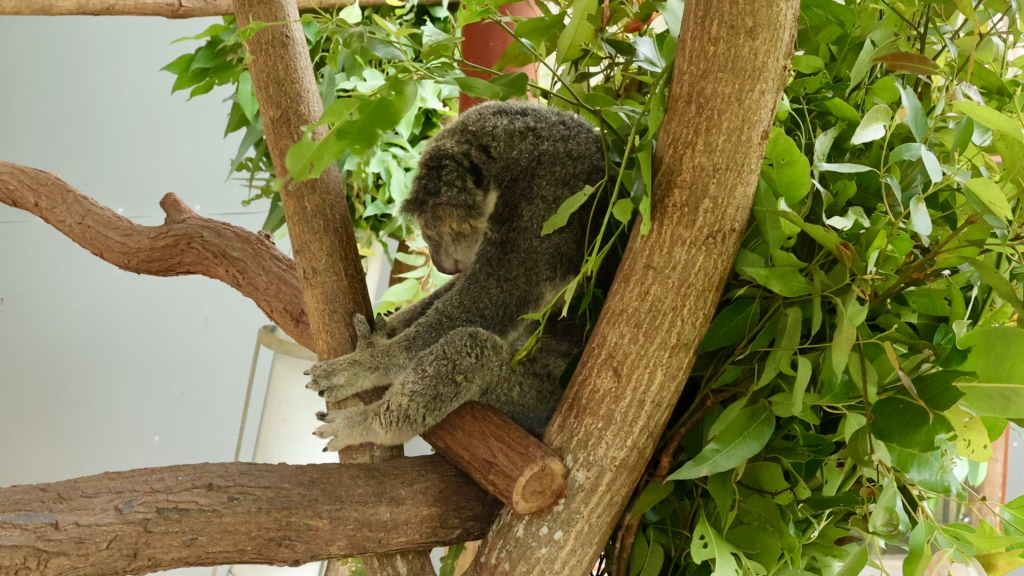
Kuranda Koala Gardens sits inside the Heritage Markets, a short walk from either the Skyrail terminal or the railway station, and it’s easy to underestimate from the outside. It’s small. But small, in this case, means something closer to a working wildlife sanctuary than a sprawling zoo, and that shapes the whole visit. It’s well kept, it’s not trying to be bigger than it is, and I had a genuinely good time there.
Quick answer to the question in the title, since it’s the one most people actually want settled before they book: no, you don’t hold the koala here. A keeper holds it, and you stand alongside for a supervised pat and a photo. If holding one yourself is the goal, that’s a different attraction elsewhere in Cairns, not this one.
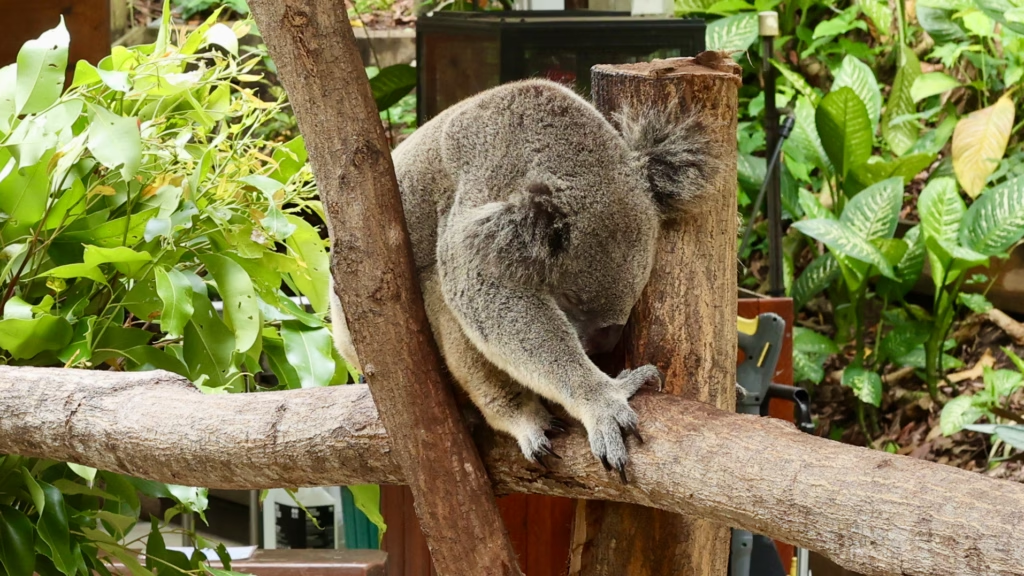 A koala settled into its perch under open-sided cover, with a fan running nearby for the warmer months.
Quick facts before you go
- Where: 2/4 Rob Veivers Drive, Kuranda QLD 4881, inside Kuranda Heritage Markets, walkable from both the Skyrail terminal and Kuranda Railway Station.
- Opening hours: 9:30am to 4pm daily.
- How long to allow: 30 to 40 minutes for a straightforward walk-through, longer if you’re feeding wallabies or booked in for a koala photo.
- Best time to visit: Dry season (May to October) for the most comfortable weather, and early morning if you want the animals at their most active and the boardwalks at their quietest.
- Run by: The Freeman Family, through the North Queensland Wildlife Trust, established in 2004 to support wildlife rehabilitation and habitat restoration in the region.
What’s actually there
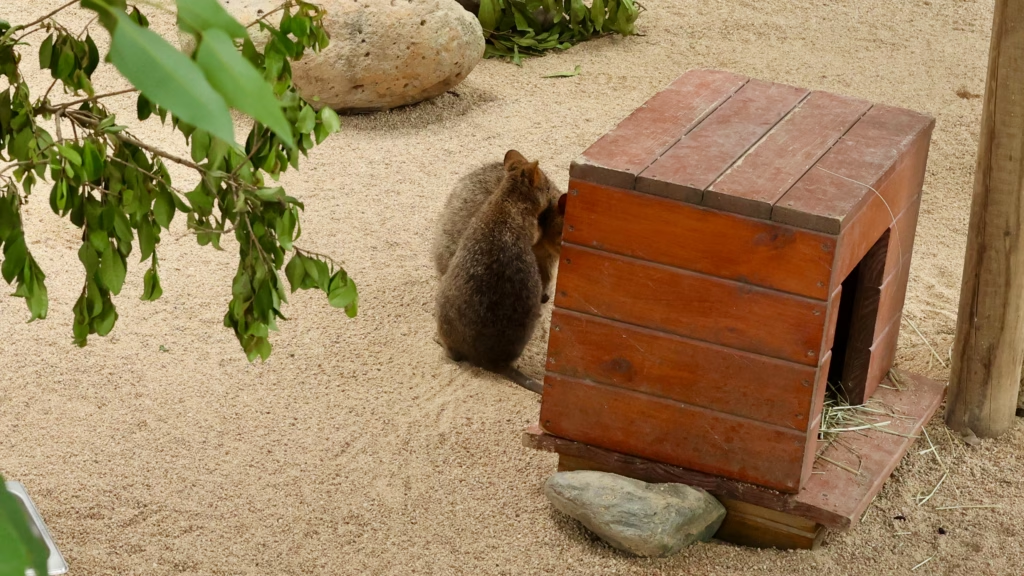 A quokka investigating its own timber shelter, one of the smaller, easily overlooked residents.
The animal list is longer than the footprint suggests. Alongside the koalas, there are wombats, kangaroos, and free-roaming wallabies you can hand-feed for nothing.
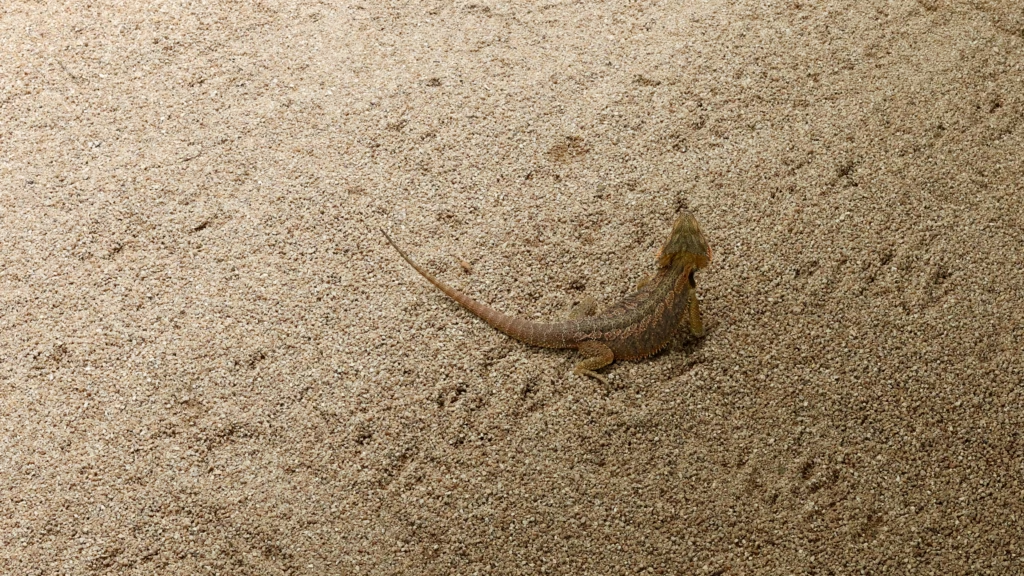 A frilled-neck lizard blending almost perfectly into the sand of its enclosure.
There’s a genuinely good reptile collection too, not an afterthought tacked onto the mammals.
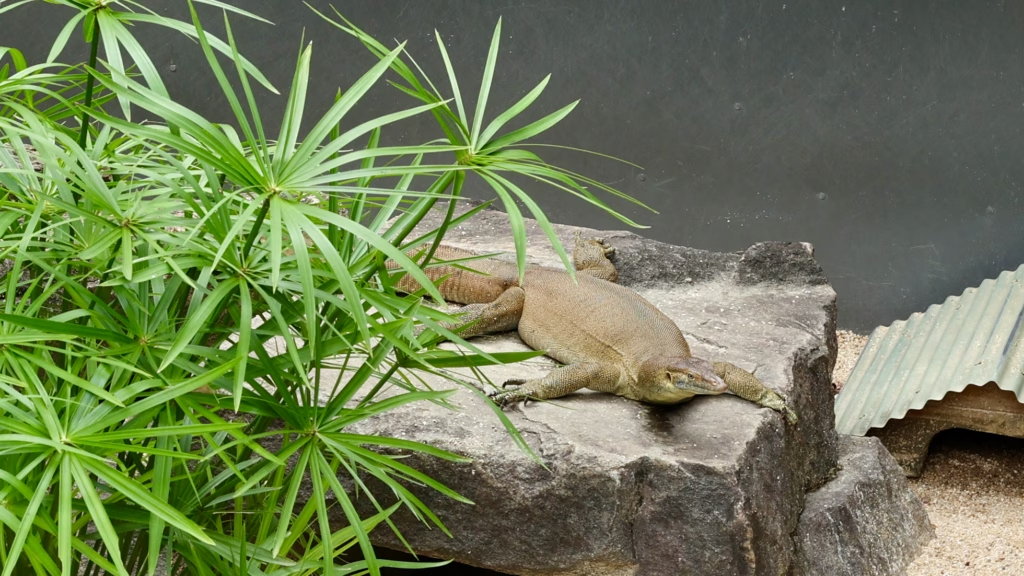 A monitor lizard sunning itself on a flat rock, tucked in among ferns and a corrugated iron hide.
These are ambush specialists by nature, and the enclosure plays to that instinct, plenty of open sand to disappear into rather than dense cover to hide behind.
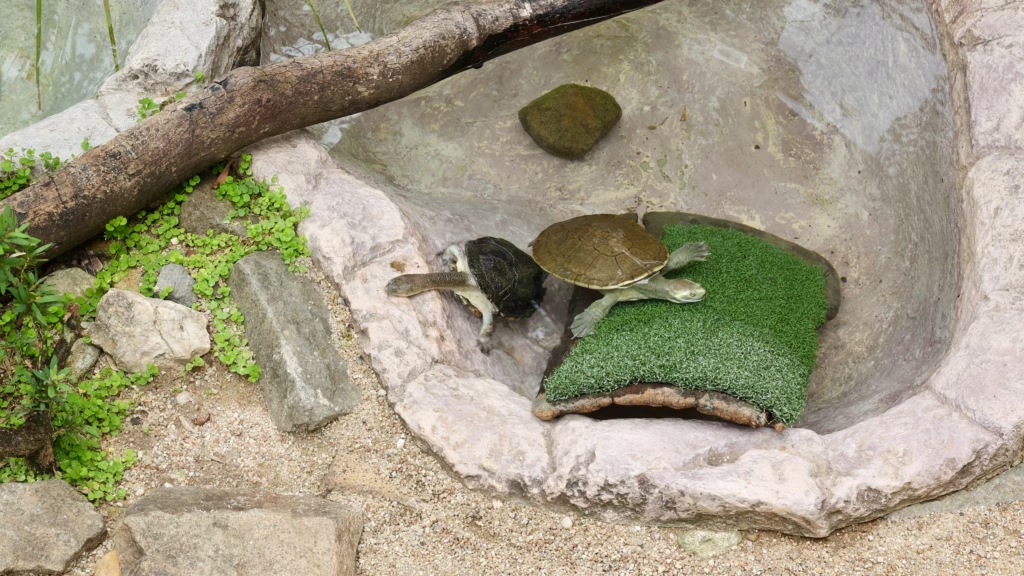 A pair of freshwater turtles hauled out onto a rock ledge, one balanced on an artificial turf mat.
A few steps further along, the reptile theme continues with a very different kind of enclosure.
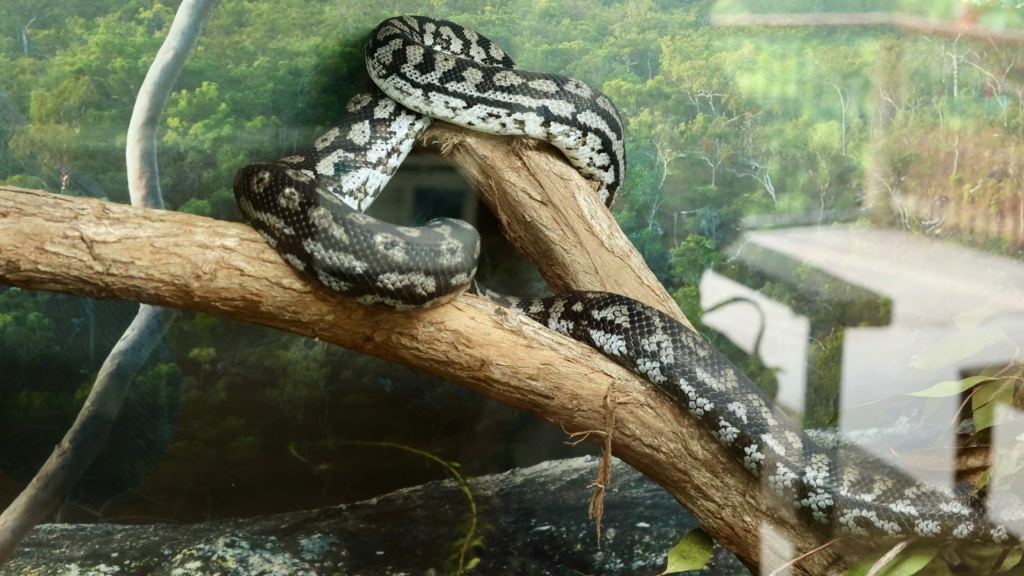 A carpet python coiled around a branch, rainforest visible through the enclosure wall behind it.
The water enclosures are small but well thought out, rock ledges and turf mats giving the turtles somewhere to properly haul out and bask rather than just tread water.
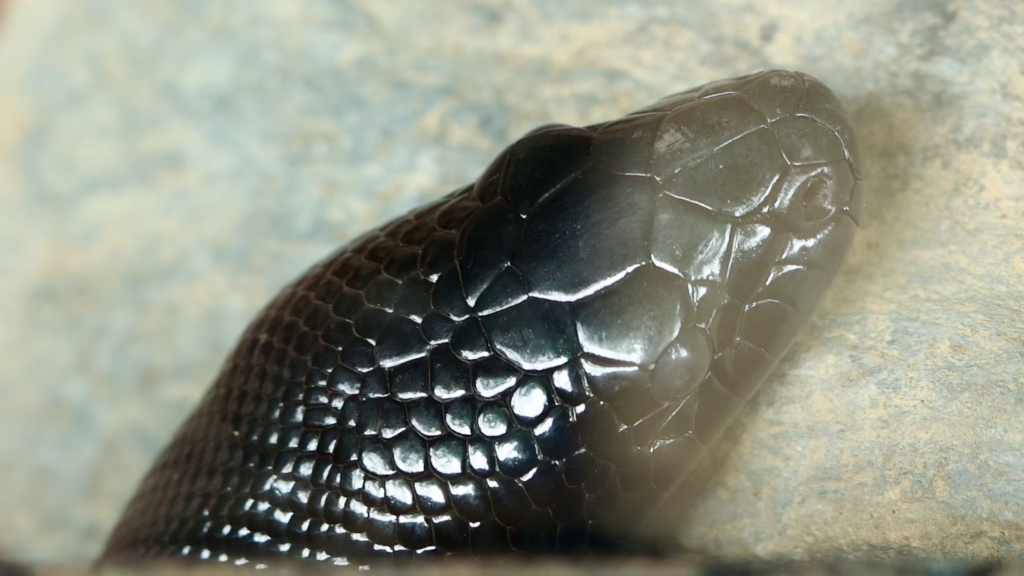 Something smaller and darker, just a head visible between two rocks, easy to walk straight past.
Carpet pythons are common enough across Far North Queensland that you might spot one in the wild too, non-venomous, and generally more interested in staying still than doing anything dramatic for an audience.
Worth slowing down for, this one in particular, since it’s the kind of animal you’ll only spot if you’re actually scanning the rockwork rather than walking past on the way to the next enclosure.
The nocturnal exhibit is worth knowing about specifically, it’s the only one of its kind in the Tablelands region, home to species like the Greater Bilby, Northern Bettong, and Mahogany Glider, animals most visitors to Far North Queensland never get the chance to see at all.
The kangaroos, wallabies, and a genuine word of caution about the wombats
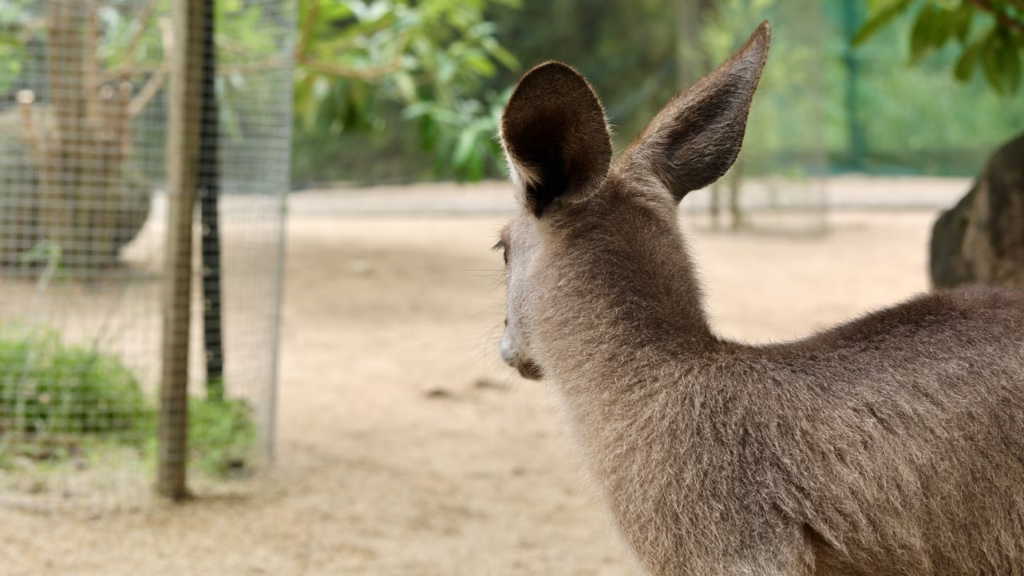 A kangaroo’s ear caught mid-swivel, close enough in this enclosure for genuinely detailed shots.
This is where the Gardens earns its “intimate” reputation. The wallabies roam free through their section, and feeding them is included in admission, no extra charge, no queue.
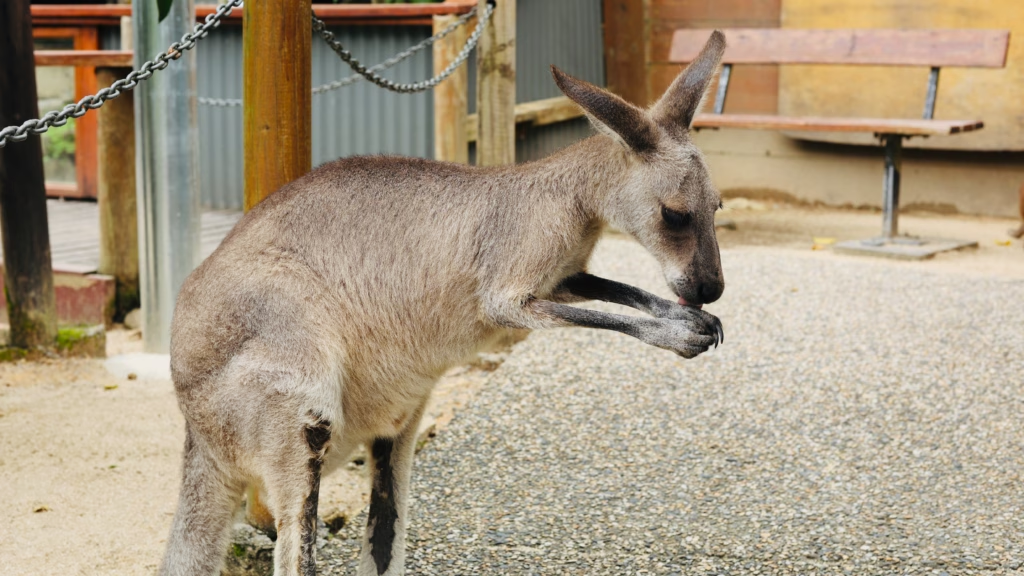 A kangaroo mid-groom, licking its forearm in the unhurried way they do when nothing feels like a threat.
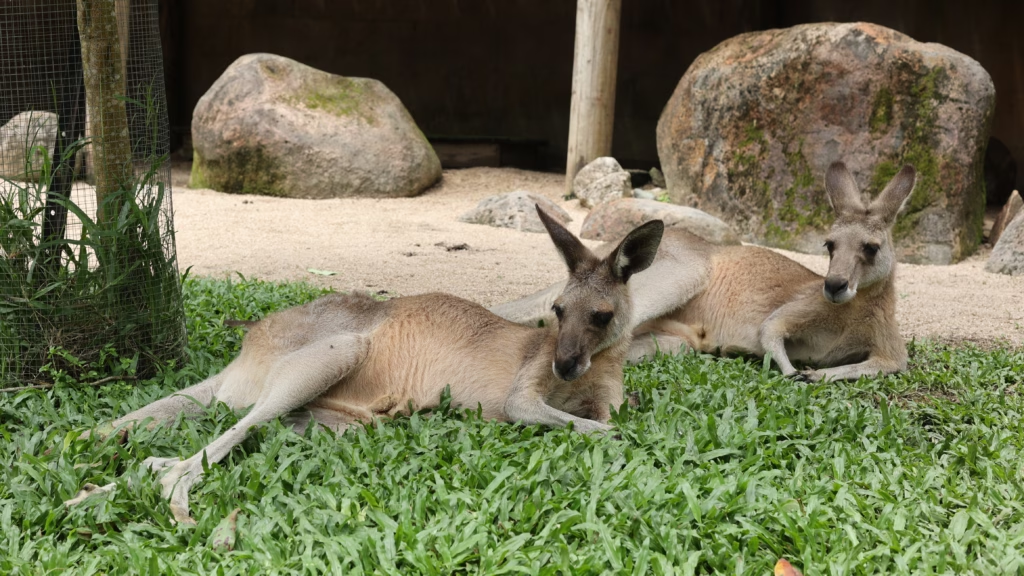 Two kangaroos resting together in the shade, an unposed, half-asleep moment.
A practical note on the wombats. They look slow and harmless, and most of the time they are. But if a wombat is tucked in near its wooden den and feels cornered, it can charge, and it hits far harder than its size suggests, wombats have a reinforced rear and shoulder built to defend a burrow entrance against predators. Don’t put your hand on a wombat’s body while it’s near its log shelter. Admire it, photograph it, but give it the space to retreat if it wants to.
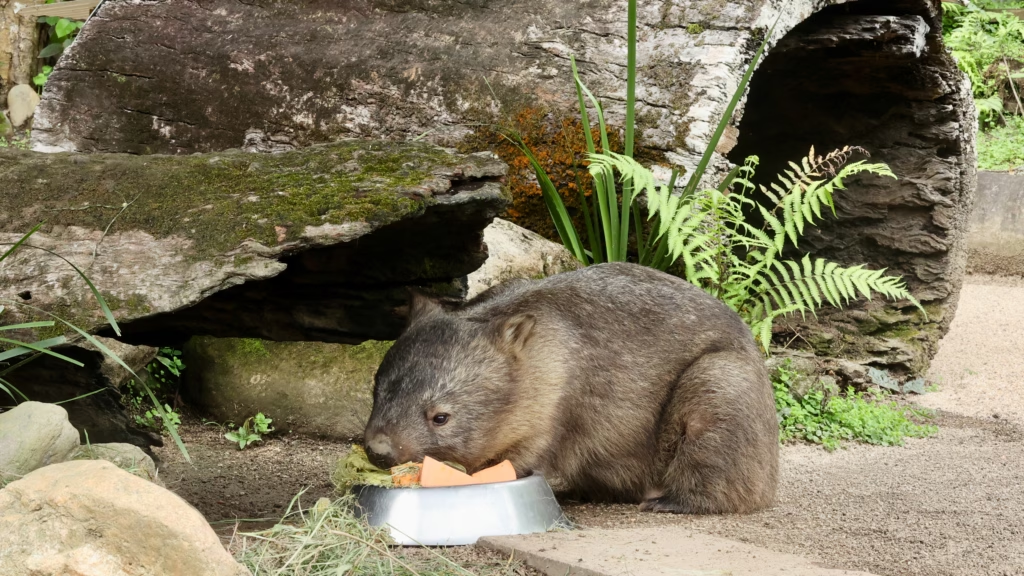 A wombat working through a bowl of vegetables beside its log den, unbothered by nearby visitors.
The koala photo, and the debate worth knowing about
One of the Koala Gardens residents settled into a eucalyptus branch, mid-feed.
Kuranda Koala Gardens is one of a small number of places in Australia where visitors can pay for a supervised koala photo, but it’s worth being precise about what that actually involves: a keeper holds the koala, and you pat it and stand alongside for the photo, rather than holding the animal yourself. It’s also worth knowing that some older cached pages and directory listings for this same business still use the word “hold,” which is likely a leftover from how the experience used to be marketed rather than how it currently runs, the operator’s own current site is consistent in calling it a patting photo. That inconsistency across the web is probably a big part of why reviews are so mixed on this exact point. Numbers are limited each day so the koalas aren’t overworked, so it’s worth asking at admissions when you arrive rather than assuming you can turn up at any time and join in.
The sessions run at scheduled times through the day rather than on demand. The standard process elsewhere I’ve seen described includes a printed photo on the spot plus a free digital copy within a few hours, but for what it’s worth, when I asked about it, I was told the photo would simply be taken and sent later via a link, so the exact process may vary by day or by how busy they are. Worth confirming at the counter rather than assuming either way.
Reviews on this specific point are genuinely divided. Plenty of visitors describe it as a highlight, staff talking them through proper handling, animals rotated out if they show any sign of stress. Others have raised concerns about enclosure size and about paid handling of koalas and snakes for photos more broadly, arguing it sits uncomfortably with modern animal welfare standards.
I don’t think it’s my place to settle that argument for you. What I’d say is this: if animal handling for photos is something you have strong feelings about either way, it’s worth deciding before you go rather than being surprised at the counter. My own visit was a straightforward, enjoyable walk through a well-kept small park, and nothing I saw looked distressed, but I also didn’t book a koala photo session myself, so I can’t speak to that part of the experience first-hand.
Worth knowing if you’re weighing this up
Queensland is one of only three states in Australia, alongside South Australia and Western Australia, where any form of koala handling is still legal. New South Wales, Victoria, Tasmania, the ACT, and the Northern Territory have all banned it outright. That’s part of why this kind of experience exists here and not everywhere. On the money side, Kuranda Koala Gardens states that $2 from every souvenir photo purchased goes to the North Queensland Wildlife Trust, which funds wildlife rehabilitation and habitat work in the region.
Right next door: Birdworld Kuranda
If you’re already at the Heritage Markets, Birdworld sits close enough that it’s worth treating as a pair rather than a separate trip. It’s a large walk-through, free-flight aviary, home to close to 350 birds across around 60 species, one of the biggest such collections in Australia, and there’s no time limit on your visit, so you can wander at whatever pace suits you.
The path is paved and easy going, winding past two lakes connected by a small waterfall where you’ll find stilts, herons, and Australia’s own black swan. Overhead, blue-and-gold macaws and other South American parrots share space with native lorikeets, galahs, and cockatoos, and most of them are genuinely free-flying rather than caged, which is the whole point of the place. A finch aviary holds the smallest and most colourful residents in their own secure enclosure, and there’s a dedicated, secure enclosure for Birdworld’s Southern Cassowary, a male named Jimmy, kept separate for everyone’s protection given how dangerous cassowaries can be despite how placid they look.
Feed is available to buy if you want the birds landing on your arm or shoulder for photos, and staff run informal talks through the day covering conservation status and behaviour for some of the rarer species. Both attractions offer combined tickets covering Koala Gardens and Birdworld together, worth asking about at the counter rather than buying two separate entries if you’re doing both.
Getting there
Both Kuranda Koala Gardens and Birdworld sit inside the Heritage Markets, a 10 to 15 minute walk from either the Skyrail terminal or Kuranda Railway Station, so either or both slot naturally into a Skyrail-and-railway day without any extra transport. The address is 2/4 Rob Veivers Drive, Kuranda QLD 4881, and Kuranda Koala Gardens is open daily from 9:30am to 4pm.
Other ways to see it
Book Your Visit in Kuranda Koala Park + Bird World
Was It Worth It?
Yes, and for a reason I didn’t expect going in. I’d braced myself for something closer to a roadside zoo, a few tired enclosures built around the koala photo as the main event. What I actually found was smaller and better than that, a place clearly run by people who care about the animals more than the queue, where the highlight for me wasn’t the koala at all, it was a snake’s head tucked between two rocks that I almost walked straight past, and a wombat that taught me to keep my hands to myself.
If you’re the kind of traveller who needs the headline attraction to be the whole story, you might come away thinking this is a small stop between the markets and lunch. If you’re the kind who likes finding the detail nobody mentioned, the quokka in its own timber shelter, the reptile collection that’s better than it has any reason to be, this is exactly the kind of place that rewards slowing down for. I went in for a koala photo I never took, and left thinking about the wombat instead.
FAQ
Is Kuranda Koala Gardens worth visiting?
For a straightforward, unhurried look at koalas, wombats, kangaroos, and a solid reptile collection in a compact setting, yes. It’s small enough to feel personal rather than overwhelming, and it’s well maintained.
Can you hold a koala at Kuranda Koala Gardens?
No, not by yourself. A keeper holds the koala, and you pat it and pose alongside for a souvenir photo, for an additional fee, at scheduled times through the day with limited daily numbers. It’s one of the more debated aspects of the visit, so worth deciding your own comfort level with it beforehand.
Are the wombats safe to touch?
Generally yes, but treat them with real caution near their log dens. A cornered wombat can charge and hit hard enough to injure someone, so admire and photograph rather than placing a hand directly on its body.
How long does a visit take?
Around 30 to 40 minutes for a walk-through, longer if you feed the wallabies or book a koala photo session.
Is it included in a Skyrail or train ticket?
No. Entry needs to be booked separately from either the Skyrail Rainforest Cableway or Kuranda Scenic Railway tickets.
What animals will you actually see?
Koalas, wombats, quokkas, kangaroos, free-roaming wallabies, freshwater crocodiles, turtles, snakes, monitor lizards, and a nocturnal exhibit with bilbies and gliders.
Is Birdworld worth visiting alongside it?
Yes, if you enjoy birds even casually. Close to 60 species, free-flying rather than caged, and no time limit on the visit, easy to pair with Koala Gardens since they share the same markets.
PS: This is the post promised at the end of my Skyrail and Kuranda Scenic Railway write-up, and the loop closes both ways, that post covers how to actually get here.
Every guide on A Walk in the World is written to help you have the best possible trip. I only recommend hotels, tours, and experiences I’d genuinely choose myself, and I don’t accept payments or sponsorships from operators in exchange for positive coverage. Some of the booking links on this site are affiliate links, which means I may earn a small commission if you book through them, at no extra cost to you. Thanks for trusting my guides and supporting the blog!
Please visit:
Our Sponsor
Related Posts

Downtown Monroe’s Newest Crown Jewel, The Hotel Monroe Officially Opens May 29
MONROE, LA — A new chapter begins in Northeast Louisiana…

IHG Hotels & Resorts Strengthens Presence in Turkish Leisure Market with Second Holiday Inn Resort Signing
IHG Hotels & Resorts (IHG), one of the world's leading…

IDeaS Announces Spotlight, Delivering a New Edge in Demand Generation for Hotel Marketing
Source: IDeaS MINNEAPOLIS — IDeaS, a SAS company and the…