If someone had blindfolded me on my first evening in Cairns and left me on a street corner with every sign covered, I don’t think I could have told them I was in Australia. That’s not a complaint. It’s the single most interesting thing about the place, and it took me until my second day here to actually admit it to myself.
I’d flown in from Melbourne on 17 January, five nights booked at a motel on Sheridan Street, Skyrail and a waterfall day already locked in before I’d even landed. What I hadn’t planned for was how much the city itself would keep surprising me, in ways that had nothing to do with the reef or the rainforest everyone comes here for.
Cairns City Centre at a Glance
- Vibe: tropical and laid-back, closer to Southeast Asia than the rest of Australia
- Beach in the CBD: no, it’s tidal mudflat and unsafe ocean water (crocodiles, seasonal stingers), with the free Esplanade Lagoon as the safe swimming alternative
- Walkable: yes, the CBD is compact enough to cover almost entirely on foot
- Public transport: limited buses, cash only, no metro or tram
- Nightlife: concentrated around the Esplanade and Night Markets, quiet elsewhere after dark
- Reef trips: depart from Reef Fleet Terminal on the Esplanade, most mornings between 8-8:30am
It Doesn’t Look Like the Rest of Australia
Every other Australian city on this trip had a certain look to it: dry light, low scrubby hills or none at all, that particular flat brightness you get in Sydney or Hobart or Melbourne even in summer. Cairns has none of that. The mountains behind the city are close and green and steep, the air is thick in a way it never was further south, and the rain doesn’t build up over an afternoon the way it does elsewhere, it just arrives, all at once, and then stops again twenty minutes later like nothing happened.
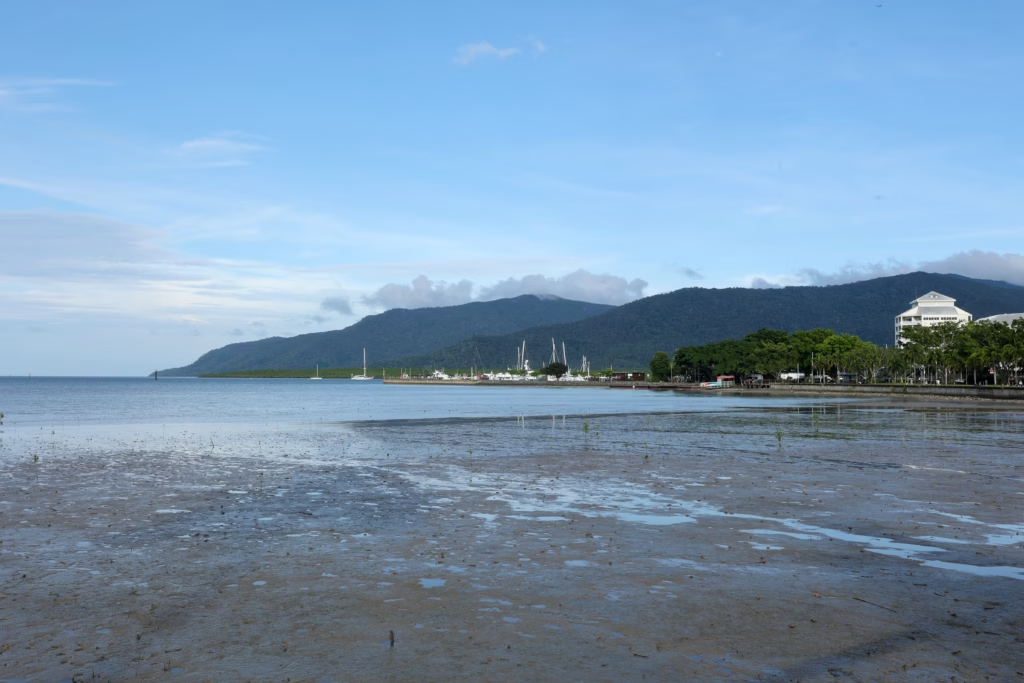 The mountains sit right behind the city, close and green, nothing like the drier skylines further south.
If I’m honest about what it reminded me of, it wasn’t Sydney or Melbourne at all. It was Thailand, or Vietnam. The lushness, the smaller, steeper hills instead of the flatter country I’d seen everywhere else on this trip, the heat that turns to rain without warning. Cairns sits at roughly the same latitude as plenty of Southeast Asia, and once I noticed the resemblance I couldn’t stop seeing it.
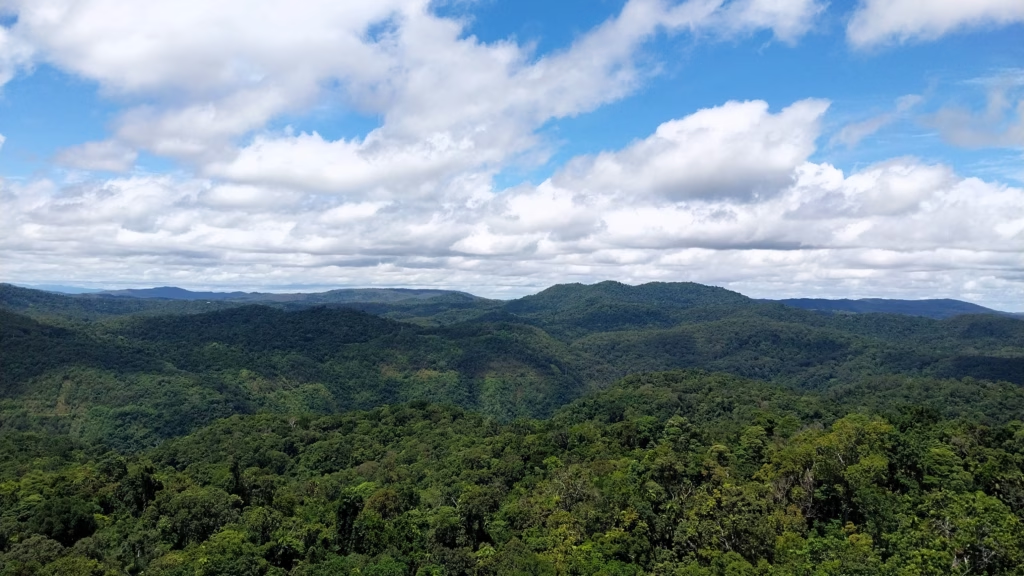 Rainforest canopy running unbroken across the ranges – this is the view that convinced me Cairns has more in common with Southeast Asia than the rest of Australia.
I visited in January, deep in the wet season, and that timing is a big part of why everything looked as lush as it did. Cairns runs on two seasons: wet (roughly November to April), with the heat, the humidity, and the sudden downpours I’ve been describing, and dry (May to October), which trades the intense green for far more reliable, sunny weather. If you want what I saw, come in the wet season and accept the rain. If you’d rather not risk a washed-out day, the dry season is the safer bet, just a less dramatic-looking one.
One more thing about the landscape, once you’re out of the CBD itself: Cairns is proper sugar country. The moment you’re on any road heading out of the city, whether that’s toward Palm Cove, out to Skyrail’s base at Smithfield, or anywhere else along the coastal plain, you’ll pass field after field of sugarcane. Far North Queensland has been growing cane commercially since the 1880s, and the Mulgrave Sugar Mill at Gordonvale, just south of the city, has been running since 1896. It’s easy to miss if you’re only spending time on the Esplanade, but it’s a big part of what the region runs on.
A Different Mix of People Than the Cities Further South
The other thing I noticed within a day or two was that Cairns simply looks different to Sydney, Melbourne, or Hobart in who’s on the street. It’s not a small thing, and it’s not a coincidence either. Cairns has a noticeably larger Aboriginal and Torres Strait Islander population than the southern capitals, somewhere around 7-11% depending on which part of the wider region you’re counting, against roughly 1-2% in Sydney or Melbourne.
Torres Strait Islanders specifically are a Melanesian people, closely related to the Papuan people of Papua New Guinea, and Cairns and Townsville are the two mainland cities they’ve historically moved to in the largest numbers. On top of that, Cairns is a real gateway to PNG in a way no city further south is: Papua New Guinea is one of the top source countries for Cairns’ overseas-born population, alongside the UK and New Zealand.
None of that is something you’d necessarily read about before visiting, but it’s part of what makes the city feel different the moment you’re standing in it, and it’s worth knowing rather than just noticing and wondering. Worth adding, too: the land Cairns itself is built on is the traditional Country of the Gimuy Walubara Yidinji people, part of the wider Yidinji nation, and Gimuy is the traditional name for the area the city now occupies. Cairns Regional Council formally acknowledges several Traditional Owner groups across the wider region, including the Djabugay, Yirriganydji, and Gunggandji peoples alongside the Yidinji.
Getting Your Bearings: One Signpost Tells You Everything
Cairns’ city centre is small enough that you can orient yourself from a single street corner, and for me that corner was Shields Street, just after dark on my second evening.
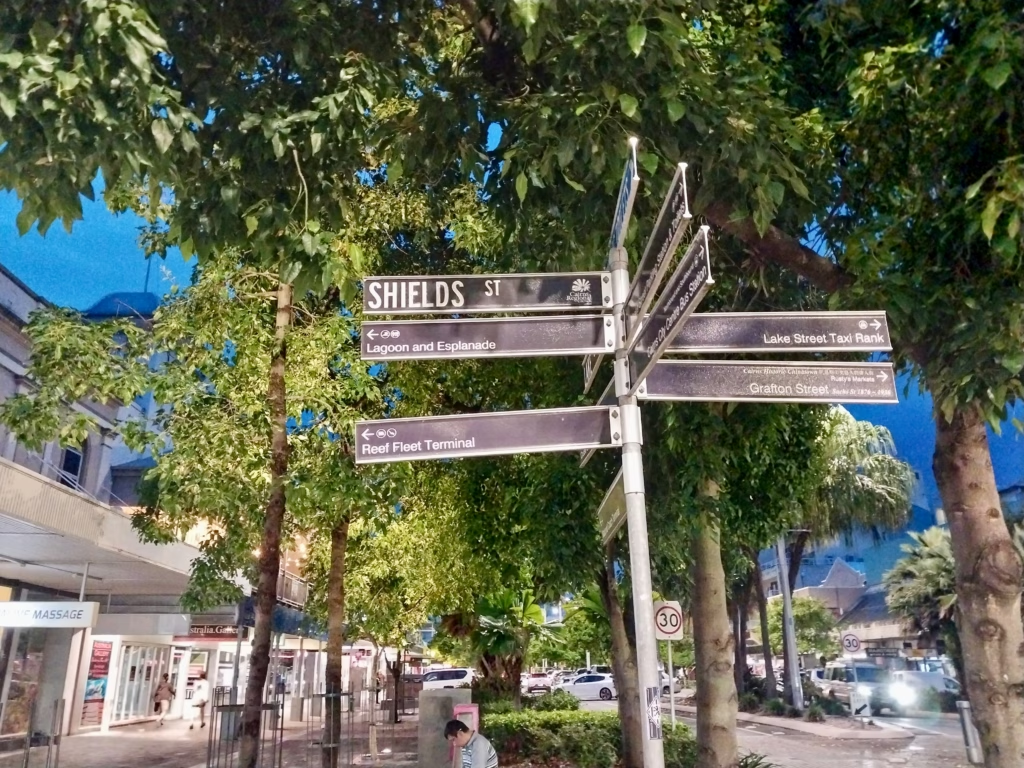 One signpost, and you’ve basically got the whole city centre laid out: the Lagoon, the Esplanade, the Reef Fleet Terminal, the taxi rank, and Chinatown.
One pole, six arms, and between them the entire reason most people are in this city: the Lagoon and Esplanade one way, the Reef Fleet Terminal another, the Lake Street taxi rank a third, and Cairns’ historic Chinatown and Rusty’s Markets off toward Grafton Street. If you only remember one thing about navigating central Cairns, it’s that almost everything worth doing on foot sits within a few blocks of that exact spot. I didn’t spend real time in Chinatown itself on this trip, so I can’t give you a first-hand take on it, but it’s worth knowing it’s there on the signpost alongside everything else, a short walk from wherever you’re standing.
I didn’t do a reef trip on this visit, so I can’t tell you what it’s actually like out there, but the Reef Fleet Terminal is worth understanding since it’s where every one of those boats actually leaves from. It’s at 1 Spence Street, right by the Pier and the Shangri-La, and it works like an airport departure hall: you check in at your operator’s desk, then board for an 8-8:30am departure. Most boats reach the outer reef in 45-90 minutes by high-speed catamaran, and you’ll typically get 3-5 hours on the water before heading back. You don’t need to be a strong swimmer either; glass-bottom boats, semi-submersibles, and underwater observatories are all standard options for people who’d rather not get in the water at all. If you want to plan the actual trip, Tourism Tropical North Queensland is the official regional body and a better starting point than picking an operator off a street-side board.
The other anchor is Cairns Central, the shopping centre built over the top of the train and long-distance coach station, a short walk inland from the Esplanade.
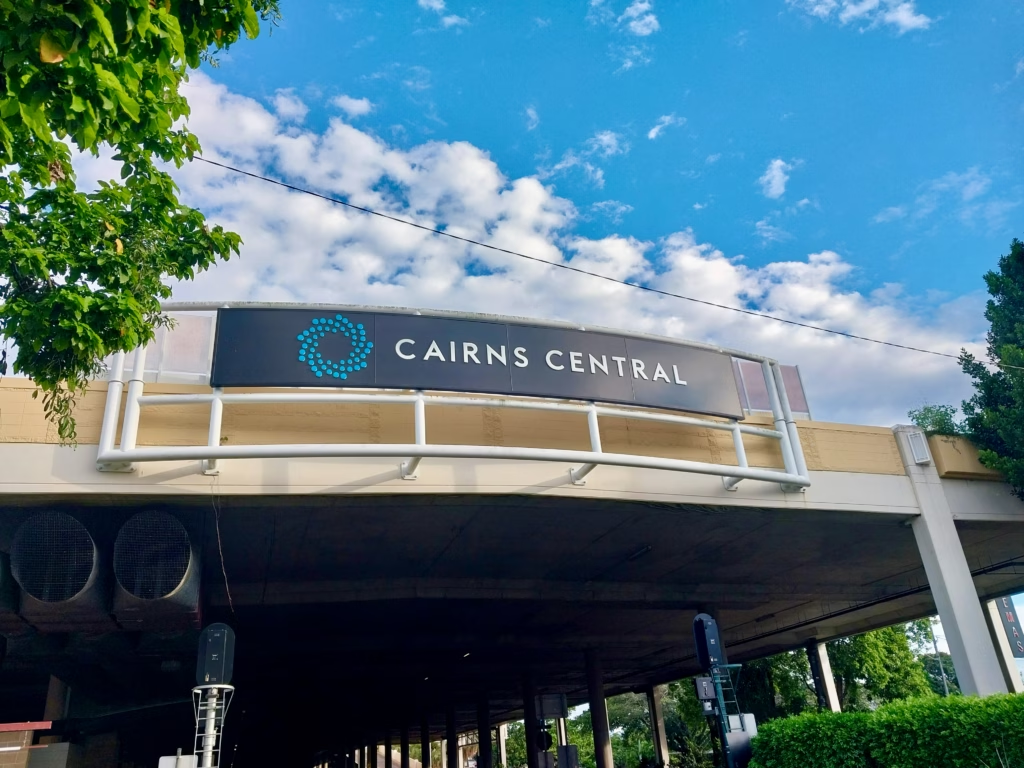 Cairns Central: the shopping centre, train station, and coach terminal all under one roof, a few minutes’ walk from the water.
Between those two points, Shields Street and Cairns Central, you’ve got the CBD’s entire practical skeleton: where you eat, where you catch a bus or a train, and where you’ll spend your time. Working from the GPS on my own photos, it’s roughly a 15-minute walk between Cairns Central and the Lagoon, so nothing in the CBD is ever more than a short stroll away.
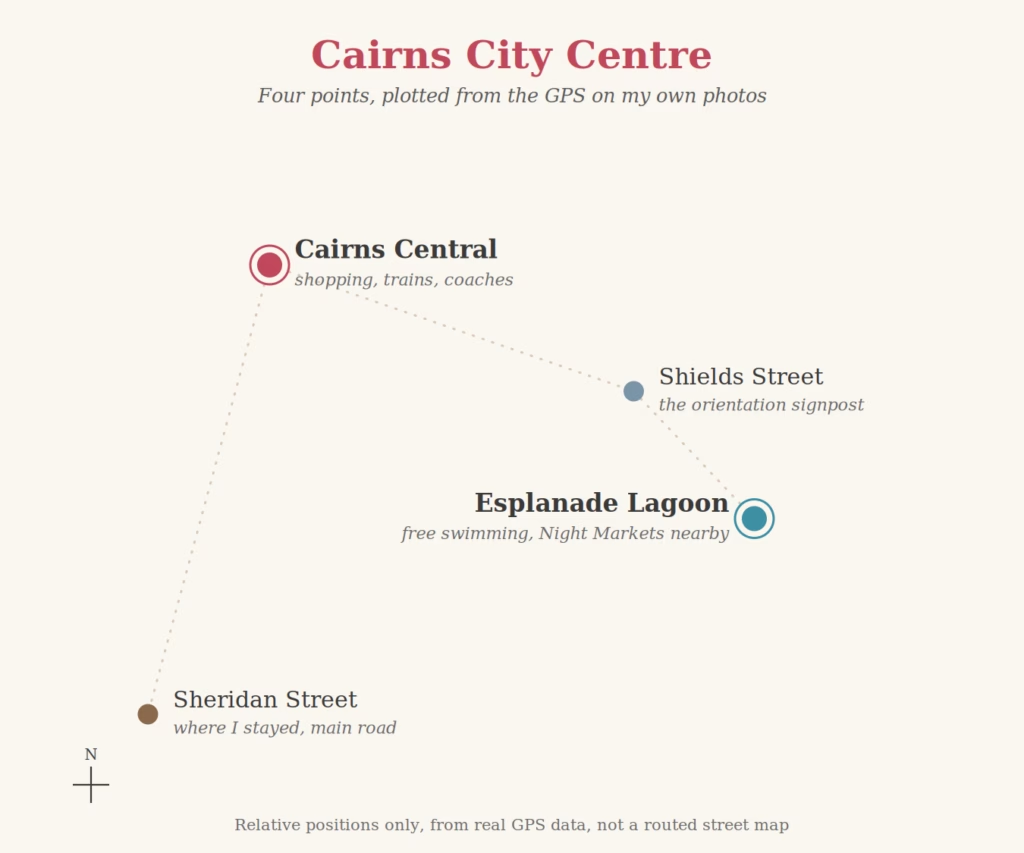 Roughly how these four points sit relative to each other, plotted from the GPS on my own photos rather than a generic map.
The Esplanade Is the City
If Cairns has a heart, it’s the Esplanade, and it took me a full walk along it to understand why locals treat it less like a tourist strip and more like a living room.
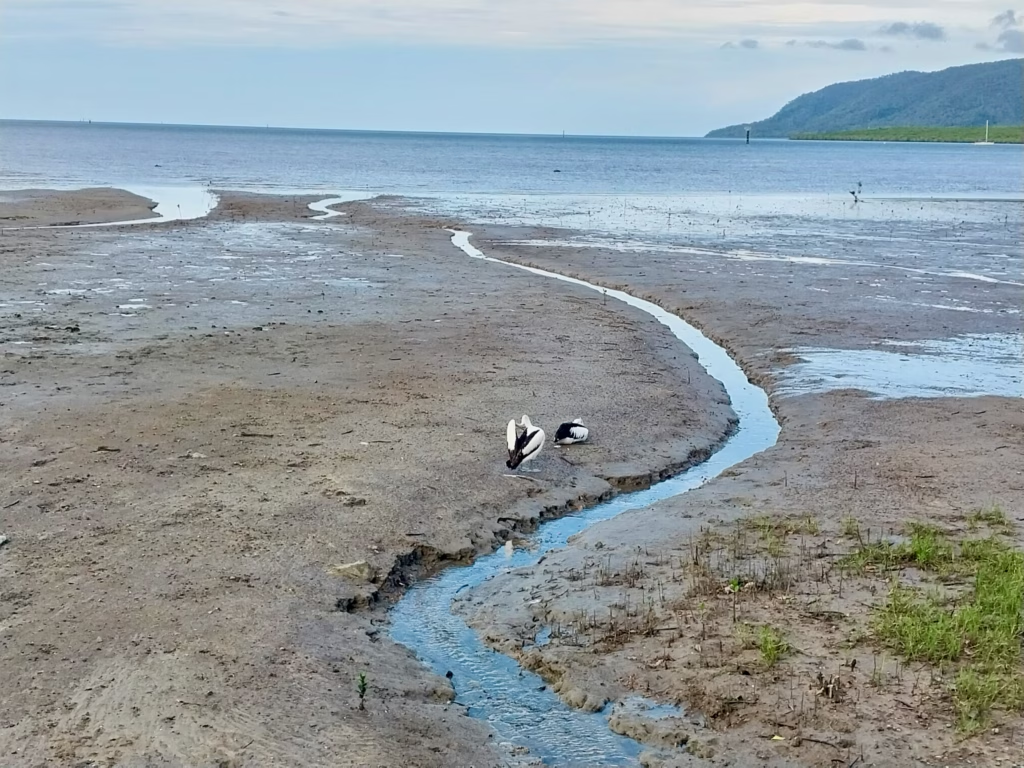
The first thing that surprised me is that Cairns doesn’t really have a beach in the CBD itself. What you get instead, at low tide, is a wide stretch of exposed mudflat running out toward the water, framed by mangroves and mountains, with the odd pelican working the shallows.
Low tide on the Esplanade: mudflat instead of sand, and pelicans instead of sunbathers.
That’s not just an aesthetic quirk, either. Walk the boardwalk at almost any hour and you’ll pass joggers, families, and couples out for an evening stroll with the mudflat or the incoming tide on one side and lawns and palm trees on the other, but nobody’s ever in that water.
Don’t swim off the Esplanade
The water here is saltwater crocodile habitat year-round, and marine stingers, including box jellyfish and Irukandji, are a real risk from November to May. That combination, not just the lack of sand, is the actual reason the city built the free saltwater lagoon as a safe alternative right next to the water you can’t swim in.
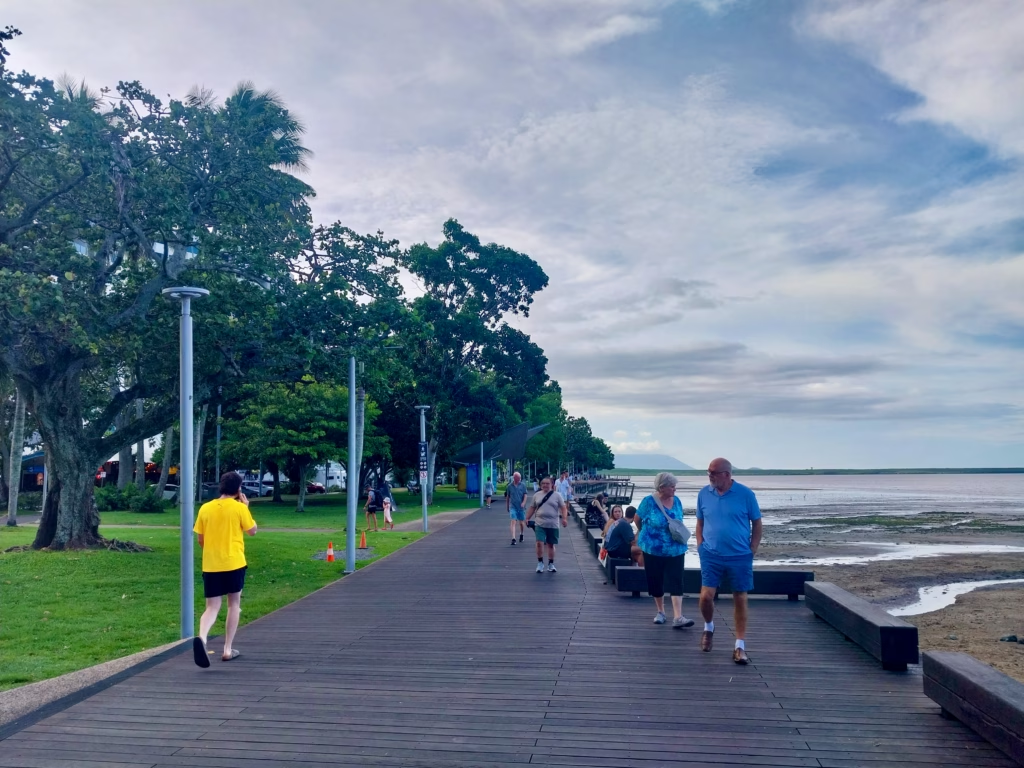 The Esplanade boardwalk in the early evening, doing double duty as footpath, jogging track, and the closest thing Cairns has to a beachfront.
Further along, a ferris wheel rises above the treeline, one of the small touches that make the Esplanade feel more like a permanent fairground than a stretch of foreshore.
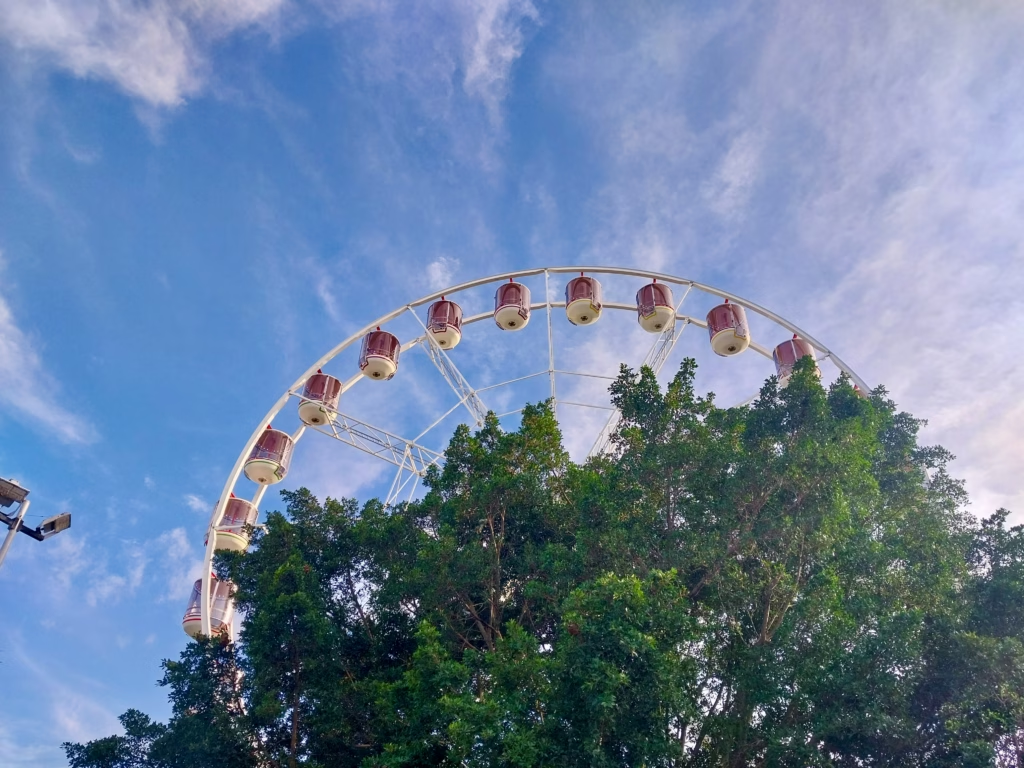 A ferris wheel above the trees, part of the Esplanade’s slightly carnival atmosphere in the evenings.
Cairns Esplanade Lagoon
- Free entry, no exceptions
- 4,800 square metres of filtered saltwater, drawn from Trinity Inlet
- Maximum depth 1.5 metres, and shallower than that across most of the pool
- Open 6am-9pm daily, except Wednesdays when it opens at midday for weekly maintenance
- Closed for its biennial maintenance program from 13 July to 16 August 2026, reopening 17 August
- Paid lockers available at the southern end for valuables
- Direct, unbroken views out to the Coral Sea while you swim
And then there’s the Lagoon itself, which by early evening is properly full: kids in the shallows, parents watching from the sand-edged sides, the whole scene backed by open ocean rather than a fence or a car park.
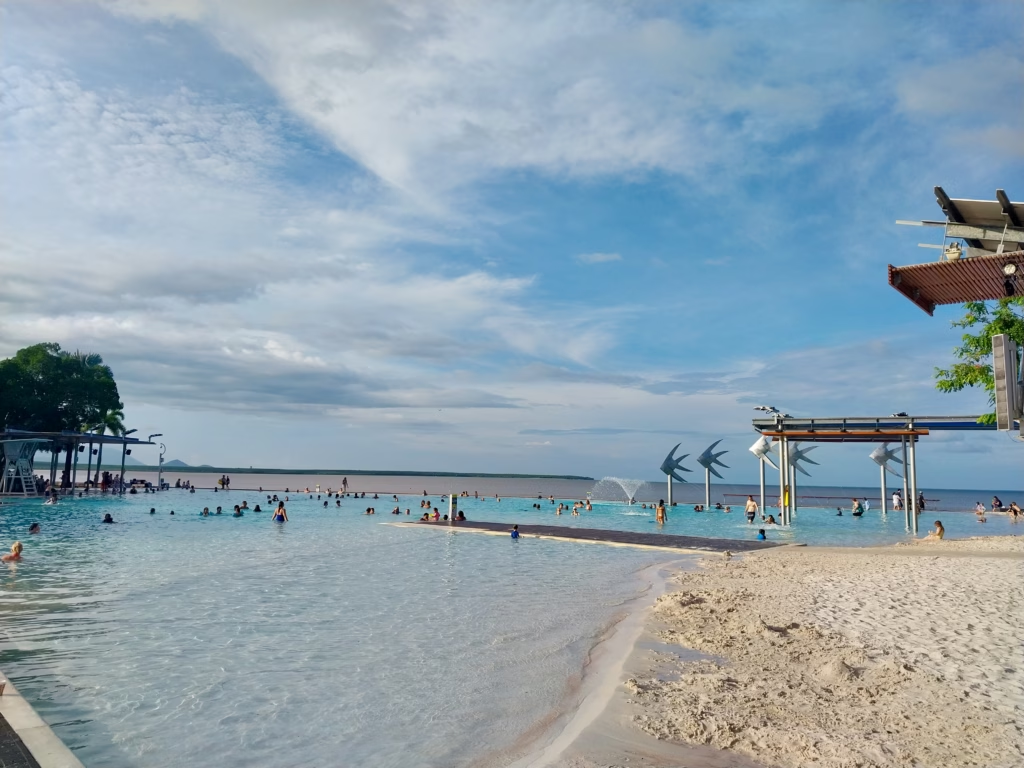 The Lagoon by late afternoon – packed, free, and about as shallow as a pool gets.
It’s worth being honest about what the Lagoon actually is, though. At 1.5 metres deep at its absolute maximum, this isn’t somewhere you go for a proper adult swim. It’s built for exactly what I saw: kids paddling, families relaxing, and anyone who wants a safe, supervised spot to learn to swim in the first place. If you want laps, look elsewhere. If you want to sit in salt water with a reef view and watch your kids play, this is one of the best free things to do in the whole city.
One thing worth checking before you plan around it: the Lagoon closes for a biennial maintenance program every two years, and as I’m writing this it’s mid-closure, shut from 13 July to 16 August 2026. Check Cairns Regional Council’s site for current status before you build a day around it, since a closure like this isn’t something a static blog post can keep up to date on its own.
After Dark, the City Goes Quiet
Here’s where Cairns surprised me the most, and not in a way most guides mention. Once the sun goes down, the city centre gets quiet fast. Restaurants close earlier than you’d expect from a city this size, the food courts inside the shopping centres wind down well before you’d assume, and walking the CBD’s side streets after dinner, you’ll pass properly dark stretches between the streetlights, nothing like the constant glow of central Sydney at the same hour.
The one late-night exception
The Cairns Night Markets, running from 54-60 Abbott Street through to 71-75 The Esplanade opposite the Lagoon, are open 5pm to 11pm every single day of the year. Over 70 stalls of food, jewellery, tattoos, clothing, and Indigenous and Torres Strait Islander art, all under cover and air-conditioned. If nothing else in the CBD is open, this almost certainly still is.
That contrast, quiet dark streets a few blocks back, a lively covered market right on the water, is a good summary of Cairns after dark generally. The action doesn’t spread across the whole city centre the way it does somewhere like Sydney. It concentrates, hard, right along the Esplanade, and everything else winds down early around it.
My own hotel was on Sheridan Street, a few blocks back from all of this, and by early evening the difference was obvious.
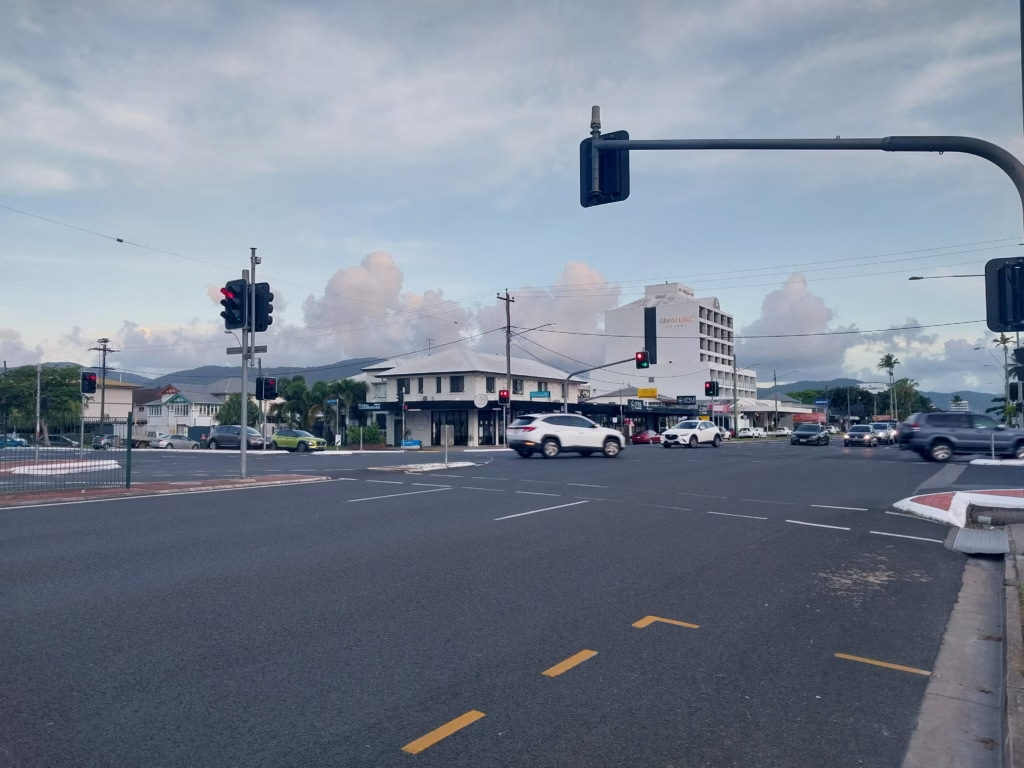 Sheridan Street at dusk – a real main road, but noticeably dimmer than the equivalent street would be in Sydney.
Sheridan Street is a proper main road rather than a quiet side street, and it’s also where you’ll find the Alivio Hotel and a run of other Cairns accommodation, so it’s a fair sample of what the streets around the CBD’s edges feel like once the Esplanade’s lights are a few blocks behind you.
Every Way Out of the City Is Scenic
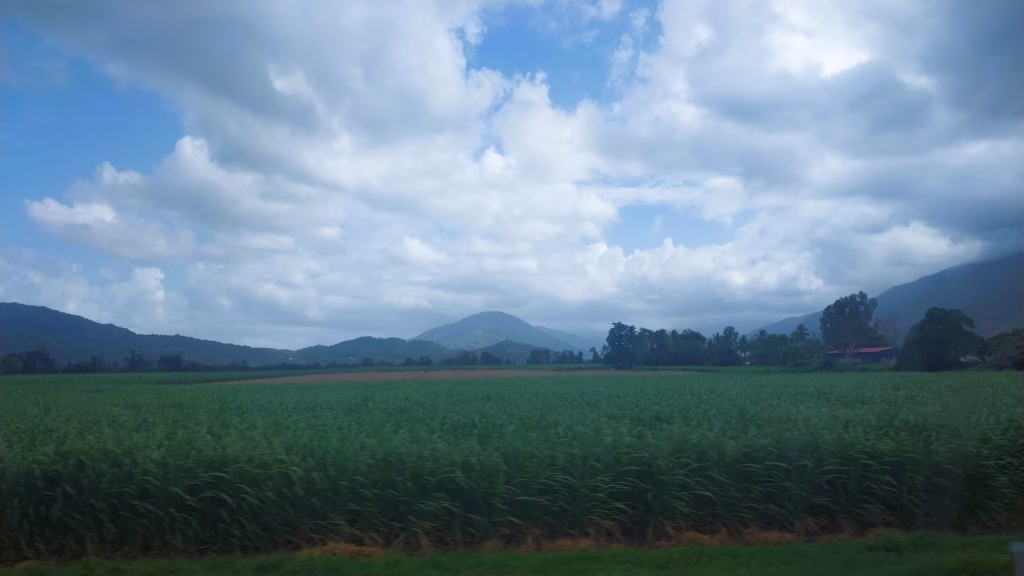 Cane fields and mountains, somewhere on the road out of the city – this is the view on almost every route out of Cairns.
One thing that held true no matter which direction I left the city centre: the journey itself was worth paying attention to, not just the destination. The bus out toward Palm Cove runs along the coast with the ranges on one side and glimpses of the sea on the other. The road out to Skyrail’s base at Smithfield cuts straight through those same cane fields before the mountains start climbing. And the Kuranda Scenic Railway back down from the Tablelands is, if anything, the best of the three, an hour and a half of gorge, waterfalls, and hand-carved tunnels that would be worth the trip on its own even without Kuranda village at the other end.
It’s a small thing to notice, but it changed how I thought about the city. Cairns itself is compact and, after dark, quiet. The region around it is doing a lot of the work, and every route out rewards looking out the window rather than putting your headphones in.
Where to Stay in Cairns
Everything above, the Esplanade being the centre of gravity, no beach in the CBD itself, the Night Markets as the one late-opening exception, feeds directly into where you should actually base yourself. I’ve covered that properly in Where to Stay in Cairns, the full area-by-area breakdown, and Best Hotels in Cairns for 20 specific picks across every budget.
A Few Accessibility Notes
I don’t have a personal mobility need, so I can’t speak to any of this from experience, but it came up enough in my research that it felt wrong to leave out entirely. Accessible tourism is a large part of who travels to Australia, worth AU$29.2 billion in 2024 alone according to Tourism Research Australia, so it’s not a niche concern.
A few things worth knowing if it’s relevant to you: the Esplanade Lagoon has level, wheelchair-accessible entry at its southern end, with a beach wheelchair available from the lifeguard room on request. Cairns Central offers complimentary wheelchair and motorised scooter hire for anyone who needs it while shopping. The Reef Fleet Terminal has a dedicated disability drop-off point on Pier Point Road with level footpath access straight into the terminal. None of this is from my own trip, so treat it as a starting point for your own research rather than the last word, and confirm directly with venues before you rely on it. Queensland’s own Accessible Travel Guide to Cairns and the Great Barrier Reef is a better place to go deeper than a single blog post can.
The Practical Bits
A few things worth knowing before you land, none of them dramatic, all of them useful. The key hours and costs, all in one place before the detail:
| Spot | Hours | Cost | Note |
|---|---|---|---|
| Esplanade Lagoon | 6am-9pm daily, Wed from midday | Free | Closed 13 Jul-16 Aug 2026 for biennial maintenance |
| Cairns Night Markets | 5pm-11pm, every day of the year | Free entry | 54-60 Abbott St, through to the Esplanade |
| Rusty’s Markets | Fri-Sat 5am-6pm, Sun 5am-3pm | Free entry | Grafton St, not open Mon-Thu |
| Cairns Central | 9am-5:30pm most days, 9am-9pm Thu, 10:30am-4pm Sun | Free entry | Shopping, trains, coaches |
| Local buses | Varies by route | 50 cents flat, cash only | Route 100 airport link confirmed but not yet launched |
Don’t expect a metro, tram, or any kind of rail transit around the city itself. Cairns runs on a limited public bus network, and services can be infrequent enough that you’ll find yourself waiting a while for one, especially outside peak times. It also, as of when I visited, didn’t reach the airport directly at all, a gap the state government has since confirmed it’s finally closing. If you’re staying in the CBD and sticking to the Esplanade and a couple of day trips, you can get by on foot and the occasional Uber. If you’re planning to explore further afield independently, budget more time for buses than you would in a bigger city, or look at a rental car instead.
Whatever transit card you’re used to won’t help you here either. Sydney’s Opal card and Melbourne’s myki are both useless in Cairns, and so, more surprisingly, is Queensland’s own go card: it’s a South East Queensland system that hasn’t been extended to the Cairns region at all. Buses here are cash-only, paper tickets, and the driver will want exact change. The fare itself is a flat 50 cents under Queensland’s current transit pricing (worth double-checking before you travel, since government fare policies do shift), which probably explains why, on more than one occasion when I didn’t have the right coins, the driver just waved me on board anyway rather than bother with it. It’s hard to hold up a queue over fifty cents. Worth keeping a little cash on hand generally, since Cairns Central and the CBD’s banks have ATMs if you land without any, but the Night Markets, taxis, and plenty of smaller stalls still lean cash-friendly even where cards are accepted. If you’re planning routes beyond the CBD, Translink’s own Cairns fares and zones page is the place to check current timetables rather than relying on a blog post to stay current for you.
If you need groceries or basics, there’s a reasonably well-stocked Woolworths on Abbott Street, an easy walk from the Esplanade. I went in for one specific thing, my usual brand of lemonade, and couldn’t find it anywhere on the shelves. A small, slightly funny reminder that “reasonably well-stocked” and “has exactly what you’re used to at home” aren’t always the same thing.
How to Spend a Day in the City Centre
Everything above works as a loose loop rather than a strict itinerary, but if you want an actual sequence, here’s one built around real opening hours rather than guesswork, plus the one exception worth knowing before you plan around it.
Early morning (6-9am): the Lagoon, before the heat or the crowds
Cairns is hottest through the middle of the day, so the Lagoon is at its best right when it opens. Six until around nine is quiet, cooler, and gives you time to dry off before the sun really sets in. The one thing to check first: the Lagoon opens at 6am every day except Wednesday, when it’s closed for weekly maintenance until midday, and as of this post it’s also mid-way through its biennial full closure (13 July-16 August 2026). Confirm current status directly on Cairns Regional Council’s site before you build a morning around it.
Build in buffer time
This sequence works, but it assumes nothing goes sideways. Finding your way somewhere new, a longer queue than expected, a shop that’s closed when you thought it wouldn’t be: normal parts of travel. Give yourself 15-20 minutes of slack between each block rather than timing it to the minute, and the day stays relaxed instead of rushed.
Mid-morning (9-11am): Shields Street and Cairns Central
From the Lagoon it’s a short walk inland to the Shields Street signpost for your bearings, then on to Cairns Central if you need anything practical, a SIM card, a proper breakfast, air-conditioning to cool off in. Cairns Central opens at 9am most days (5:30pm close), with a late night until 9pm on Thursdays and a shorter 10:30am-4pm window on Sundays, so if you’re relying on it for dinner, Thursday is your best bet.
Midday (11am-3pm): indoors, or moving slowly
This is the hottest stretch of the day, and it’s the point where the CBD itself goes quietest too. Good time for an air-conditioned lunch, a break back at your accommodation, or, if it’s a Friday, Saturday, or Sunday, a visit to Rusty’s Markets on Grafton Street. Rusty’s only runs those three days (Friday and Saturday 5am-6pm, Sunday 5am-3pm), so it’s worth checking the day of the week before counting on it.
Late afternoon (4-6pm): the Esplanade boardwalk
The heat eases off and the light turns golden, which makes this the best window for the walk along the boardwalk itself: mudflat or incoming tide on one side, the marina and the mountains behind it. Working from the GPS on my own photos, it’s roughly 15 minutes on foot between Cairns Central and this stretch of the Esplanade, so it fits easily into the same afternoon.
Evening (5-11pm): Night Markets and dinner
This is the one part of the CBD that stays properly open after dark, every day of the year, 5pm to 11pm. Dinner, a wander through the stalls, and if the Lagoon’s open and you fancy a dusk swim before it closes at 9pm, that works too.
That’s a full day without ever needing a bus, a taxi, or a plan more complicated than checking two things first: the day of the week, and whether the Lagoon happens to be mid-closure.
Was It Worth Slowing Down For?
Yes, and for a reason I didn’t expect going in. I came to Cairns for Skyrail and the Atherton Tablelands’ waterfalls, and both delivered. But the city centre itself, the mismatch between what “Australia” is supposed to look like and what was actually in front of me, turned out to be its own kind of interesting.
If you’re expecting Cairns to feel like a smaller, tropical Sydney, it won’t. It’s slower, quieter after dark, greener than anywhere else on an east-coast Australia trip, and closer in feel to Southeast Asia than to anywhere else I visited on this itinerary. It’s peaceful enough that at one point I half-joked to myself there must be no jobs, no universities, nobody with anywhere to be. Obviously untrue, James Cook University has a campus here, and the city runs on tourism, sugar, and the reef trade like everywhere else on this coast, but that’s how unhurried it felt from the outside. That’s not a downside. It’s just worth knowing before you arrive, so you’re not measuring it against the wrong city.
Final Thoughts
Go back to that blindfold test I started with. A week into this Australia trip, I’d have known Sydney by the light alone, and Hobart by the cold. Cairns is the one city on the whole itinerary where the climate, the mountains, the pace after dark, and the mix of people on the street would have thrown me completely.
That’s not a knock on the place. It’s the reason I’d tell anyone planning the same route to stop treating Cairns as just the gateway to the reef and the rainforest, and spend at least one unhurried evening walking it. The Esplanade at low tide, the Night Markets when everything else has closed, a bus fare a driver didn’t bother collecting: none of it is dramatic on its own, but together it’s a city that doesn’t feel like anywhere else I went in Australia, and I mean that as the highest compliment I can give it.
Continue Exploring Cairns
Frequently Asked Questions
Can you walk everywhere in Cairns city centre?
Pretty much. The CBD is compact enough that the Esplanade, Shields Street, Cairns Central, and Chinatown are all within a few minutes of each other on foot. You’d only need transport for day trips out of the city itself.
How far is Cairns Airport from the city centre?
Close. It’s about a 10 to 15-minute Uber (roughly AU$25) or (AU$25-35) from the airport into the CBD.
Is one day enough for Cairns city centre?
For the Esplanade, the Lagoon, and a walk through the CBD, yes, one day covers it comfortably. If you want to catch the Night Markets in the evening too, plan to arrive with enough daylight left to see the Esplanade first.
Does Cairns have a metro, train, or tram system in the city?
No local rail or tram network. Cairns relies on a limited public bus service, which can mean longer waits than you’d expect from a city its size. Walking covers most of the CBD and Esplanade easily.
Is the Cairns Esplanade Lagoon suitable for adult swimming?
Not really, in the sense of doing laps. The maximum depth is 1.5 metres, and most of the pool is shallower still. It’s built for families, kids, and beginners rather than serious adult swimming, but it’s free, safe, and has real ocean views.
What are the Cairns Night Markets, and when are they open?
A covered market on Abbott Street running through to the Esplanade, open 5pm to 11pm every day of the year, with over 70 stalls covering food, jewellery, tattoos, clothing, and Indigenous and Torres Strait Islander art. It’s the one reliably late-opening spot in the city centre.
Is the water off the Cairns Esplanade safe to swim in?
No. It’s saltwater crocodile habitat year-round, and marine stingers including box jellyfish and Irukandji are a real risk from November to May. That’s exactly why the Esplanade Lagoon exists, as a safe, filtered alternative right next to the water you can’t swim in.
Why doesn’t Cairns city centre have a real beach?
The coastline directly in front of the CBD is tidal mudflat rather than sand, which is the main visible reason, though the water itself isn’t safe to swim in either (see the question above). Either way, the city built the free saltwater Lagoon as the alternative. For an actual beach, you need to head up the coast to Palm Cove, Trinity Beach, or the rest of the Northern Beaches.
Does Cairns feel like the rest of Australia?
Not to me. Compared with Sydney, Melbourne, or Hobart, Cairns is greener, more mountainous, noticeably hotter and wetter, and has a different demographic mix, with a considerably larger Aboriginal and Torres Strait Islander population than the southern capitals. If anything, it reminded me more of parts of Southeast Asia.
Where can I buy groceries near the Esplanade?
There’s a Woolworths on Abbott Street, a short walk from the Esplanade and Lagoon, reasonably well-stocked for everyday basics.
Please visit:
Our Sponsor
Related Posts
Private Equity Firms Pull Back on Investing in U.S. Hotels
This year was supposed to belong to the hotel industry…

Summertime Blues: Corporate Finance Faces a Financial Reporting Reckoning
Summer is just at the half-way point, but financial reporting…

Millennium Hotels and Resorts Selects Amadeus to Enhance its Digital Media Strategy
In a competitive hospitality landscape, Singapore based Millennium Hotels and…