Some places you remember for a single view. Bruny gave me a dozen. Sea cliffs dropping straight into the Southern Ocean, a thin ribbon of sand with ocean on both sides, an empty beach curving away into low cloud, and a lighthouse balcony with the whole wild south of the island laid out beneath it. I went on a grey, drizzly January day, and it was still one of the most beautiful days of my entire Tasmanian trip.
I am Fuad, and I have been lucky enough to wander through forty-three countries now. I went to Bruny Island on 9 January, in the middle of a Tasmanian summer that gave me cloud, drizzle and a properly bouncy sea instead of sunshine. It did not matter. The landscape carried the day, and the food was the very happy bonus.
So let me say this plainly, right at the top. If you are putting together a Tasmania itinerary, a Bruny Island day trip is a must. Not a maybe. A must. This little island off the coast of an island off the coast of Australia packs in dramatic coastline, a clifftop lighthouse and some of the best food in the state, all inside a single day from Hobart.
Here is everything I learned, so your day runs even better than mine did.
Bruny Island Day Trip at a Glance
Bruny Island day trip: quick facts
- Getting there: Drive about 40 minutes south of Hobart to Kettering, then a 20-minute vehicle ferry to Roberts Point on Bruny Island
- Ferry operator: SeaLink Bruny Island (queueing system, no set departure time)
- Ferry cost (2026): Around AUD $50.60 return per car; passengers and drivers travel free. A temporary $4 fuel surcharge applies on new bookings between 4 May and 1 August 2026
- Best for: Food lovers, photographers, coastal scenery, lighthouse history
- How long you need: A full day. Tours run roughly 7:45am to 5:30pm from Hobart
- Tour vs self-drive: Both work. I took a tour and would recommend it for first-time and overseas visitors
- Wildlife: Do not bank on it (more on that below)
Should You Take a Tour or Self-Drive?
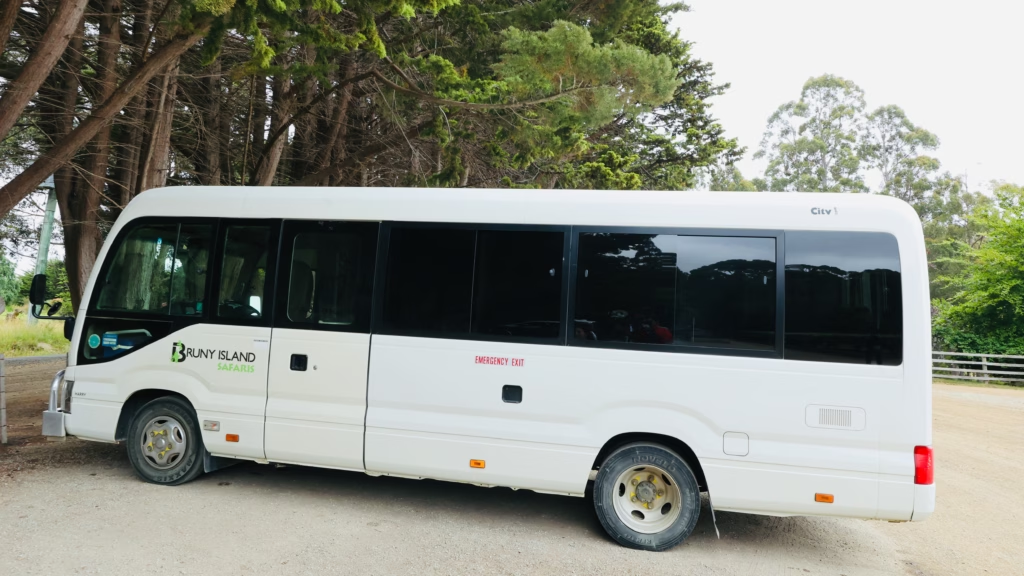 Our Bruny Island Safaris coach, parked up between stops.
This is the first real decision, so let me be honest about it rather than pretend there is one right answer.
You can absolutely self-drive Bruny Island. You take your hire car onto the ferry at Kettering, cross over, and explore at your own pace. If you like total freedom, an early start and lingering wherever you please, self-driving is wonderful. I will cover the logistics for that further down, because plenty of people do it and love it.
But I took a guided tour, and for the kind of traveller I am, and probably for a lot of you reading this, it was the right call. Here is why.
I am visiting from overseas. Driving on the left, on narrow single-lane island roads I do not know, while also trying to find each food producer and watch for wildlife, is a lot. On a tour I sat back, looked out the window, and let someone who knows the island do the thinking. Our guide knew exactly where to stop, when to beat the crowds, and which stories made each place come alive. The food stops were sorted. The ferry was sorted. I did not so much as glance at a map all day.
There is also the small matter of tasting your way around an island that makes wine, beer, cider, mead and whisky. On a tour, nobody has to be the designated driver. (If car-free day trips are your thing, I went down the same route on the mainland in my guide to day trips from Melbourne without a car.)
The tour I actually took
I booked the Bruny Island Food, Sightseeing and Exclusive Lighthouse Tour through Klook, operated by Bruny Island Safaris. A small coach, a friendly young guide-driver, hotel-area pickup, and crucially, the exclusive guided entry inside Cape Bruny Lighthouse that not every operator offers. My honest verdict: good, but not cheap. You get a lot for the price, but it is a premium day out.
Check prices and book the Bruny Island Safaris tour on Klook →
If that particular tour does not suit your dates, there are several other well-reviewed Bruny Island tours from Hobart worth comparing:
Getting to Bruny Island: The Ferry From Kettering
Whether you drive or take a tour, every Bruny Island day trip begins the same way: heading south out of Hobart to the little town of Kettering, about a 40-minute drive, where the SeaLink ferry crosses to the island.
My tour picked us up near the Tasmanian Travel and Information Centre in central Hobart in the morning, and we made our way down to Kettering to join the ferry queue. The crossing itself takes about 20 minutes across the D’Entrecasteaux Channel, and there is something lovely about standing on the deck watching the island approach.
A few things worth knowing about the ferry:
- It runs on a queueing system. Your ticket is not for a specific sailing, it is for the next available ferry. You simply join the queue and roll on.
- Passengers travel free. The fare is charged per vehicle, around AUD $50.60 return for a standard car under 6 metres in 2026, with a temporary $4 fuel surcharge in place over winter.
- Departures run roughly every 20 to 30 minutes through the day, from early morning until early evening.
- If you are self-driving, you can pre-purchase your vehicle ticket online to save time, and it stays valid for 365 days.
Mind the last ferry
If you self-drive, keep a close eye on the time of the final evening sailing back to Kettering. Bruny is bigger than it looks on a map, the roads are slow, and there is no public transport once you are over there. Missing the last ferry is a genuine risk if you lose track of time at the lighthouse or over one too many oysters. Tours handle this for you, which is one less thing to worry about.
My Bruny Island Day, Stop by Stop
Once across, the day unfolded as a string of stops that mixed food, scenery and history. This is roughly how it went, and what you can expect.
Morning tea and a cheese stop
Our first proper stop was at Bruny Island Cheese and Beer Co, where our guide ducked in to collect our morning tea. It is one of the island’s signature producers, and even a quick visit gives you a sense of how seriously Bruny takes its food. From there we made a drive-through stop at Get Shucked to pick up oysters, which we would eat a little later in the most perfect spot imaginable.
Bruny Island Honey
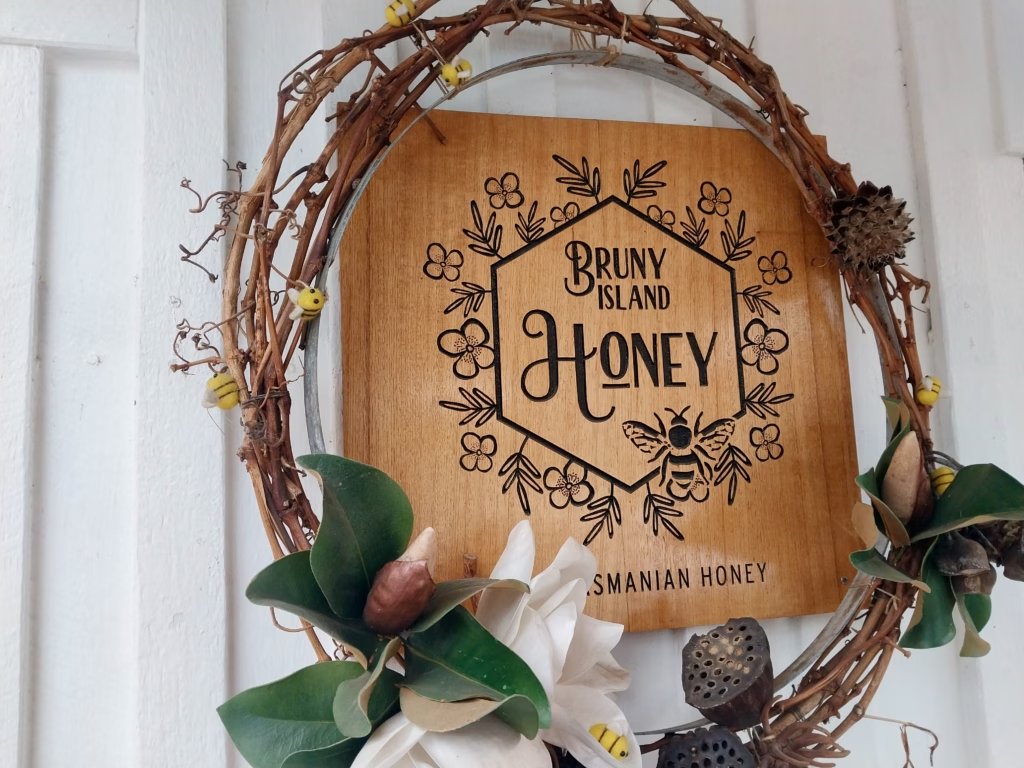 Bruny Island Honey, where the tasting is free and the mustard honey is dangerously good.
Next came one of my favourite surprises of the day, Bruny Island Honey.
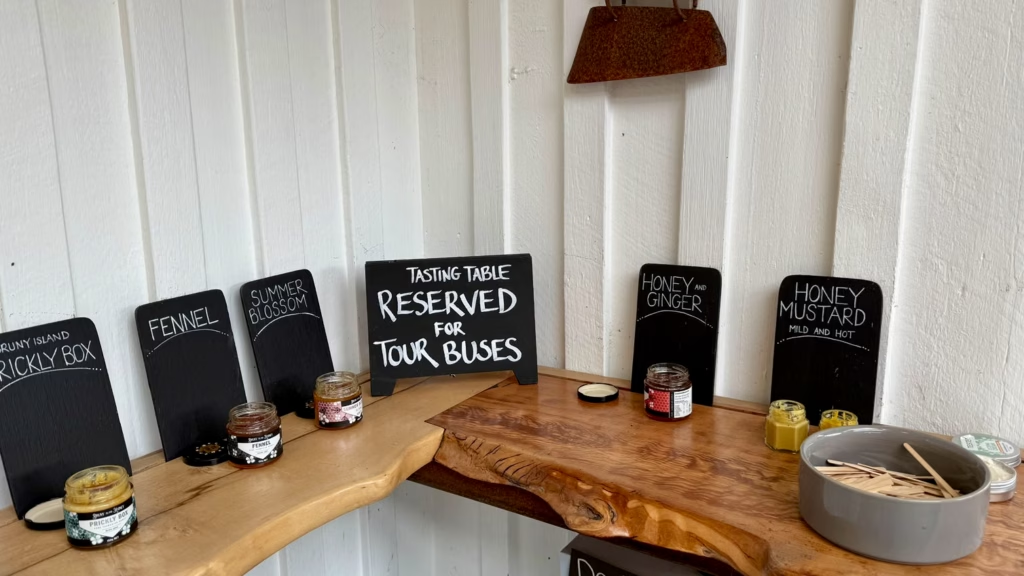 The tasting bench. Note the “reserved for tour buses” sign, one quiet perk of arriving with a group.
There is free tasting here, which is a wonderful way to discover just how different honey can taste depending on what the bees have been feeding on. There is a whole wall explaining the three castes of bee, and a tasting bench lined with little chalkboards: Prickly Box, Fennel, Summer Blossom, Honey and Ginger, and Honey Mustard.
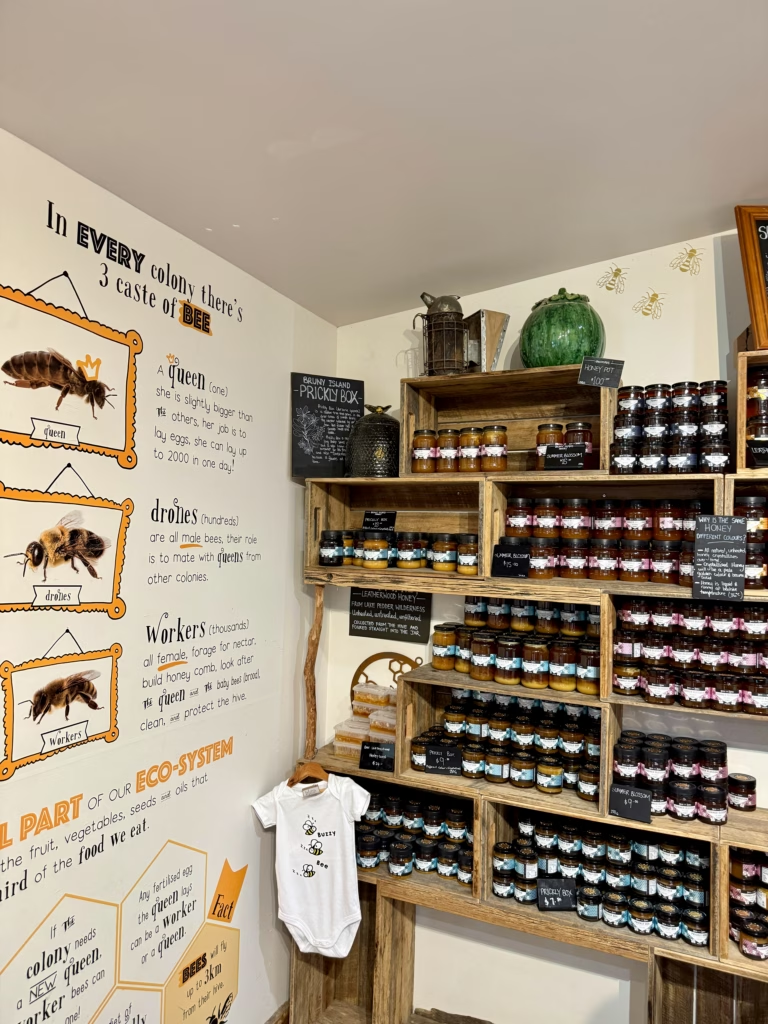 Shelves of unheated, unfiltered Tasmanian honey in every shade.
Manuka was the crowd favourite, as it usually is. But for me the standout was the mustard honey, the mild-and-hot one, and I happily bought a jar to take home. Prices were reasonable, especially for something this fresh and local.
Inside the shop, the shelves are a story in themselves. The same honey appears in a dozen different shades, from pale gold to deep amber, depending entirely on what was flowering when the bees were working. A painted wall walks you through the three castes of bee, which kept the kids in our group entertained while the adults worked through the tasting sticks.
The Neck lookout
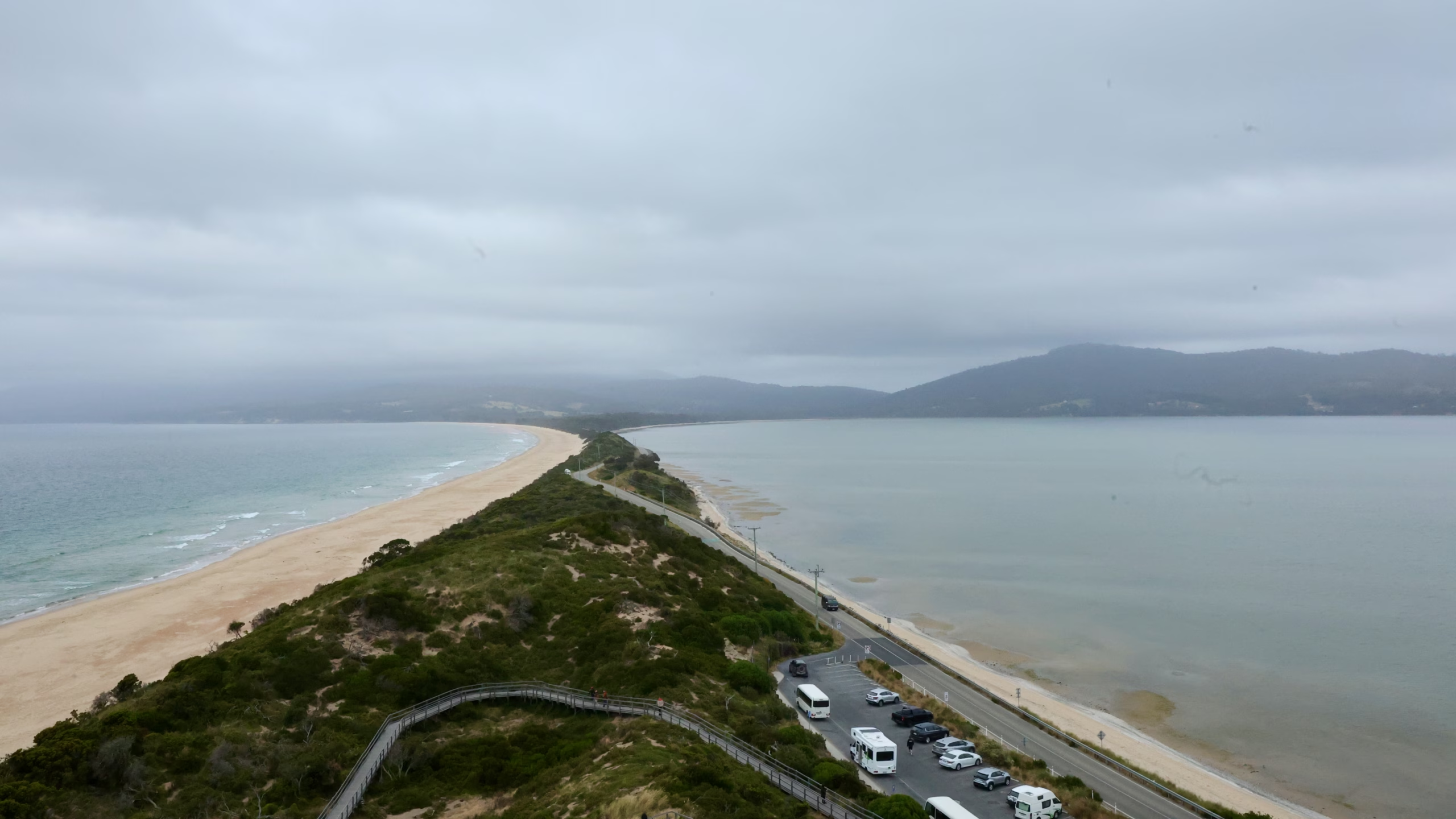
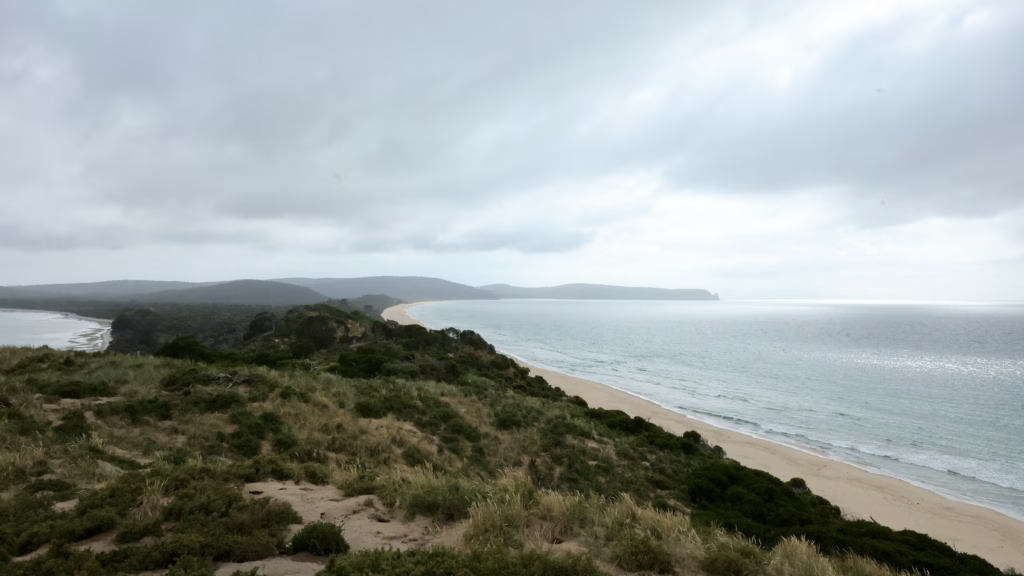 From the top of The Neck, the beaches just empty out into the distance.
Then came the moment that ends up on every Bruny Island postcard: The Neck, the slender ribbon of sand and dune that joins North and South Bruny.
There is a boardwalk staircase up to the Neck Game Reserve lookout. The climb is not difficult, a few hundred steps, and the reward at the top is a genuine 360-degree view: ocean curving away on both sides, the thin isthmus stretching into the distance, hills fading into cloud. Even under a grey sky it was astoundingly beautiful. On a clear day it must be unreal.
Adventure Bay and those oysters
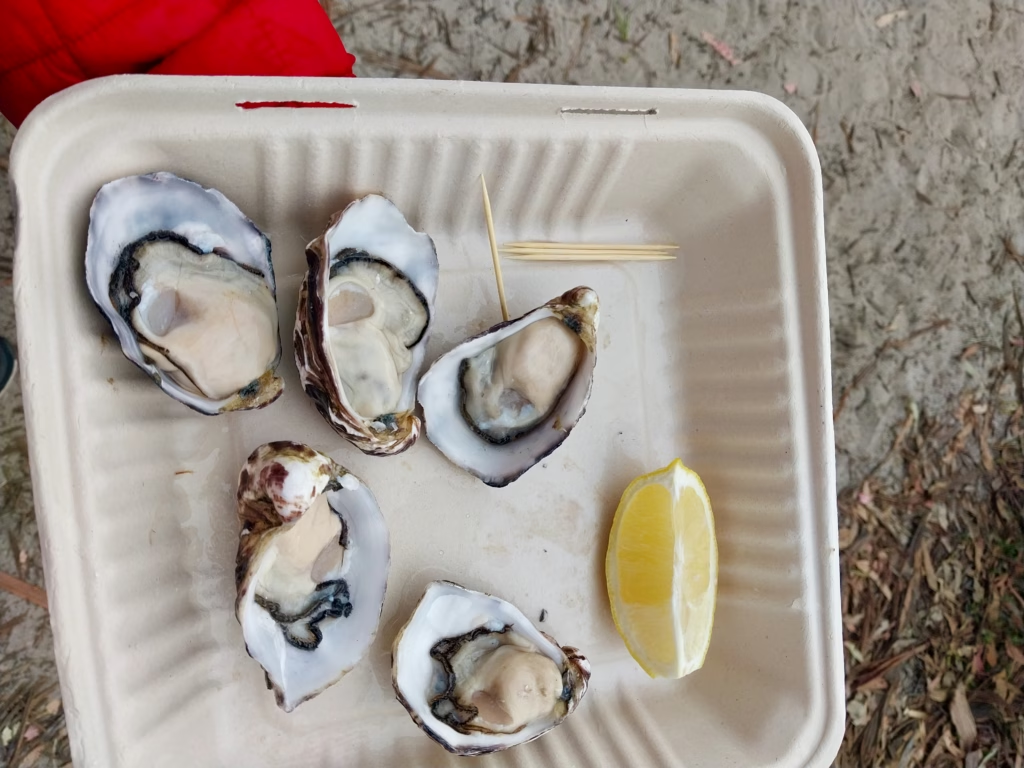 Get Shucked oysters with a wedge of lemon, eaten beside the sea at Adventure Bay.
We drove on through the island, soaking up the scenery, to Adventure Bay, where our guide set up a table and laid out our morning spread. This is where we finally ate those Get Shucked oysters, raw, with nothing more than a squeeze of lime.
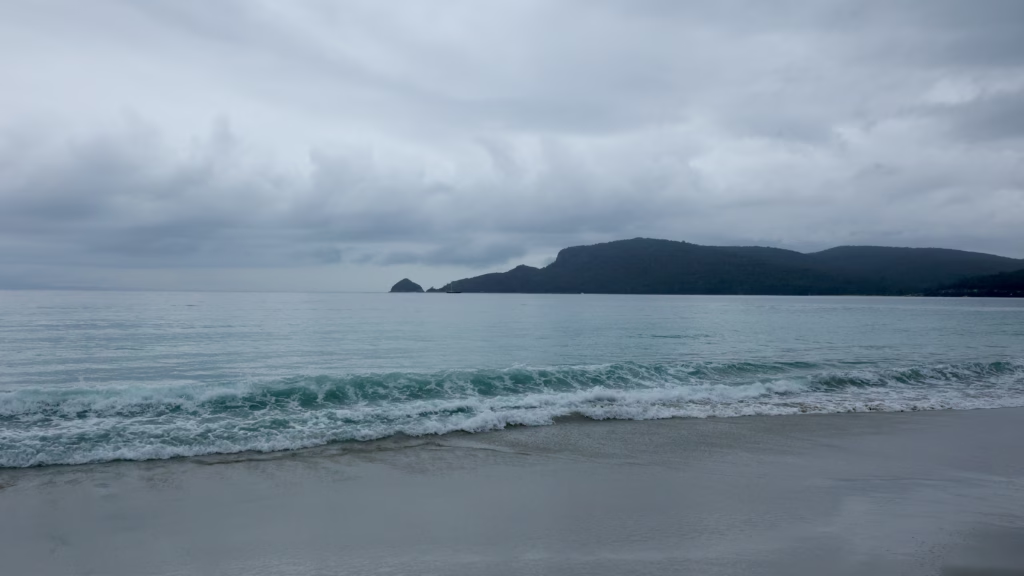 Adventure Bay, where Tasman, Cook and Bligh all once anchored.
I will not pretend to be neutral here. Eating fresh Bruny Island oysters at a table beside the sea, with the waves coming in and the cliffs in the distance, was one of the great food moments of my travels. We had time to relax on the beach too, which was lovely even with the cloud overhead.
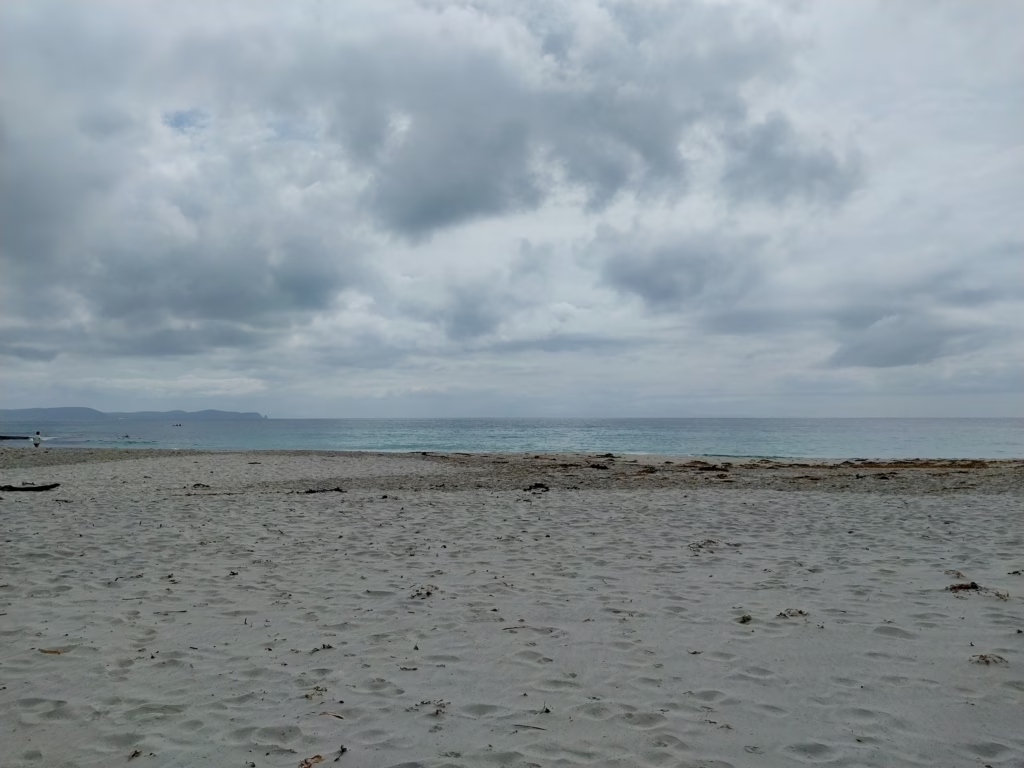 Even in peak summer, Adventure Bay felt like ours alone.
Adventure Bay is not just pretty, it is genuinely historic. This sheltered curve of sand is where Tasman, Cook and Bligh all anchored in their day, taking on fresh water before pushing on into the Southern Ocean. Standing on the beach, it is easy to see why they stopped here.
What surprised me most was how quiet it was. This is one of Bruny’s best-known spots, and yet in the middle of a January morning the beach was all but empty, just us, the surf and the gulls. That emptiness is part of Bruny’s magic and something the busier mainland beaches simply cannot offer.
Driving south to Cape Bruny
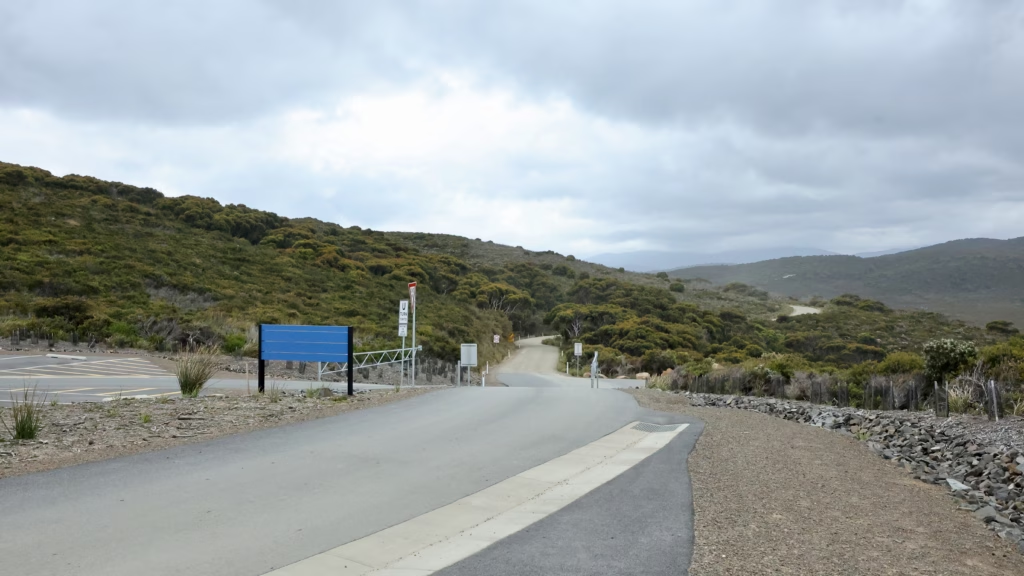 The winding road south through South Bruny National Park.
From Adventure Bay we turned south through South Bruny National Park, heading for the island’s far southern tip and its lighthouse. This is the longest single stretch of driving in the day, around 45 minutes, and it is genuinely part of the experience rather than dead time between stops. The road winds through coastal heath, climbs over rolling hills and keeps throwing sudden, wide glimpses of wild, cliff-edged coast at you.
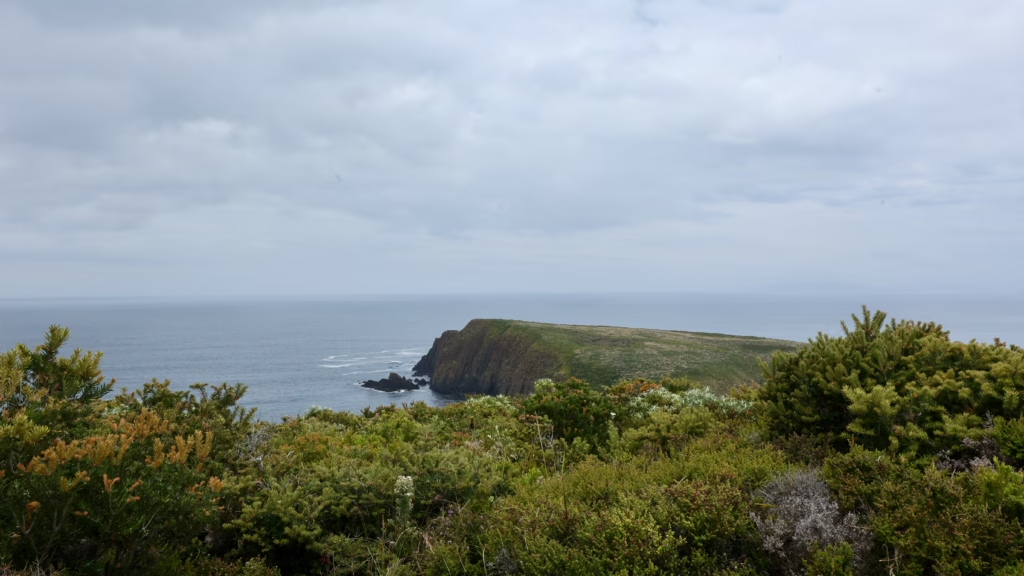 The coast turns wild and rugged as you near Cape Bruny.
A word for anyone self-driving: take this stretch slowly. Parts of the road narrow to a single lane, and the final stretch to the cape, roughly the last 20km, is unsealed gravel that can be loose and potholed, so it is not a route to rush. People do it in small hire cars, but go gently. On a tour you simply sit back and watch it unfold through the window, which is one of the quiet pleasures of letting someone else drive. Either way, the further south you go, the wilder it gets. The gentle farmland of the north gives way to dense, low scrub, and then, without much warning, the land simply falls away into the sea.
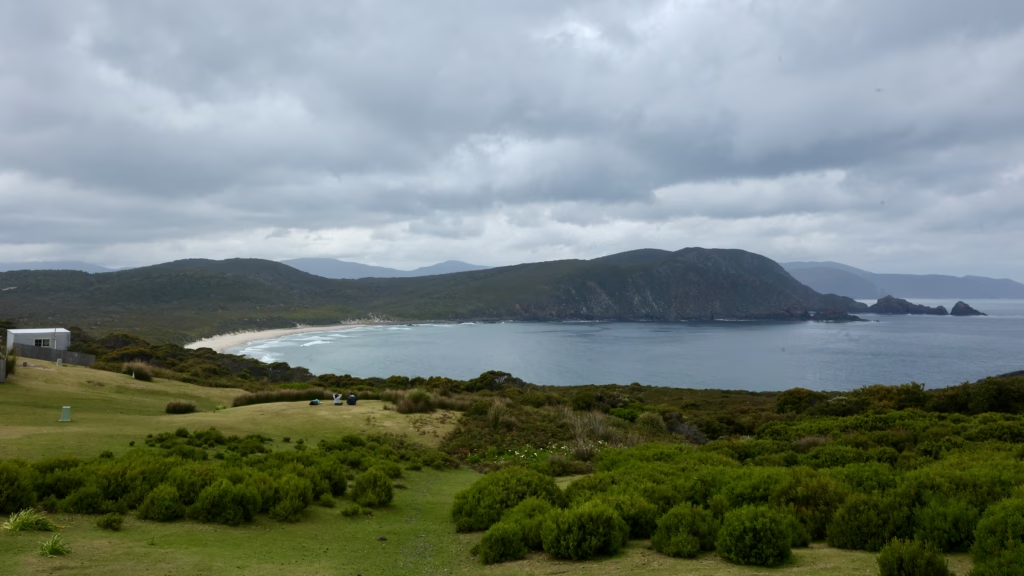 A keeper’s cottage above the bay on the approach to the cape.
South Bruny National Park protects this whole southern end of the island, and you can feel the shift as you enter it. The landscape becomes rawer and emptier, the kind of country where you might see a sea eagle overhead or nothing at all for a while except heath and ocean. There are walking tracks and lookouts down here for those with more time, but even just passing through, the sense of reaching the edge of something is strong.
Closer to the cape, the first of the old lightstation buildings come into view, white cottages set on the green above a curving bay. After a morning of food and beaches, this is where the day shifts gear and the history takes over.
Cape Bruny Lighthouse
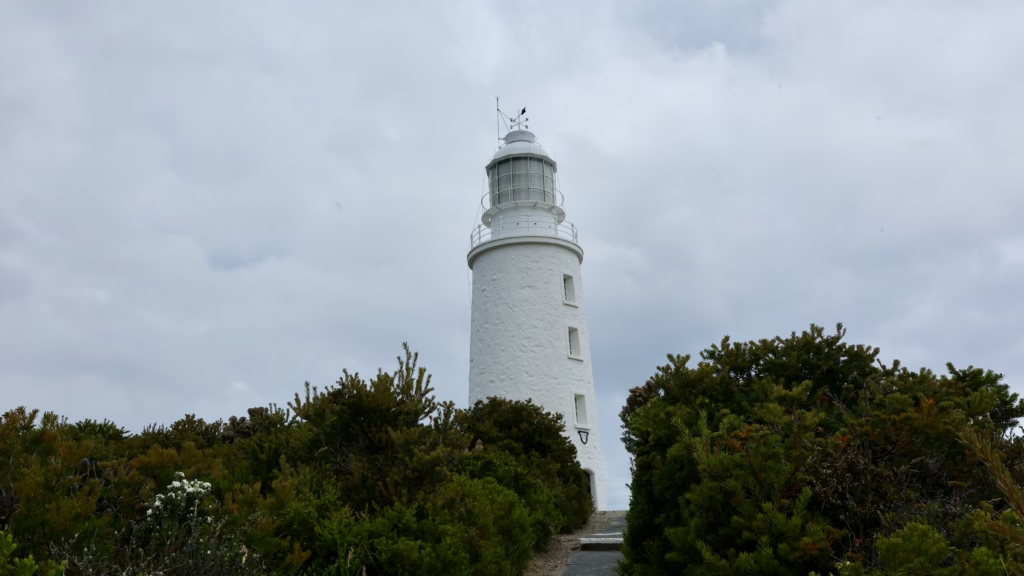 Cape Bruny Lighthouse, first lit in 1838 and built by convict labour.
The lighthouse was the highlight of the whole day, and not just for the view, though the view alone would have been worth the drive.
A little history, because it genuinely adds to the visit. The lighthouse exists because this stretch of coast used to kill people. Ships rounding the south of Bruny met fierce weather and hidden reefs, and after a run of wrecks, including the convict transport George III, which went down south of the island in 1835 with the loss of 134 lives, the colonial government finally acted.
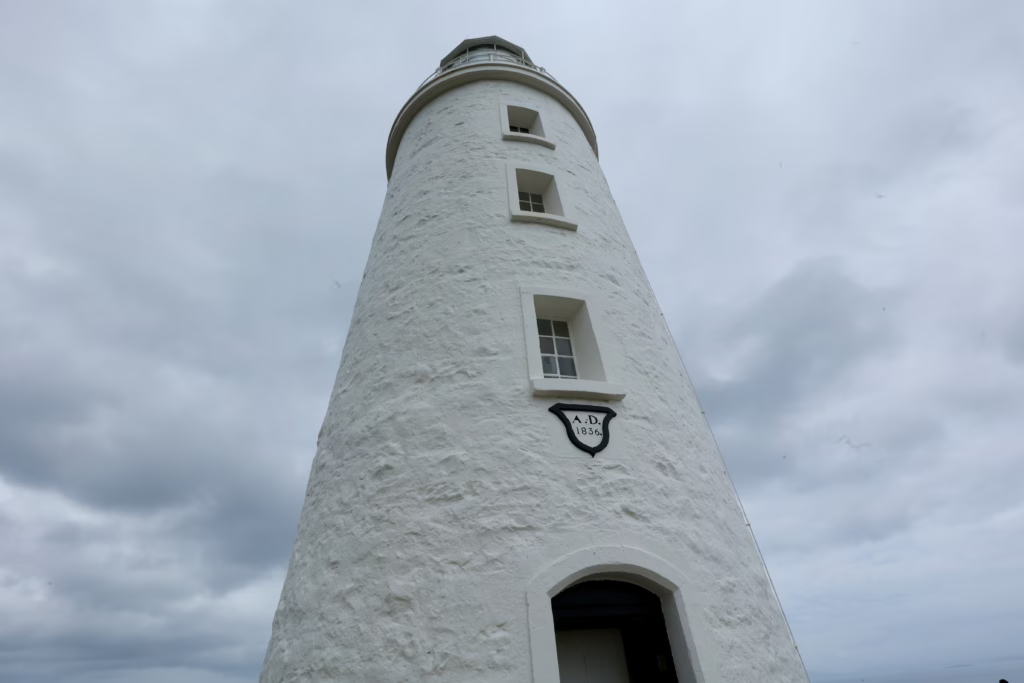 Look up: the “A.D. 1836” datestone above the door marks when building began.
Cape Bruny Lighthouse was first lit in March 1838, which made it Tasmania’s third lighthouse, after the Iron Pot in the Derwent and Low Head on the Tamar, and Australia’s fourth. It was designed by the colonial architect John Lee Archer and built from locally quarried dolerite, the same dark rock you see in the cliffs all around the cape. The 13-metre tower was raised by convict labour, supervised by Charles Watson, himself a former convict who had earned a conditional pardon, with a team of twelve men.
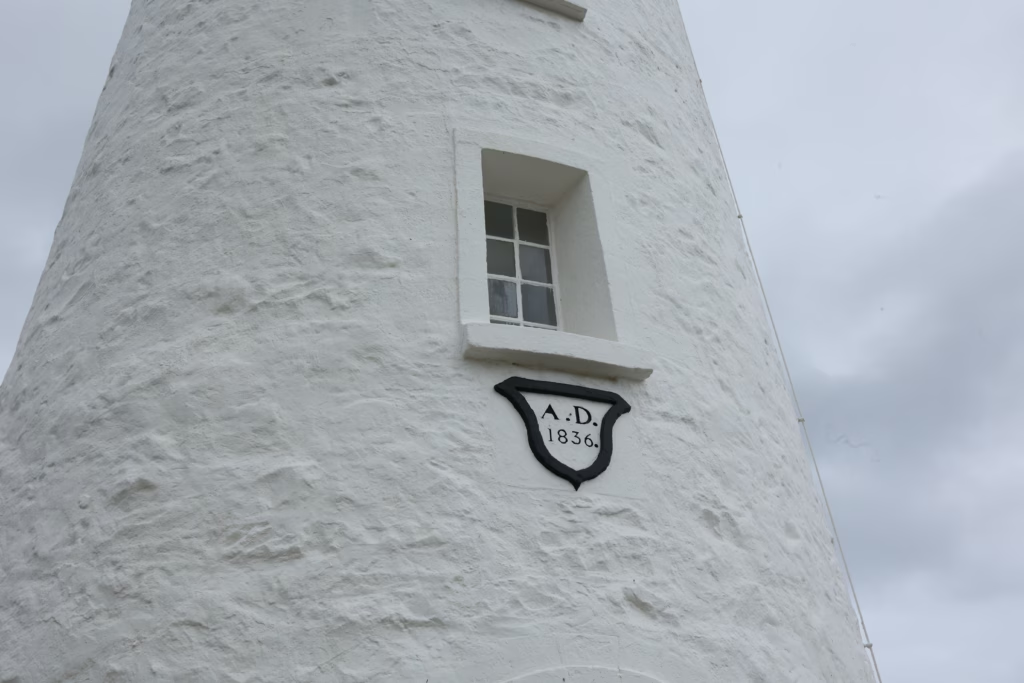 The “A.D. 1836” datestone on the tower, marking the year convict labour began work on the lighthouse.
If you stand at the base and look up, you can still read the “A.D. 1836” datestone above the door, marking the year construction began. From first light in 1838, keepers tended the lamp here every single night until the light was finally decommissioned in 1996. That is well over a century and a half of someone climbing those stairs in the dark. Today Cape Bruny is the second-oldest surviving lighthouse tower in Australia and holds the record as the longest continuously staffed, which you feel standing in front of it far more than any plaque can convey.
There is a nice thread connecting the past to the present here, too. The tour I was on is run by Bruny Island Safaris, and the family behind it has lightkeeping in its blood, which is part of why the lighthouse stop feels less like a photo opportunity and more like a story being handed down.
The view from the base
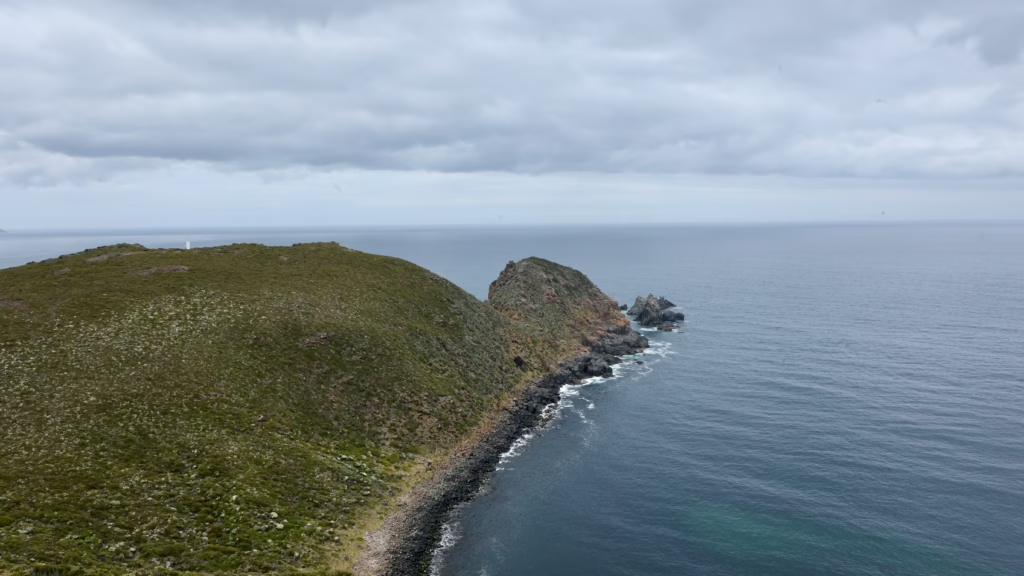 The wild coast around the cape, made for photographs.
You do not need to go inside to understand why they built here. The cape is all wild green headland and sheer dolerite cliff, dropping straight into a restless Southern Ocean, and the views run for miles in every direction.
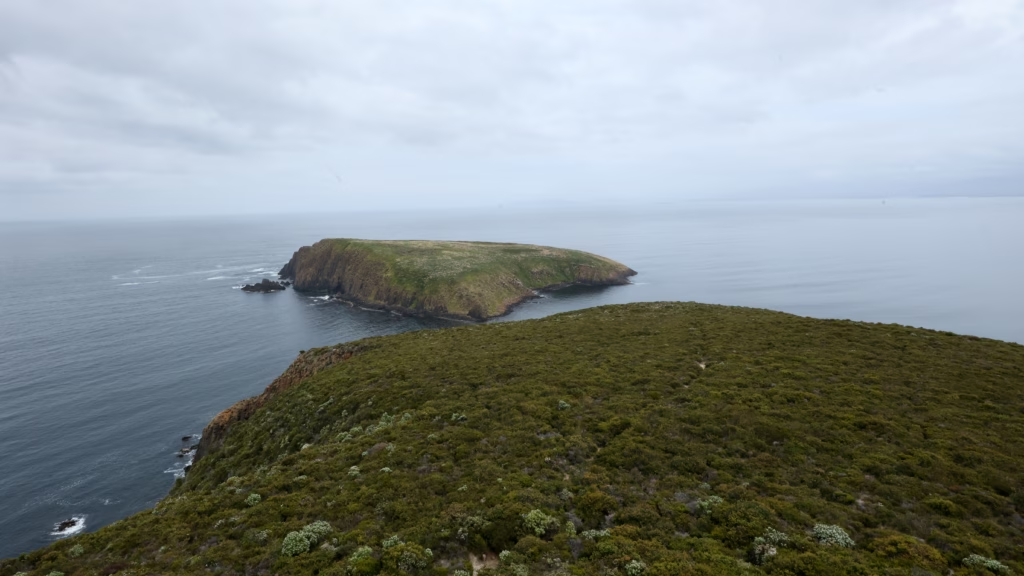 Sheer dolerite cliffs drop straight into the Southern Ocean.
Because only a limited number of people can climb the tower at once, we had a short wait for our turn. It turned out to be no hardship at all. We spent it wandering the clifftops around the base, and this is where I took some of my favourite photos of the entire trip. Even under heavy grey cloud, the coastline had a raw, end-of-the-world quality that I have rarely seen anywhere else.
If you are a photographer, give yourself time here. The light shifts constantly, the cliffs frame the sea beautifully, and there is no bad angle. Moody weather, which I had plenty of, actually works in your favour.
Climbing the tower
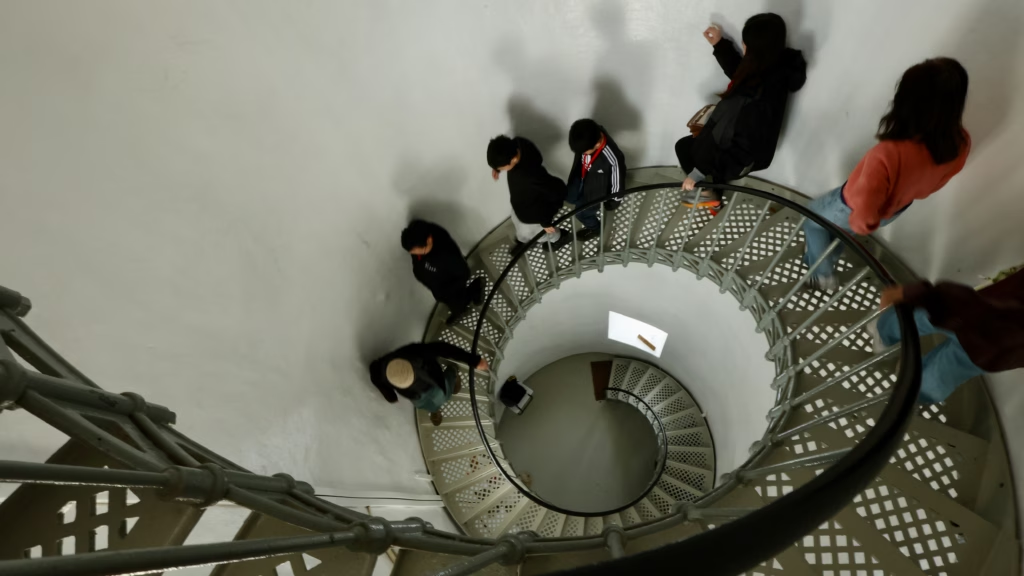 The spiral climb to the top, easier than it looks.
Then it was our turn to go inside. An older guide, full of stories and clearly fond of the place, led us up the spiral staircase, pausing to share the history of the light as we climbed.
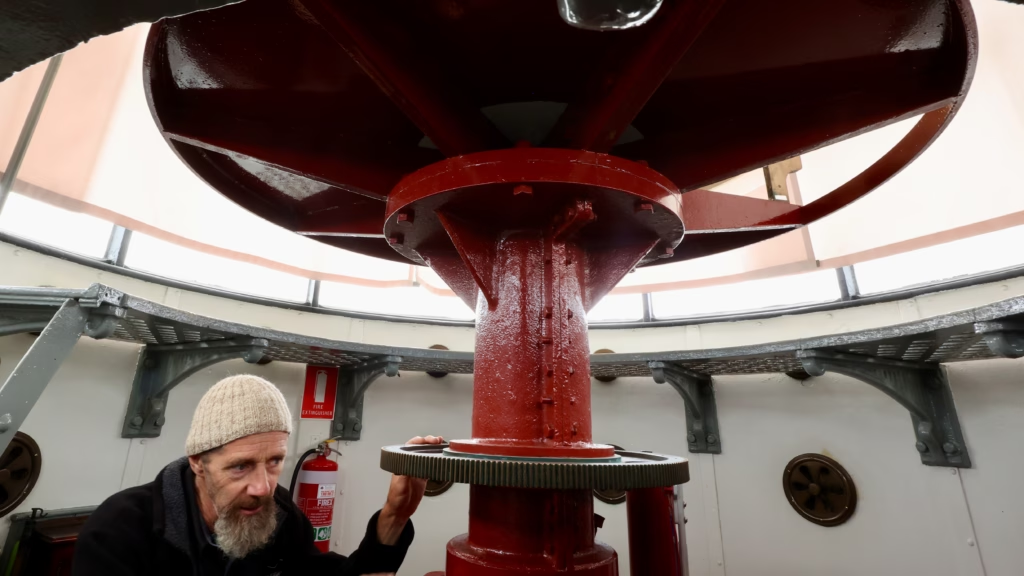 Our guide inside the lantern room, beside the original rotation mechanism.
The climb is shorter than you might fear, a tight iron spiral that winds up the inside of the tower. Near the top, the staircase opens into the lantern room, where the original mechanism still sits. The first Wilkins lantern that burned here ran on sperm whale oil, and the keepers spent their nights refilling lamps, trimming wicks and polishing brass to keep the beam alive.
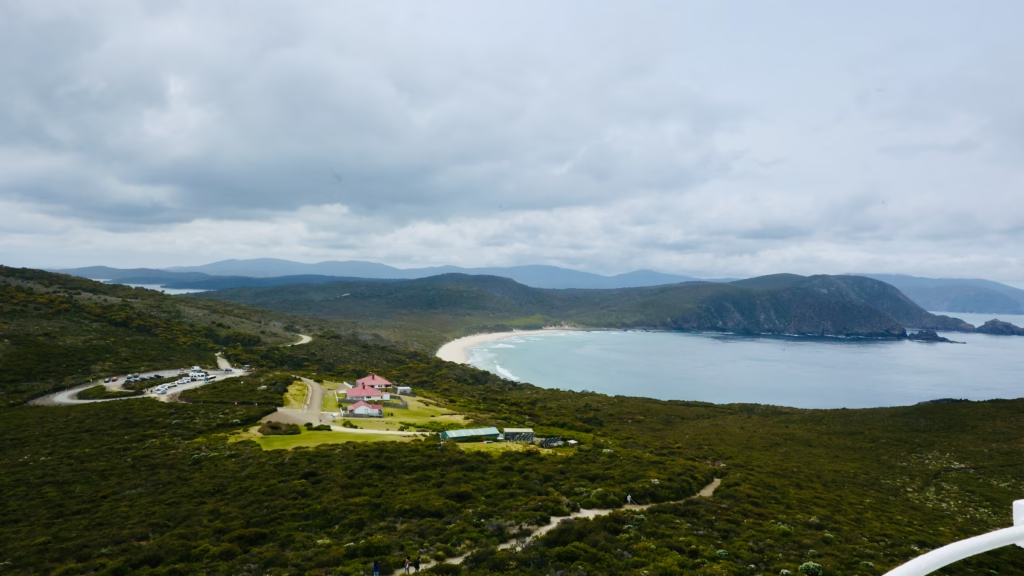 The reward at the top: the lightstation, the beach and the bay from the balcony.
And then came the moment that stayed with me. The guide opened the door out onto the balcony, and the whole wild south of Bruny opened up beneath us. After the climb and the stories, that first step onto the gallery, with the wind pulling at you and the island laid out below, was unforgettable.
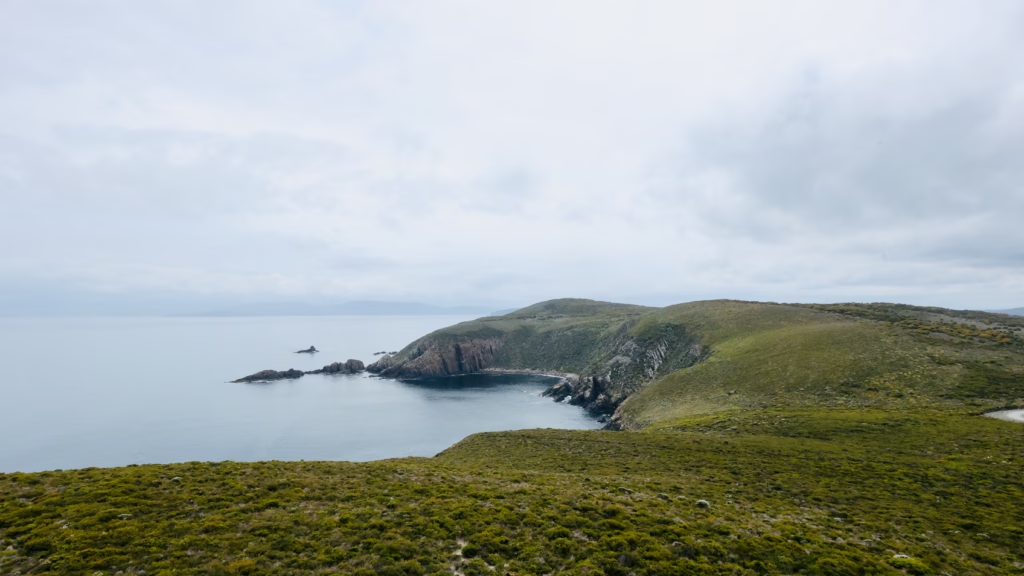 Looking out over the headland and coves from the gallery.
From up there you can see exactly how the lightstation was laid out: the red-roofed keepers’ cottages, the curve of the beach, the bays folding into one another, and the layered hills rolling back toward the rest of the island. It is the kind of view that makes you understand a place in a single glance.
Turn the other way on the balcony and it is all ocean and cliff, the headland dropping away to rock stacks and hidden coves. If your tour includes lighthouse entry, and not all of them do, treat it as the centrepiece of the day rather than just another stop. It is the thing I would go back for.
Lunch at Hotel Bruny
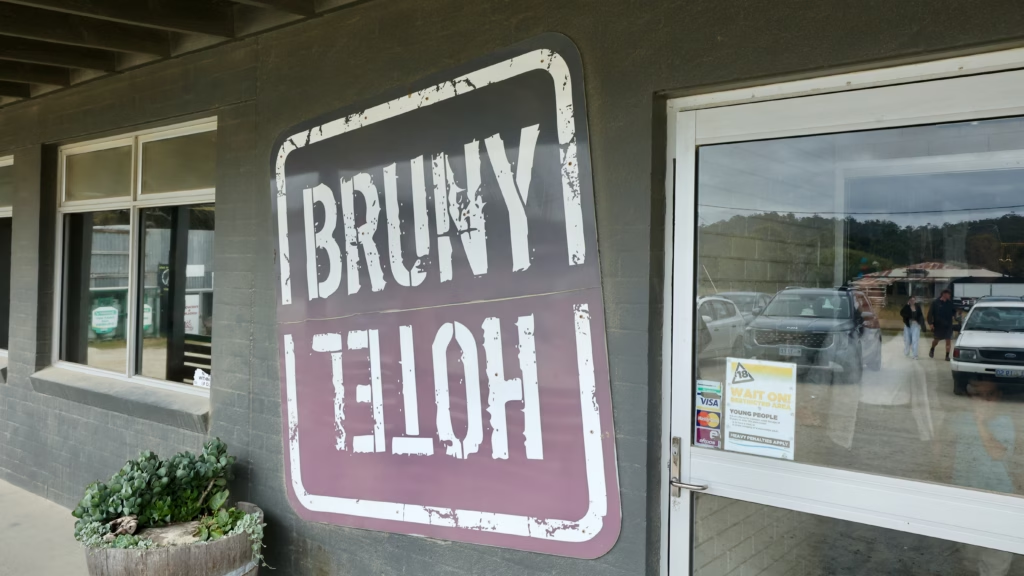 Hotel Bruny, where lunch came with a sea view.
Lunch was included with the tour, at Hotel Bruny. The room itself felt a little crowded, but here is the trick: you can take your food outside, where there are tables, and eat almost on top of the sea. It was cold and windy on my January visit, so the outdoor tables were a brave choice, but the setting is hard to beat.
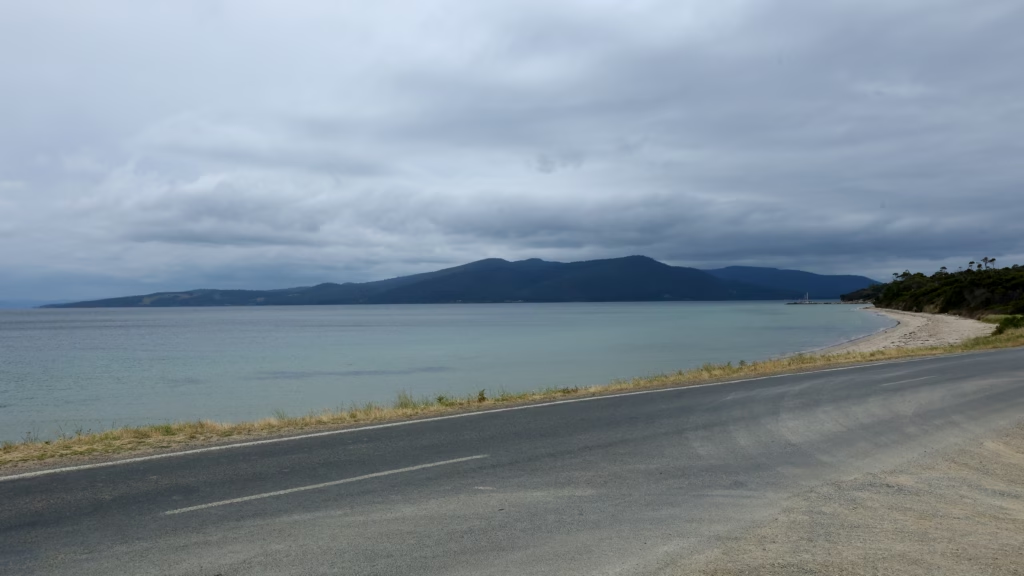 The view across the water from beside Hotel Bruny.
Bruny Island Chocolate Co.
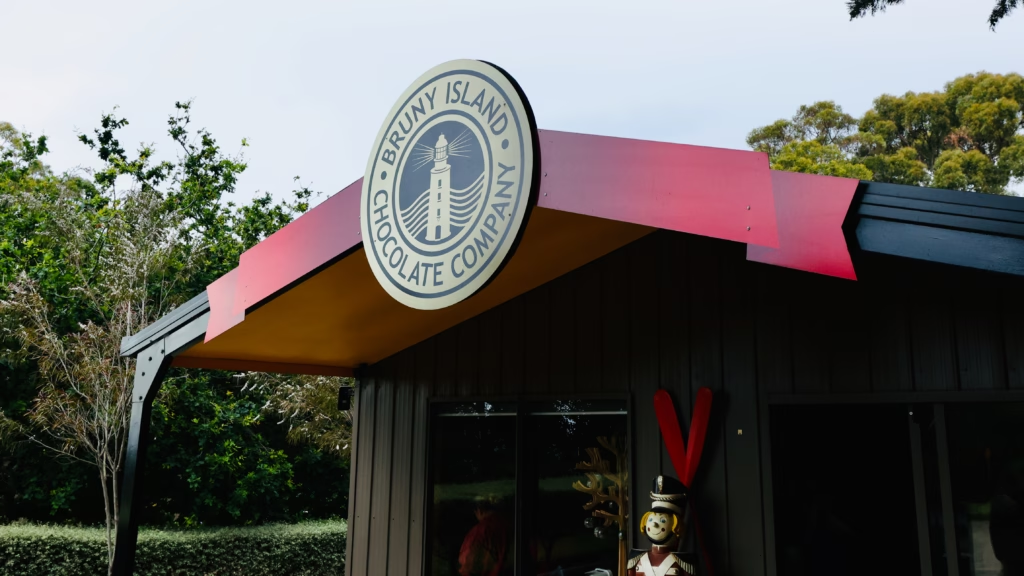 Bruny Island Chocolate Co., the last sweet stop of the day.
Our final stop before the ferry home was the Bruny Island Chocolate Company, for one more round of tasting. By this point I was thoroughly spoiled, but there is always room for chocolate. As with the honey, you can taste and then buy, and it makes a good last memento of the island.
The ferry home
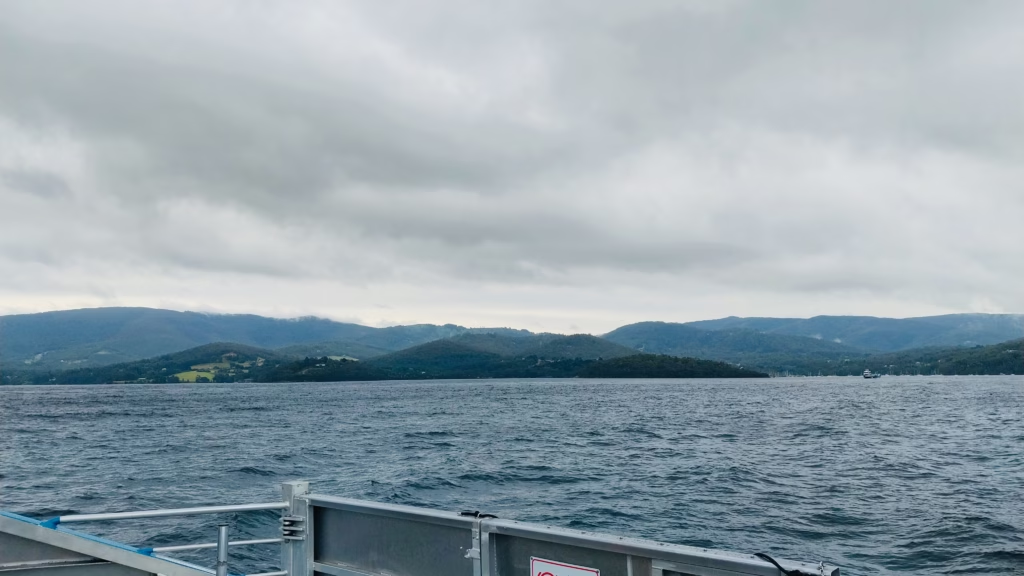 The choppy ride home. The grey weather only added to the adventure.
Then it was back to the ferry for the crossing to Kettering and the drive to Hobart. The weather had turned properly moody, cloud, drizzle and a real swell, and the boat rolled through some big waves. Honestly, it made the whole thing more fun. We rolled back into Hobart around 5:30pm, full of oysters and cheese and chocolate, and very glad we had come.
What a Bruny Island Day Trip Costs
Here is a rough guide to help you budget, based on 2026 prices.
| Item | Approximate cost (AUD) |
|---|---|
| Guided full-day tour (gourmet/lighthouse) | From around $290 per adult, $250 per child |
| Vehicle ferry (if self-driving) | About $50.60 return per car, plus $4 winter surcharge |
| Oysters at Get Shucked (if self-driving) | A dozen from around $20-25 |
| Honey, cheese, chocolate to take home | $7-25 per item |
| Lunch (often included on tours) | $20-35 if buying your own |
A tour costs more up front, but bundles the ferry, lunch, tastings, lighthouse entry and a guide into one price, with no driving and no logistics. Self-driving is cheaper if there are a few of you splitting the ferry, but you pay for everything separately and you do the work. For me, the tour was worth it. Good, but not cheap, is the fairest way I can put it.
Best Time to Visit and What to Bring
Pro tip: dress for four seasons, even in summer
I went on 9 January, the height of summer, and still got cloud, drizzle and a cold wind off the sea. Bruny’s weather does what it likes. Bring a warm layer and a waterproof jacket whatever the month, wear comfortable shoes for the lighthouse and Neck stairs, and do not forget your camera. The moody light actually makes for wonderful photos.
Summer (December to February) brings the longest days and the best chance of warmth, but also the biggest crowds. Spring and autumn are quieter and still lovely. Winter is cold and atmospheric, and you even get a chance at the Southern Lights after dark. Whenever you go, the producers and the lighthouse run year-round.
A Note on Wildlife
One honest expectation to set: do not come to Bruny purely for wildlife.
Bruny is famous for its rare white (albino) wallaby, and some tours go looking for it. But my tour, the food and lighthouse one, did not actively hunt for wildlife, and we did not see anything especially noteworthy. The focus was squarely on tasting and the lighthouse, and that was fine by me, because that is what the day is built around. If wildlife is your priority, choose a tour that specifically promises it, or self-drive at dawn or dusk when animals are most active. Just go in with the right expectations.
Where to Stay if You Want Longer
A day trip is plenty to see the highlights, but Bruny rewards those who linger, and an overnight stay lets you catch the island at its quietest, before and after the day-trippers. If you want to extend your visit, you can compare island stays and nearby Hobart options on Booking.com and Agoda.
Bruny Island Day Trip FAQ
Is Bruny Island worth visiting?
Yes, without hesitation. For food, coastal scenery and a genuinely interesting lighthouse, a Bruny Island day trip is one of the best things you can do from Hobart, and a must on any Tasmania itinerary.
How do you get to Bruny Island from Hobart?
Drive about 40 minutes south to Kettering, then take the SeaLink vehicle ferry for a 20-minute crossing to Roberts Point. You can self-drive or join a guided tour that arranges transport for you.
How much is the Bruny Island ferry?
In 2026, the return vehicle fare is around AUD $50.60 for a standard car, with a temporary $4 fuel surcharge over winter. Passengers and drivers travel free; you only pay for the vehicle.
Can you visit Bruny Island in one day?
Yes. A single day is enough to see the highlights, The Neck, the food producers, Adventure Bay and Cape Bruny Lighthouse, especially on a guided tour that keeps the day moving.
Is a tour or self-drive better for Bruny Island?
Both work. Self-driving gives you freedom and costs less if you are splitting the ferry. A tour is easier, sorts out the logistics and lets everyone taste the local wine, beer and spirits, which makes it ideal for overseas visitors and first-timers.
Do you need to book the Bruny Island ferry in advance?
It runs on a queueing system rather than set departures, so you do not book a specific time. Pre-purchasing your vehicle ticket online is recommended in busy periods to save time at Kettering.
What food is Bruny Island known for?
Oysters, cheese, honey, chocolate, fudge, plus wine, beer, cider, mead and whisky. The island is essentially one long gourmet trail, which is why food-focused tours are so popular. If eating your way around a place is how you travel too, you might enjoy my complete Melbourne restaurant guide for the mainland leg of an Australian trip.
Can you go inside Cape Bruny Lighthouse?
Yes, on a guided tour. Entry is limited to a set number of people at a time, and you climb the spiral staircase to the balcony with a guide. Not every operator includes lighthouse entry, so check before booking. I did it with Bruny Island Safaris.
Final Thoughts
Bruny Island gave me a grey, drizzly, windswept January day, and I would not change a thing about it. The oysters at Adventure Bay, the mustard honey I am still rationing at home, the climb up the lighthouse and that view from the balcony, it all added up to one of the most memorable days of my entire Tasmanian trip.
So if you are planning Tasmania, build in a Bruny Island day trip. Take a tour if you would rather relax and taste your way around, self-drive if you love your freedom, but go. This little island off the coast of an island is one of the best days Tasmania has to offer.
Planning the rest of your Tasmanian adventure? Once it is live, do not miss our 7 Days in Tasmania Itinerary (link when live) for the full road map, and if you are starting in the north, our guides to things to do in Launceston, the Cataract Gorge, a Cradle Mountain day trip and historic Ross Village will help you plan. Tasmania is easy to reach from the mainland too, as I found on my Sydney to Launceston flight. And if your trip takes in Victoria, my 4 days in Melbourne itinerary covers what I actually did with the time.
Please visit:
Our Sponsor
Related Posts
Hotels Are Bringing Back The Social Hour—And It’s Better Than Ever
Key TakeawaysHotels are bringing back B&B-style socializing with organized programs…
The Dolomites’ Aman Rosa Alpina to Reopen Following Complete Redesign
Set in the village of San Cassiano, in Italy's UNESCO-listed…

All Child and RIU collaborate in the United Kingdom
RIU Hotels & Resorts goes one step further in its…