Hobart sits close enough to the rest of southern and eastern Tasmania that most visitors end up choosing between five or six properly different days out, and every “best day trips” listicle online treats them as interchangeable. They are not. I did two of these myself, researched three more properly rather than guessing, and there is one that gets recommended constantly that I would actually talk you out of doing from Hobart at all.
The quick answer
| Day trip | Distance from Hobart | Best for | Status |
|---|---|---|---|
| Bruny Island | 40 min drive plus a 20 min ferry | Food, coastal scenery, a lighthouse you can climb | I went, full write-up exists |
| Freycinet & Wineglass Bay | 2.5 to 3 hours | The single best view in Tasmania | I went, full write-up exists |
| Port Arthur, Richmond & Tasman Peninsula | 90 minutes | Convict history, sea cliffs, Tasmanian devils | Researched, did not visit |
| Maria Island | 75 to 90 minutes plus a ferry | Wildlife you can walk right up to | Researched, did not visit |
| Mount Field National Park | 90 minutes | Waterfalls, ancient forest, an easy half-day | Researched, did not visit |
| Cradle Mountain | 4 hours | Tasmania’s most iconic hike | Bookable from Hobart, do it from Launceston instead |
Bruny Island: the one to prioritise if you can only do one
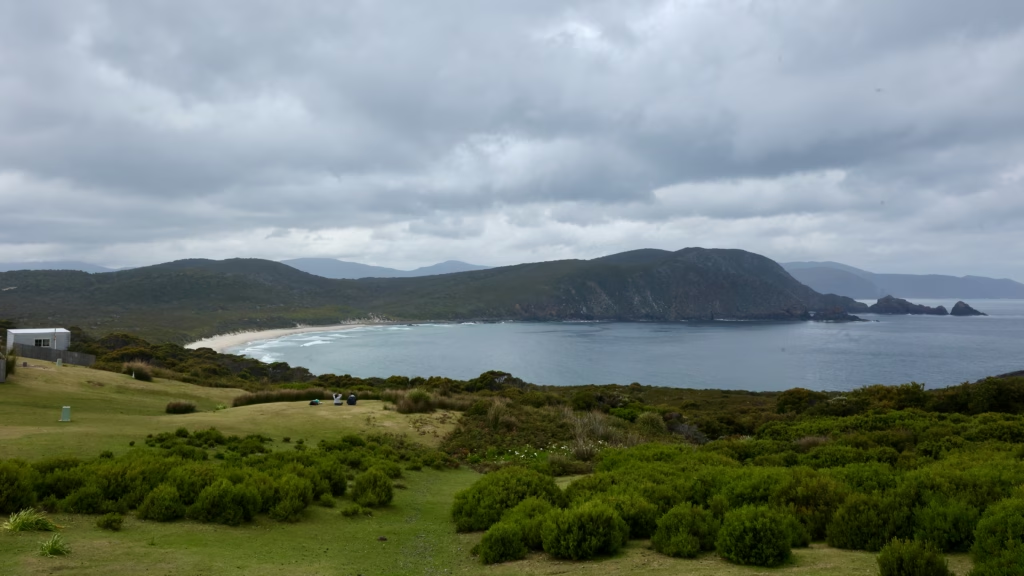 A keeper’s cottage above the bay on the approach to the cape.
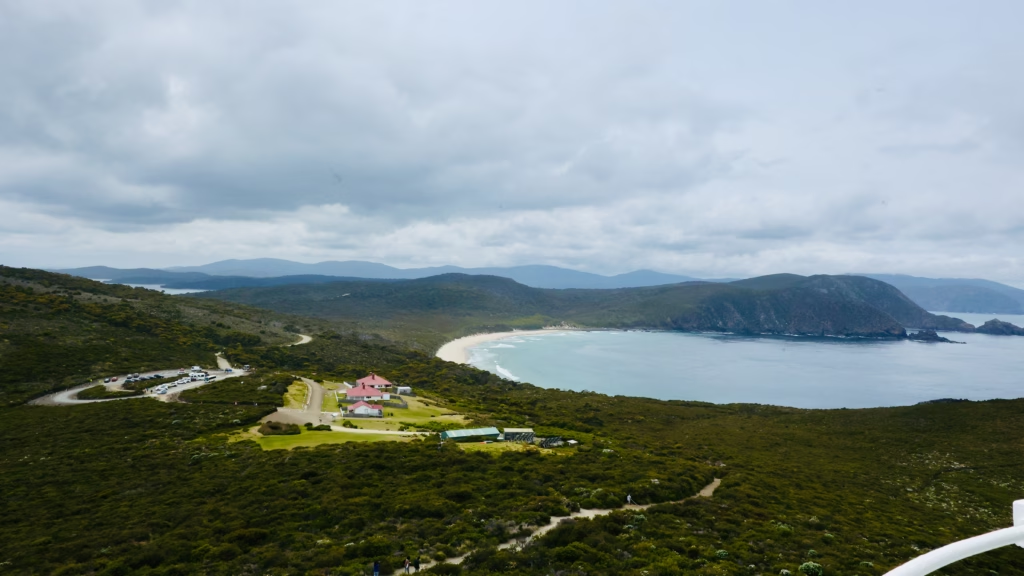
Sea cliffs, a clifftop lighthouse you can climb inside, and some of the best food in Tasmania, oysters, cheese, honey, chocolate, all inside a single day. I went on a grey, drizzly day and it was still one of the best days of the whole trip. The ferry crossing from Kettering is about 20 minutes, and the island is bigger than it looks on a map, so a guided tour properly earns its cost here, it handles the ferry queue and the food stops without you losing half the day to logistics. Full stop-by-stop account in Bruny Island Day Trip From Hobart.
Freycinet and Wineglass Bay: the one worth extending your trip for
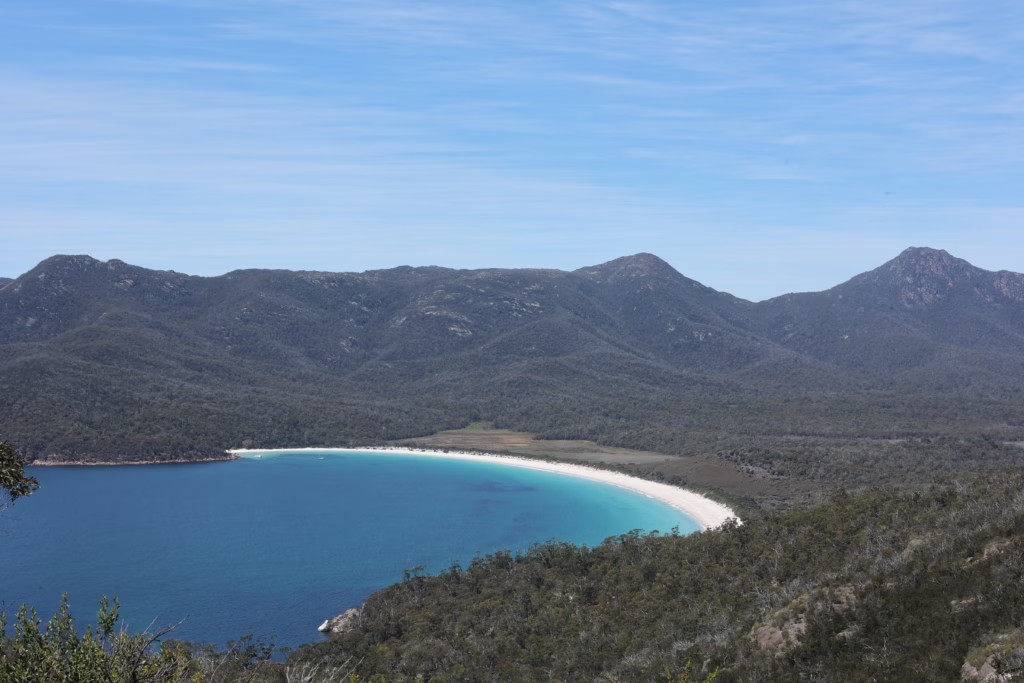 The view from the Wineglass Bay Lookout, the photo that sells Tasmania.
Freycinet sits 2.5 to 3 hours up the east coast, too far to combine with anything else on this list, which is exactly why it needs its own day rather than a rushed add-on. Wineglass Bay is the reason people make the drive, that perfect curve of white sand wrapped in pink granite peaks, and the lookout walk is properly worth the climb. Full details in Hobart to Freycinet & Wineglass Bay Day Trip.
Port Arthur, Richmond, and the Tasman Peninsula
I have not been to Port Arthur myself, so everything here is researched and checked against multiple current sources, not personal experience. It is worth saying plainly, because this is the day trip that shows up on nearly every “things to do near Hobart” list, and I would rather tell you what it actually involves than pretend I have walked it.
Port Arthur Historic Site is Australia’s largest and best-preserved convict settlement, about 90 minutes from Hobart on the Tasman Peninsula. Built from 1830 as a timber-getting camp and expanded into a purpose-built penal station for repeat offenders, it held somewhere between 12,000 and 14,000 convicts over its working life before transportation ended in 1853. More than 60 buildings and ruins survive across the site, the four-storey Penitentiary, the Separate Prison built for total solitary confinement, and the Isle of the Dead burial ground offshore. It is part of the Australian Convict Sites, inscribed on the UNESCO World Heritage list in 2010. Standard entry includes a guided walking tour and a short harbour cruise past the Isle of the Dead, with the Point Puer boys’ prison site and evening ghost tours available separately.
Worth knowing before you go
Port Arthur was also the site of a mass shooting in 1996 that killed 35 people and led directly to Australia’s modern gun laws. The site now includes a quiet memorial garden near where it happened. It is a part of the site’s history rather than something that defines a visit today, but it is worth knowing rather than encountering unprepared.
The usual day tour pairs Port Arthur with two other stops that make the drive worth it on their own. Richmond, a Georgian village about 24km from Hobart, has Australia’s oldest bridge still in use, a convict-built sandstone crossing finished in 1825, plus the oldest intact gaol in the country, older than Port Arthur itself. It is a properly pretty half-hour wander, antique shops, a bakery known for its scallop pies, and the kind of quiet colonial streetscape Tasmania does well. On the way to or from the peninsula, most tours stop at Tasman Arch and Devil’s Kitchen, two dramatic sea-carved rock formations near Eaglehawk Neck, reachable on an easy boardwalk loop, and often the Tasmanian Devil Unzoo, a conservation park with devil feedings and hand-feeding wallabies.
Maria Island: Tasmania’s only island national park
Also researched rather than personally visited. Maria Island keeps coming up as the trip locals recommend and visitors miss, and once you see what is actually there, it is easy to understand why.
The island sits off the east coast, reached by a passenger ferry from Triabunna, itself about 75 to 90 minutes from Hobart, with the crossing taking 30 to 45 minutes depending on the operator. There are no cars on Maria Island, you walk or cycle everything, and there are no shops, so bring what you need for the day. What you get in return is wildlife density that is hard to find anywhere else in Australia: wombats graze in the open, completely unbothered by people, alongside Forester kangaroos, Cape Barren geese, and pademelons, and Tasmanian devils were reintroduced here in 2012 specifically because the island’s isolation keeps them free of the facial tumour disease that has devastated the species elsewhere.
History sits right alongside the wildlife. Darlington, where the ferry arrives, is the most intact convict probation station in Australia, also part of the UNESCO-listed Australian Convict Sites, with buildings dating to 1825 including the old Commissariat Store, now the visitor centre. Full background on the island’s convict and natural history is on Parks Tasmania’s official Maria Island page. Beyond Darlington, the Painted Cliffs and Fossil Cliffs are the island’s geological highlights, sandstone eroded into striking iron-oxide patterns by centuries of wind and waves, both reachable on foot or bike from Darlington in a couple of hours.
This one needs a full day
Between the ferry, the wildlife, and the walk out to the cliffs, Maria Island does not compress well into half a day. Check the ferry timetable carefully, missing the last sailing back means an unplanned night with no shops and very basic accommodation.
Mount Field National Park: waterfalls and ancient forest, and the easiest half-day on this list
Also researched rather than personally visited. Mount Field is the one locals mention almost reflexively when southern Tasmania day trips come up, and it is the shortest, easiest option on this whole list, which makes it a properly good fit if a full day out feels like too much.
Mount Field, about 90 minutes northwest of Hobart via the Derwent Valley, was proclaimed one of Tasmania’s first two national parks in 1916, alongside Freycinet, and the Russell Falls area was protected even earlier, as the state’s first nature reserve back in 1885. The park’s signature walk is easy rather than strenuous: a sealed, wheelchair-friendly track leads to Russell Falls, a three-tiered cascade often called one of Australia’s most photographed waterfalls, and from there the Three Falls circuit continues on to Horseshoe Falls and Lady Barron Falls if you want more than the twenty-minute round trip to the main falls. The Tall Trees Walk, a half-hour loop through some of the tallest flowering trees on Earth, giant swamp gums, is the other easy option right near the visitor centre.
Beyond the falls, the park climbs into proper alpine country, glacial lakes and tarns around Lake Dobson and the Tarn Shelf circuit, and in winter it becomes Tasmania’s only downhill ski area, snow permitting from roughly mid-July to mid-September. Most day-trippers stick to the lower rainforest walks near the falls rather than the full alpine circuits, which run four to eight hours return and need proper planning.
Bonorong Wildlife Sanctuary, about 30 minutes north of Hobart, is the common pairing on organised tours, free-roaming Forester kangaroos you hand-feed, Tasmanian devils, wombats, and daily guided tours included with entry. It sits roughly on the way between Hobart and Mount Field, which is why so many day tours bundle the two together rather than making you choose.
Cradle Mountain: bookable from Hobart, but do it from Launceston
 The afternoon light on the return leg – different again
This is the one I would actively steer you away from doing as a Hobart day trip, even though tours selling exactly that exist and are easy to find, including a Cradle Mountain tour departing Hobart .
The problem is distance. Cradle Mountain is about four hours from Hobart each way, compared to roughly 2.5 hours from Launceston. That is a genuine difference, not a marginal one, an eight-hour round trip from Hobart against a five-hour one from Launceston, on a day where the whole point is the three hours you actually spend at Dove Lake. If Cradle Mountain matters to you, and it should, it is one of the best things Tasmania has, base a night or two in Launceston for it rather than bolting it onto a Hobart itinerary. The full case, plus everything you need once you are there, is in Cradle Mountain Day Trip from Launceston.
How to choose if you only have time for one or two
Food and coastal scenery in a single, well-paced day: Bruny Island.
The one photo everyone associates with Tasmania: Freycinet, but only if you can give it a full day without anything else attached.
History over scenery, and you have not had enough convict-era Tasmania yet: Port Arthur, Richmond, and the Tasman Peninsula, especially if Salamanca and Battery Point left you wanting more of that story.
Wildlife over everything else: Maria Island, and it is the quietest, least crowded of the group.
Only have half a day, or want the easiest possible option: Mount Field National Park. Nothing else on this list is doable in under a full day, this one actually is.
Two day trips in one Hobart stay: Bruny and Freycinet pair well since neither eats into the other’s logistics. Port Arthur and Maria Island also work as a pair, both a similar drive time, both convict-history-adjacent, without repeating the same experience twice. Mount Field pairs naturally with Bonorong Wildlife Sanctuary on the same day if you want waterfalls and wildlife together.
A note on timing
Bruny Island and Port Arthur run comfortably year-round, both are largely indoor or short-walk experiences that hold up fine in cooler weather. Freycinet’s main draw is the Wineglass Bay Lookout walk, largely exposed to sun and wind, so summer heat and winter cold both change the experience more than the other three, check the current forecast rather than assume. Maria Island’s ferry crossing is the one properly weather-dependent leg of any of these, rough seas can affect sailings, so build in a buffer if you are visiting outside the calmer summer months and have a flight to catch soon after. Mount Field runs year-round too, and it is actually a genuine winter drawcard, Lake Dobson becomes Tasmania’s only downhill ski area from roughly mid-July to mid-September, snow permitting.
Day trips from Hobart FAQ
How many day trips can I fit into a Hobart visit?
Comfortably two, if you have four or five days in the city. Each of these is a genuine full day, factor in an early start and a return in the evening, and trying to fit three risks rushing all of them.
Which Hobart day trip is best for families?
Maria Island and the Port Arthur, Richmond, and Tasman Peninsula tour both work well for kids, wildlife and pirate-adjacent history tend to land better with children than a long coastal hike. Mount Field paired with Bonorong Wildlife Sanctuary is probably the easiest of the lot for younger children, short walks and hand-feeding kangaroos beats a full day of driving. Bruny Island works too if the food stops are framed as the highlight rather than a grown-up detour.
Can I do Cradle Mountain as a day trip from Hobart?
Yes, tours exist and run the route. Whether you should is a different question, at roughly eight hours round trip, it is a long day for a comparatively short visit. If Cradle Mountain is a priority, basing yourself in Launceston instead makes the logistics far easier.
Is Port Arthur appropriate to visit with children?
Yes, the site is set up for family visits, with the convict history presented for a general audience. The 1996 memorial is a quiet, separate part of the grounds rather than something that dominates the visit.
Do I need a car for any of these day trips?
No. All five are covered by guided tours departing Hobart, which is the easier option for Bruny, Freycinet, Port Arthur, and Maria Island in particular, since each involves a ferry, a long drive, or both.
Final thoughts
If your Hobart time only stretches to one day trip, make it Bruny Island. If you can manage two, pair it with Freycinet if scenery is what you are chasing, or Port Arthur and Maria Island if history and wildlife matter more to you than another coastline. Leave Cradle Mountain for Launceston, where the drive actually makes sense.
For the rest of your Hobart planning, the 3 to 4 Days in Hobart itinerary shows exactly where these day trips fit alongside the city itself, Things to Do in Hobart ties the whole cluster together, and if you are staying in the city for the evening, Best Sunset in Hobart covers where to be when the day trip is done.
Every guide on A Walk in the World is written to help you have the best possible trip. I only recommend hotels, tours, and experiences I’d genuinely choose myself, and I don’t accept payments or sponsorships from operators in exchange for positive coverage. Some of the booking links on this site are affiliate links, which means I may earn a small commission if you book through them, at no extra cost to you. Thanks for trusting my guides and supporting the blog!
Please visit:
Our Sponsor
Related Posts
Saudi Arabia Strengthens Its Luxury Tourism Sector with Fairmont Hotels’ Groundbreaking Red Sea, Al Khobar, and Madinah Properties
Home » HOTEL NEWS » Saudi Arabia Strengthens Its Luxury…

Seibu Prince acquires Ace Group International in $90M deal
Listen to the article 2 min This audio is auto-generated.…

Unlock a world of fun with GCSTIMES wooden key cards for kids!
Wooden key cards are not your average swipe‑and‑go—think of them…